Slow water, done properly
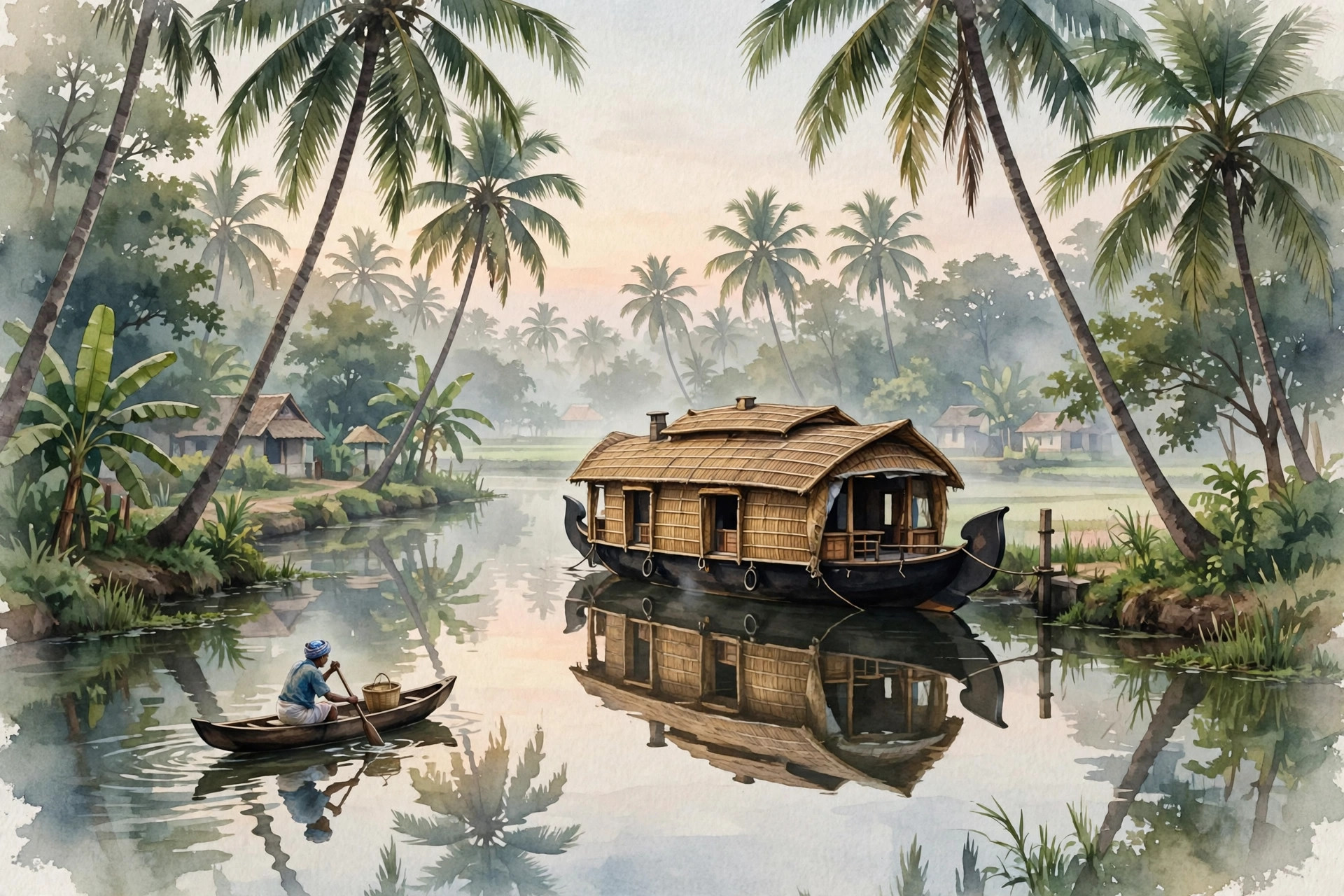
The Kerala backwaters are a 900-kilometer lacework of lagoons, lakes, canals, and rivers running parallel to the Arabian Sea — and the single most over-sold, under-delivered experience in South India if you do it wrong. Done wrong, it's a crowded two-hour motorboat ride past diesel fumes. Done right, it's one of the great slow-travel experiences on Earth: a thatch-roofed kettuvallam drifting past coconut groves and village life, kingfishers working the banks, dinner cooked on board as the water turns gold.
The difference is almost entirely about which boat and how long. This page is about getting that choice right.
Where in Kerala
Illustrated treasure map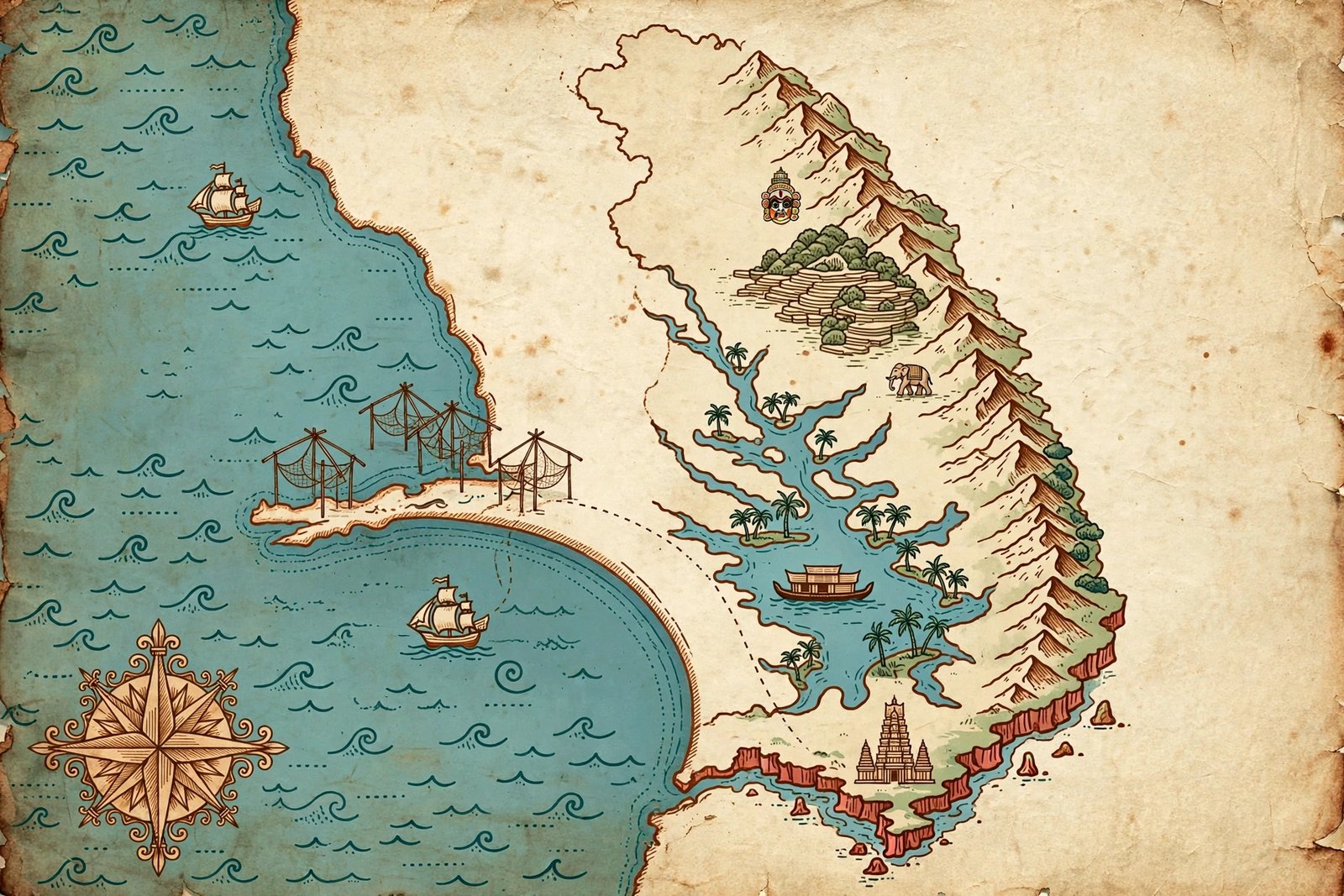 Bekal
Kannur
Wayanad
Kozhikode
Thrissur
Kochi
Munnar
Marari
Alappuzha
Kumarakom
Thekkady
Varkala
Thiruvananthapuram
Kovalam
Bekal
Kannur
Wayanad
Kozhikode
Thrissur
Kochi
Munnar
Marari
Alappuzha
Kumarakom
Thekkady
Varkala
Thiruvananthapuram
Kovalam
Illustrated treasure map. Not for navigation. Open in Google Maps ↗
Alappuzha vs. Kumarakom: pick your water
Alappuzha (Alleppey) is the classic backwater town and the houseboat capital. Roughly 1,800 houseboats are engaged in backwater tourism here per official records cited in 2018 check before you go — though counts across sources run anywhere from ~1,000 to 2,000+ depending on what's being counted (registered vs. operating, statewide vs. local), so treat every number as approximate. Alappuzha is livelier, easier to reach, and has the famous Nehru Trophy Boat Race — in August 2025 it drew about 2 lakh spectators with 75 boats including 21 chundan valloms, the great snake boats Verified Oct 2026. It also has the most boats, which means the most traffic on the main channels.
Kumarakom, on the eastern shore of Vembanad lake, is the quieter, more upmarket sibling — luxury resorts with private jetties, bird sanctuary mornings, and calmer water. Its hotels price at the very top of India: Kumarakom posted INR 11,758 RevPAR in FY23, the highest of any leisure micro-market in the country check before you go. If your budget stretches to a resort with its own boats, Kumarakom is the more serene base.
Our take: first-timers who want the postcard, go Alappuzha. Travelers who want quiet and have the budget, go Kumarakom. Either way, get off the main channel.
The houseboat decision
This is the choice that makes or breaks the backwaters, so here's the honest breakdown:
- Overnight private houseboat (1–2 nights): the real experience. You board around noon, cruise the afternoon, moor by sunset (boats must anchor by evening — regulations, not suggestions), sleep on the water, and wake to village sounds. One night is the minimum; two nights gets you into the narrow canals the day boats never reach. Prices vary enormously by season and boat grade — October to March is peak, and the premium boats book out weeks ahead.
- Day cruise (4–6 hours): a fine sampler if you're passing through, but you miss the moored-evening magic, which is half the point.
- Shikara / small canoe (2–3 hours): the sleeper pick. A small open boat with a rower takes you into canals too narrow for houseboats, right past village life — duck farms, coir workers, kids swimming home from school. Pair a canoe morning with an overnight houseboat and you've done the backwaters properly.
- What to skip: the big shared "deluxe" boats packed with 40 strangers, and any operator who can't show you the actual boat before you pay.
Ask before booking: is the crew licensed, is there a working toilet with proper waste disposal (not straight into the lake), and what's the exact route? The backwaters' biggest threat is its own popularity — choose operators who take the lake's health seriously. Kerala's Responsible Tourism Mission has a classification framework for hotels and resorts check before you go; ask your stay whether they participate.
Where to stay in The Backwaters
Our vetted stay partners for this region are coming with the launch. Until then, every hotel and lodge mention in this guide is editorial — nobody paid to be here.
No paid placements yet — when affiliate links go live here, they will be disclosed.
Beyond the boat: village Kerala
The backwaters aren't scenery — they're a working landscape, and the best hours are spent in it:
- Sunrise canoe through the village canals before the houseboats wake up.
- Coir villages around Alappuzha, where coconut husk becomes rope the old way.
- Kumarakom Bird Sanctuary at dawn in the migratory season (November–February) — Siberian cranes, herons, darters.
- Toddy shops (kallu shaaps) serving fresh palm toddy with fried karimeen (pearl-spot fish) — the backwater lunch of champions. Go with a local if you can.
- Marari beach, 15 minutes from Alappuzha town: a quiet fishing-beach comedown after the water.
The honest notes
- Monsoon (June–September) is dramatic and green and half the price — but heavy rain can curtail cruising, and in July 2026 a landslide near Kalladi in Wayanad triggered mass cancellations with spillover into backwater bookings check before you go. Check conditions before booking monsoon houseboats.
- Onam season (August–September) spikes everything: in September 2024 the festival drove full hotel occupancy and 20–25% airfare increases on Kerala routes check before you go. Book early or pay the festival tax.
- Mosquitoes are real at dusk on the water. Repellent, long sleeves, done.
- Plastic: the lake is visibly stressed in places. Carry a refillable bottle, refuse the single-use parade, and say it out loud — operators listen to guests more than regulators.
Two to three days here, with at least one night on the water, is the sweet spot. Less than that and you've seen the brochure; more than four and you're repeating yourself.