The town is skippable. The hills aren't.
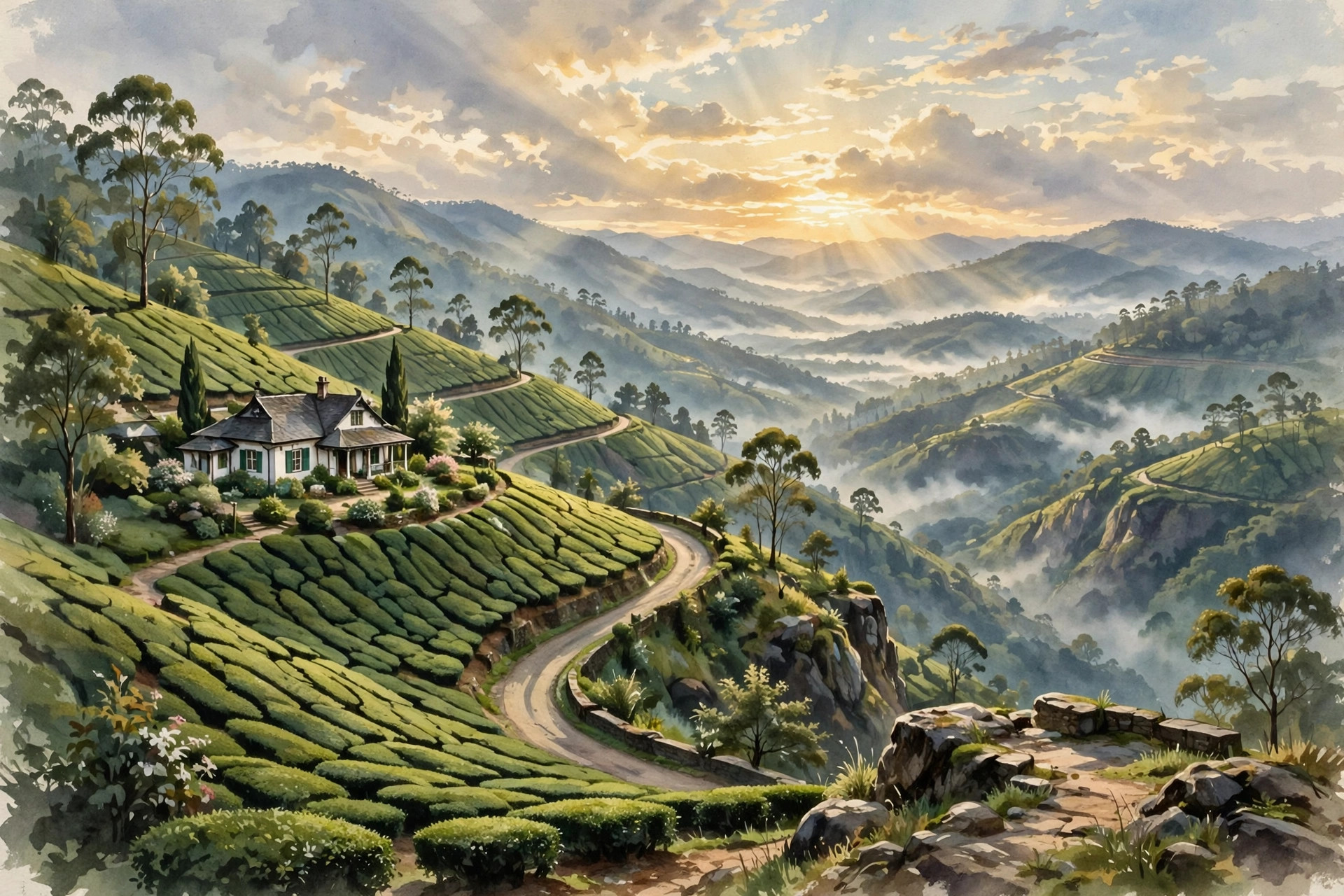
Let's be honest first: Munnar town is a congested commercial strip that exists to serve the hills around it. Nobody comes for the town. They come for the tea estates folding into mist, the viewpoints at dawn, Eravikulam's tahr, and air that smells of eucalyptus after the coastal heat. Munnar is Kerala's most-visited hill destination — Idukki district drew 4.68 million domestic visits in 2025, the highest in the state Verified Oct 2026 — which means the difference between a magical visit and a traffic jam is almost entirely about timing and where you sleep.
Where in Kerala
Illustrated treasure map Bekal
Kannur
Wayanad
Kozhikode
Thrissur
Kochi
Munnar
Marari
Alappuzha
Kumarakom
Thekkady
Varkala
Thiruvananthapuram
Kovalam
Bekal
Kannur
Wayanad
Kozhikode
Thrissur
Kochi
Munnar
Marari
Alappuzha
Kumarakom
Thekkady
Varkala
Thiruvananthapuram
Kovalam
Illustrated treasure map. Not for navigation. Open in Google Maps ↗
The timing trick
Munnar runs on day-tripper time. Buses and cars pour in from Kochi (4 hours) and Madurai mid-morning, clog the viewpoints by 11, and leave by 4. Your counter-move is simple:
- Stay in the estates, not the town. The tea-garden resorts and homestays 5–15 km out are quieter, cooler, and closer to the viewpoints. The town is for supplies.
- Be out before 9 AM. Top Station, Echo Point, and the Eravikulam viewpoints are transformative at 7 AM and parking lots by 11. This single habit upgrades the whole trip.
- Eravikulam National Park opens early — go for the first slot. It's the only wild home of the Nilgiri tahr, and the morning light on the grasslands is the park at its best. The park closes during the tahr calving season (typically ~2 months, dates vary) — check before you go. check before you go
- Avoid the long-weekend crush if you can: Munnar's domestic popularity means Indian holiday weekends are genuinely packed. Midweek is a different town.
What to actually do
- Walk a tea estate with a guide. Photographing the gardens from the road is free; walking through them with someone who explains plucking, pruning, and orthodox vs. CTC processing is the experience. Most estate stays arrange this.
- Visit a working tea factory. The orthodox process — withering, rolling, oxidizing, drying — is genuinely interesting, and the tasting at the end recalibrates what tea can be.
- Top Station at sunrise. The highest point on the Munnar–Kodaikanal road, looking down into the Theni valley in Tamil Nadu. When the valley fills with cloud, it's the classic Munnar photograph and it earns it.
- Mattupetty Dam & Kundala Lake for the easy half-day: boating, the echo-point gimmick, picnic weather.
- Trek if you can. The Meesapulimala trek (Kerala's second-highest peak, via the forest department) is the serious option — permits, guides, and a dawn start. Book through official channels. check before you go
Make This Trip Real: Munnar
Our paid trip guides pair the reel with the reality — dated itineraries, real costs, booking links. The Kerala editions are in production now.
No paid placements yet — when affiliate links go live here, they will be disclosed.
The day-tripper traps
- The "spice gardens" on the approach roads are tourist shops with plants. Real spice country is Thekkady — save your time and money.
- The town's main street in the afternoon: traffic, touts, identical souvenir shops. Pass through, don't linger.
- Boating at Mattupetty at midday in peak season means queues. Morning or skip.
- Any "viewpoint" with a parking lot full of buses at noon — come back at 7 AM tomorrow.
Where to stay
The estate stays are the move — tea-garden bungalows and homestays 5–15 km outside town put you closer to the viewpoints, above the traffic, and usually include an estate walk with the tariff. The town's hotels are fine for a single night but you'll hear the road. At the luxury end, the heritage tea bungalows (some a century old, run by the plantation companies) are among the most atmospheric stays in South India — book well ahead in season, because Munnar's domestic popularity means the good ones go first. Homestays in the surrounding villages are the value play and often include home-cooked Kerala meals that beat the town restaurants.
Practical notes
- Temperature: 10–20°C most of the year, genuinely cold December–February mornings. Fleece and a rain shell, even when the coast is 32°C.
- The ghat road up (especially via Neriamangalam) is spectacular and winding — motion-sickness-prone travelers should sit up front, and everyone should hire a driver who knows the hairpins.
- ATMs and fuel: fill up and withdraw in the town; the estate roads have neither.
- Leeches on monsoon treks. Salt in the socks, long trousers, no drama.
- Kumily/Thekkady is 2.5–3 hours south — the natural next stop, and the road between them is one of the great drives in South India. Budget half a day and stop often.
Two full days minimum, three if you want to trek. Munnar rewards the early riser and punishes the day-tripper — choose which one you'll be before you arrive.