Kerala's next chapter is in the north
Everything south of Kochi has been on the tourist map for decades. North of it — the Malabar coast — is where Kerala still feels like a discovery: fire-lit Theyyam rituals in village shrines, a 17th-century fort jutting into the sea, India's most underrated food city, and beaches where you're often the only foreigner. The numbers confirm the gap: Kozhikode district drew 1.47 million domestic visits but only 20,104 foreign visits in 2025; Wayanad matched the domestic figure with a mere 5,424 foreign arrivals Verified Oct 2026. Domestic travelers have found the north. International ones mostly haven't — yet.
Where in Kerala
Illustrated treasure map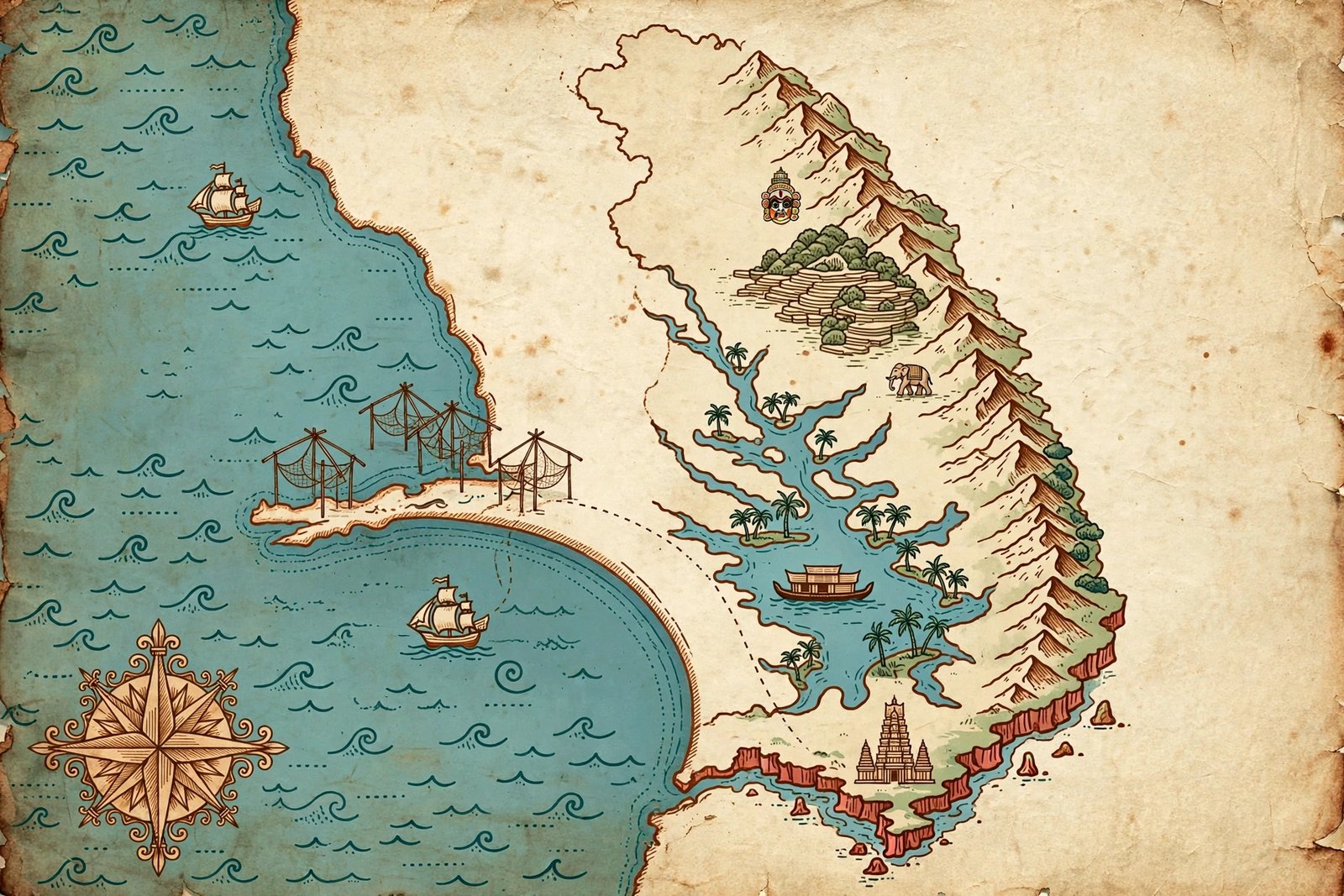 Bekal
Kannur
Wayanad
Kozhikode
Thrissur
Kochi
Munnar
Marari
Alappuzha
Kumarakom
Thekkady
Varkala
Thiruvananthapuram
Kovalam
Bekal
Kannur
Wayanad
Kozhikode
Thrissur
Kochi
Munnar
Marari
Alappuzha
Kumarakom
Thekkady
Varkala
Thiruvananthapuram
Kovalam
Illustrated treasure map. Not for navigation. Open in Google Maps ↗
Theyyam: the reason to come
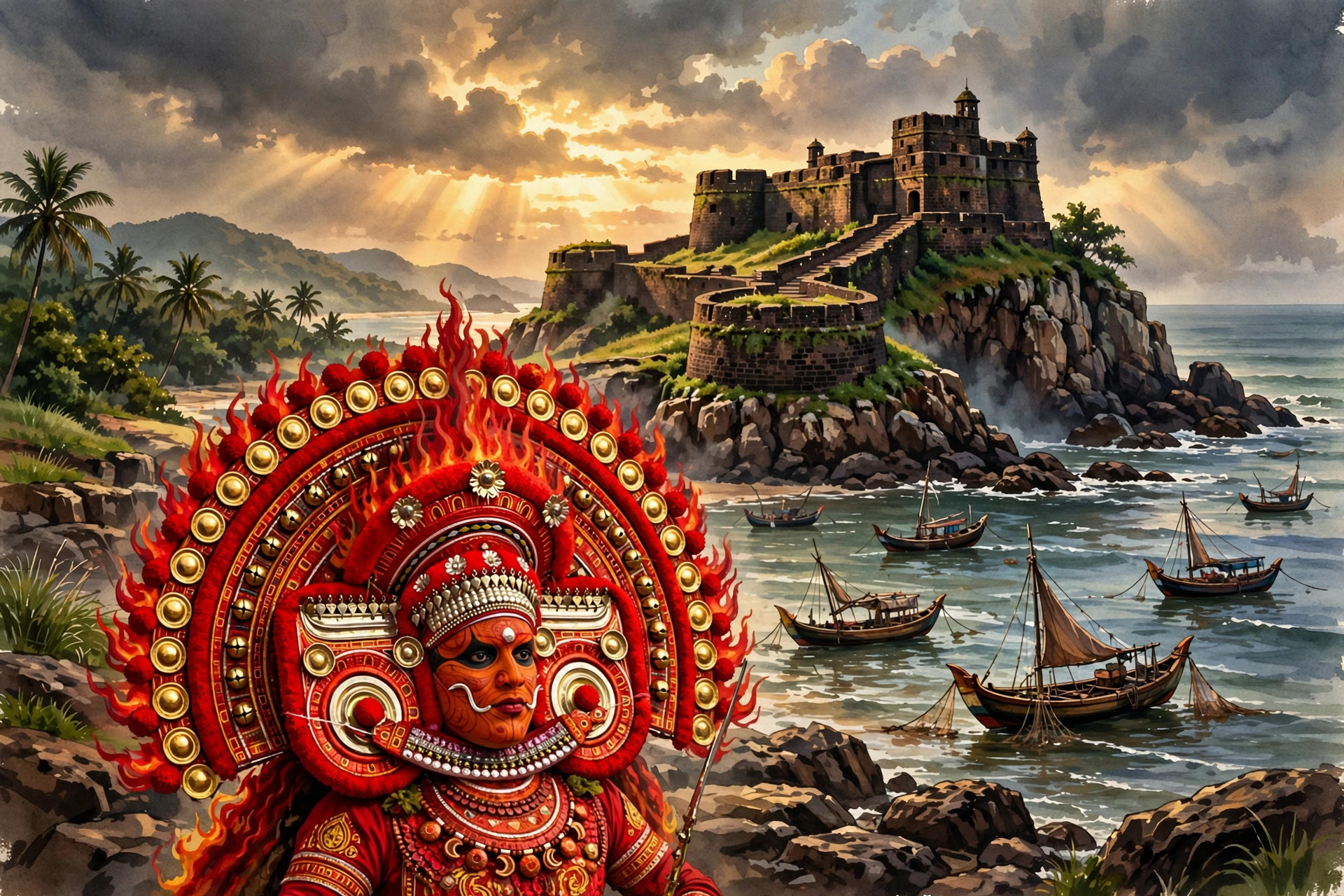
Theyyam is not a performance for tourists. It's a living ritual tradition of North Kerala — particularly Kannur and Kasaragod districts — in which performers embody deities through elaborate face painting, towering headdresses, fire, and drumming that goes on for hours, often through the night. It happens in village shrines (kavus), not on stages, and the season runs roughly November through May check before you go.
How to do it right: go with a local guide who knows the shrine calendar — Theyyam dates follow the Malayalam ritual calendar and shift yearly. Dress modestly, arrive before the main rites, stay quiet during invocations, and never treat it as a photo opportunity first. Ask permission, and accept that some moments aren't for cameras. The reward is one of the most intense cultural experiences in India — fire, blood-red paint, drums you feel in your chest — witnessed the way it's meant to be witnessed: as a neighbor, not an audience.
Honest note: Theyyam attendance figures aren't reliably published, and anyone quoting you precise numbers is guessing. What we know is that it's seasonal, rural, and real.
Kozhikode: come hungry
Kozhikode (Calicut) is the Malabar coast's great food city and criminally under-visited by foreigners. This is the home of Malabar biryani — fragrant, short-grain, utterly distinct from Hyderabadi — plus some of India's best seafood, the legendary Kozhikode halwa, and a toddy-shop culture that pairs fresh palm toddy with fiery local cooking. The city's heritage layer runs deep: Vasco da Gama landed near here in 1498, and the old trading-port streets still carry Arab, Chinese, and Portuguese traces.
Eat your way through it: biryani at one of the old houses, seafood on the beach road at sunset, halwa from the SM Street shops, and at least one toddy-shop meal if a local will take you. Two days here is a food pilgrimage; one day is a crime.
Bekal & the far north
Bekal Fort, straddling the sea in Kasaragod district, is Kerala's largest fort and one of its most cinematic — laterite walls curving into the Arabian Sea, empty beaches below, barely a crowd on most days check before you go. The surrounding coast (Bekal, Kappil, the backwater inlets) is the state's least-developed shoreline, which is precisely the appeal. The government has named Bekal among its dedicated destination-wedding locations check before you go — get here before that proposition scales.
Further south, Kannur mixes Theyyam country with handloom weaving villages and quiet beaches. It's a working coastal city, not a resort town — come for the culture, not the cocktails.
Tours we're vetting for Malabar — North Kerala
We're lining up launch partners for guided tours in this region — operators we'd book ourselves. When we recommend one, we'll tell you exactly why, and any commission will be disclosed here.
No paid placements yet — when affiliate links go live here, they will be disclosed.
Wayanad, from the northern approach
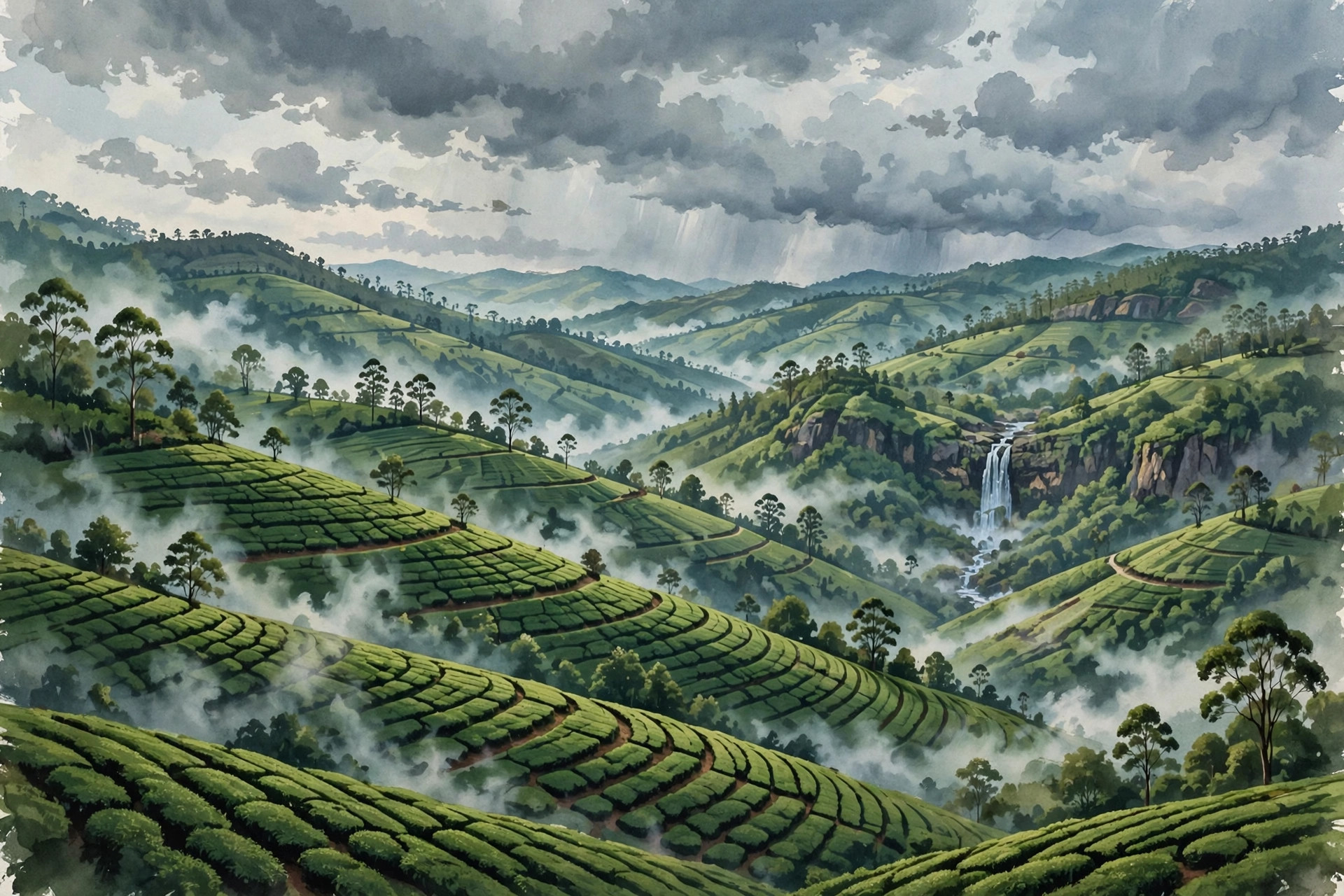
Wayanad sits at Malabar's eastern edge, and pairing it with the coast makes the natural northern circuit: three days of Theyyam, forts, and food, then up into the misty plateau for Edakkal's ancient rock carvings, coffee estates, and trekking. The standard caution applies — Wayanad carries recurring monsoon landslide exposure (the July 2024 disaster killed at least 358 check before you go; July 2026 brought cancellations check before you go), so the dry months of October–May are the window, and monsoon visits need a conditions check. Full detail on our hills page.
The practical layer
- Getting in: Calicut International (CCJ) handled 3.41 million passengers in FY25, heavily Gulf-oriented Verified Oct 2026 — excellent if you're connecting via the Middle East. Kannur (CNN) is the northern gateway; its full-year passenger total isn't reliably published. Kochi works fine as the southern entry with the train north.
- Rail is your friend: the coastal line from Kochi to Kozhikode to Kannur is scenic and efficient. Book sleeper or AC classes ahead in season.
- Language and lodging: English works in hotels and with guides; the homestay and plantation-stay scene is strong and often better value than the thin branded-hotel supply. North Kerala's branded inventory is the thinnest in the state — homestays aren't the compromise here, they're the point.
- Respect the ritual calendar: Theyyam, temple festivals, and mosque/ church feasts run on their own time. A good local fixer is worth more here than in the south.
Three to four days minimum — and if Kerala's south is the greatest-hits album, Malabar is the deep cut you'll end up talking about most.