Four beaches, four different trips
Kerala's 550-odd kilometers of Arabian Sea coastline could have been one long generic beach strip. Instead it sorted itself into distinct personalities: the package-resort bay, the cliff-top yoga town, the surf beach, and the fishing village that tourism forgot to ruin. The trick is matching the beach to the traveler — pick wrong and you'll be bored or overwhelmed in equal measure.
Where in Kerala
Illustrated treasure map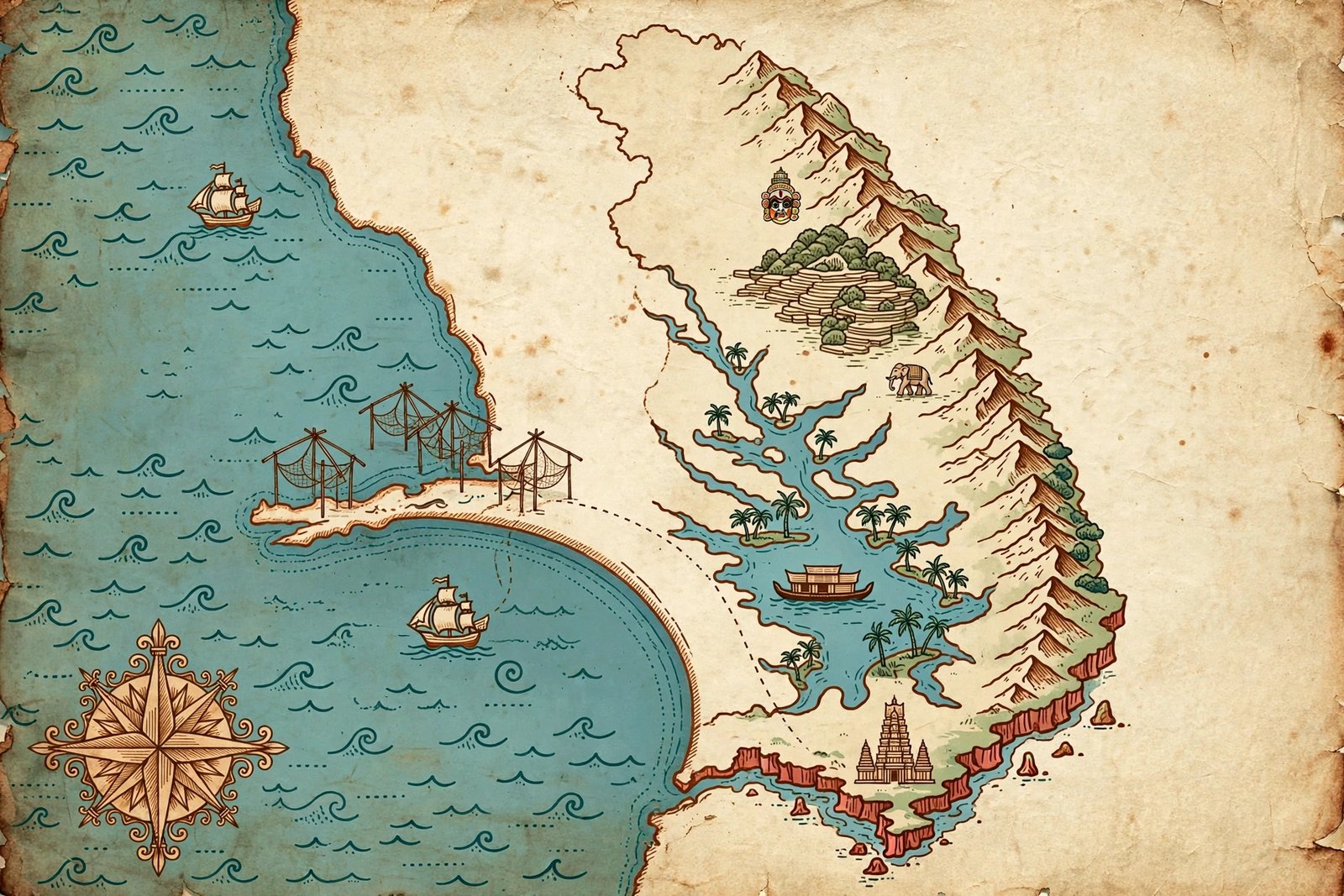 Bekal
Kannur
Wayanad
Kozhikode
Thrissur
Kochi
Munnar
Marari
Alappuzha
Kumarakom
Thekkady
Varkala
Thiruvananthapuram
Kovalam
Bekal
Kannur
Wayanad
Kozhikode
Thrissur
Kochi
Munnar
Marari
Alappuzha
Kumarakom
Thekkady
Varkala
Thiruvananthapuram
Kovalam
Illustrated treasure map. Not for navigation. Open in Google Maps ↗
Varkala: the cliff town
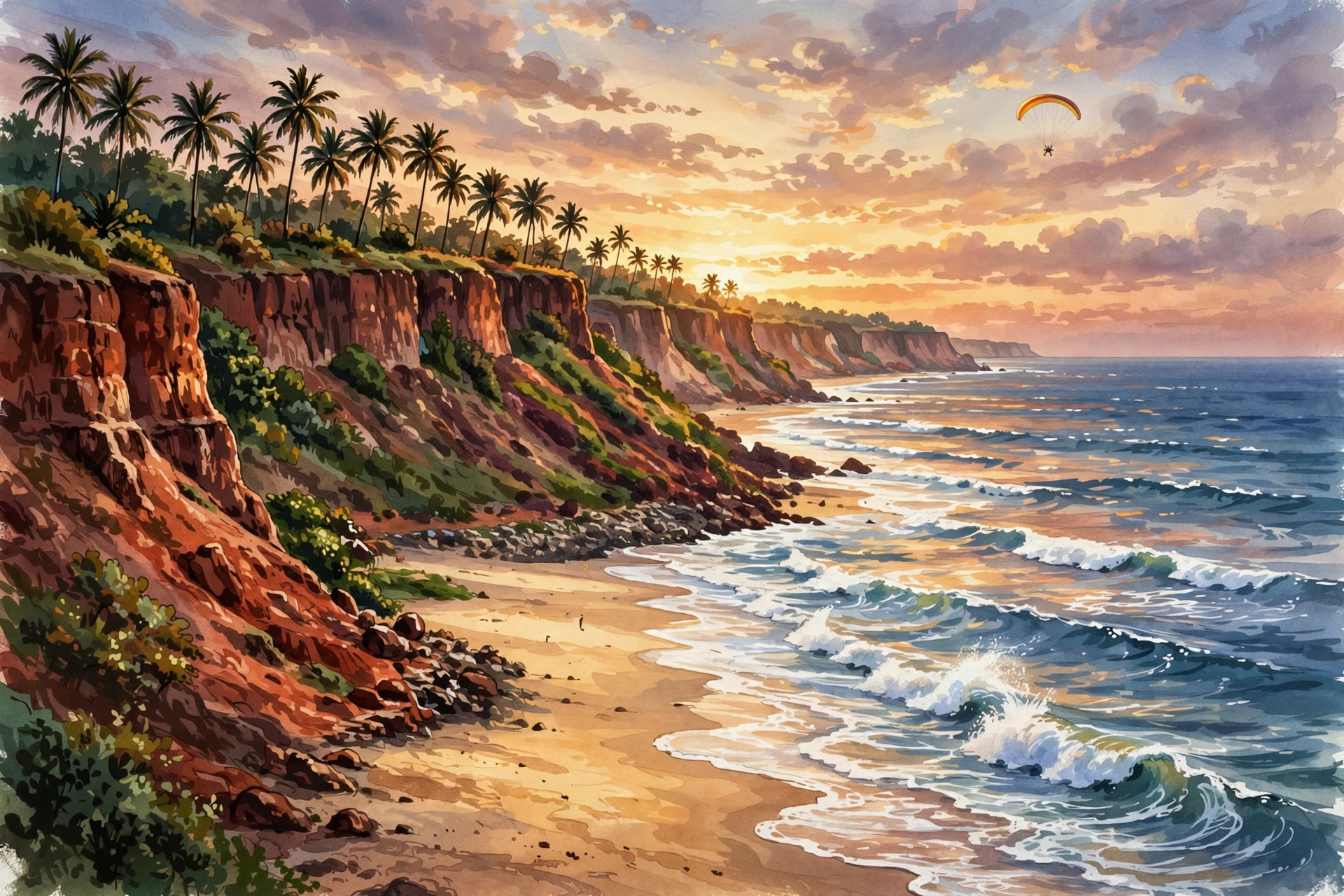
Varkala is Kerala's most distinctive beach — a red laterite cliff running along the sea with the beach below and a clifftop promenade of cafés, yoga shalas, and guesthouses above. Kerala Tourism positions it around an unusual combination: cliff-and-beach geography, wellness, surfing, yoga, and pilgrimage (the ancient Janardhana Swamy temple sits at the cliff's southern end) check before you go. In September 2024 the cliffs were added to UNESCO's tentative list check before you go — the geology is genuinely unusual.
Who it's for: solo travelers, yoga practitioners, long-stayers, and anyone who wants a beach town with a pulse but not a party. The surf works October–March; several schools rent boards and teach on the main beach. Who it's not for: luxury seekers (it's charming, not polished) and anyone expecting nightlife beyond a cliffside beer.
Practical: stay on or near the cliff for the view and the breeze; the North Cliff is quieter. The steps down to the beach are steep — mobility-limited travelers should check their guesthouse's exact location.
Kovalam: the classic resort bay
Kovalam was Kerala's first international beach resort, and it shows — in both senses. The crescent bays (Lighthouse Beach, Hawah, Samudra) are beautiful, the infrastructure is the most developed on the coast, and the Ayurveda resorts behind the beach are serious, long-established operations. Kovalam's hotels price accordingly: INR 9,087 RevPAR in FY23, the third-highest leisure micro-market in India check before you go.
Who it's for: first-time India travelers who want the beach to just work, Ayurveda patients doing multi-week treatment stays (many resorts are built around exactly this), and families who value lifeguards and easy logistics. Who it's not for: travelers allergic to touts — the beachfront hustle is Kovalam's persistent downside — and anyone seeking "undiscovered."
Practical: Thiruvananthapuram airport is 30 minutes away, which makes Kovalam the lowest-friction beach arrival in Kerala. Treatments: choose resorts with resident Ayurvedic doctors and the state's accreditation — never a beachfront "massage center."
Marari & Cherai: the quiet ones
Marari (near Alappuzha) is the comedown beach — a fishing village with a long, empty stretch of sand, a handful of resorts, and almost no scene. Come here after the backwaters to do nothing for two days. Cherai (near Kochi) is the accessible one: a long, swimmable beach 30 minutes from Fort Kochi, good for a day trip or a quiet overnight, with backwater inlets behind the sand.
Neither will change your life. Both are exactly what a rest day should be.
Where to stay in Kovalam, Varkala & the Coast
Our vetted stay partners for this region are coming with the launch. Until then, every hotel and lodge mention in this guide is editorial — nobody paid to be here.
No paid placements yet — when affiliate links go live here, they will be disclosed.
Seasons on the sand
- October/November–March is the classic window: dry, sunny, swimmable, with November–December rated best overall check before you go. Book Christmas–New Year months ahead.
- June–September (monsoon) is the Ayurveda season — the tradition holds that the moist air opens the pores and treatments work better. The sea is rough and red flags fly; this is a treatment-and-yoga season, not a swimming one.
- April–May is hot, humid, and cheap — the budget window, with hill stations the smarter play and the coast for early mornings and late afternoons.
- Onam (August–September) spikes demand statewide: September 2024 saw full hotel occupancy and 20–25% airfare increases on Kerala routes check before you go.
The honest notes
- Swimming safety: the Arabian Sea has real rip currents, especially on the open beaches. Swim where lifeguards are posted, respect the flags, and don't swim at night. Kovalam's main beaches are guarded; Varkala's less consistently.
- Sunsets face west — every one of these beaches gets the full Arabian Sea sunset. The cliff at Varkala is the best seat in the state.
- Fishing villages are working places, not backdrops. Ask before photographing people, buy the morning catch if a vendor offers, and keep the drone grounded near the nets.
- Plastic on the sand: the monsoon deposits ocean plastic on every Kerala beach. The good guesthouses organize cleanups — join one; it's the fastest way to meet the long-stayers.
Three to five days on one beach beats one night on three. Kerala rewards staying put.