The most biodiverse square kilometers on Earth
A single hectare of Yasuní National Park can hold more tree species than all of the United States and Canada combined. The Ecuadorian Amazon — the Oriente — is not a side trip from the Andes; for wildlife lovers it is the equal of the Galápagos, wetter, louder, and wilder.
This is lodge country. You don't backpack the Ecuadorian Amazon; you boat in with a naturalist guide, sleep in a thatched lodge on a blackwater lagoon, and spend four or five days doing what the forest does — which, at dawn and after dark, is a great deal.
Where in Ecuador
Illustrated treasure map Otavalo
Quito
Latacunga
Baños
Riobamba
Cuenca
Manta
Puerto López
Montañita
Salinas
Guayaquil
Lago Agrio
Coca
Tena
Galápagos
Otavalo
Quito
Latacunga
Baños
Riobamba
Cuenca
Manta
Puerto López
Montañita
Salinas
Guayaquil
Lago Agrio
Coca
Tena
Galápagos
Illustrated treasure map. Not for navigation. Open in Google Maps ↗
Yasuní National Park
Yasuní is the crown jewel: a UNESCO Biosphere Reserve the size of a small country, holding world-record biodiversity for amphibians, reptiles, bats, and trees — and the last uncontacted peoples in Ecuador, the Tagaeri and Taromenane, living in voluntary isolation in the park's intangible zone. You visit the edges, with licensed guides, by motorized canoe up the Napo from Coca.
What makes Yasuní special for visitors:
- Macaw and parrot clay licks — dawn gatherings of hundreds of birds on riverbank clay, one of the great wildlife spectacles of the Amazon.
- Canopy towers and walkways — the forest's real action is 30 meters up; towers at lodges like Napo Wildlife Center put you in it.
- Giant otters, pink river dolphins, and black caiman on the oxbow lakes and channels.
- Kichwa community visits — several lodges are community-owned or partnered, and the cultural layer is as rich as the ecological one.
Cuyabeno Wildlife Reserve
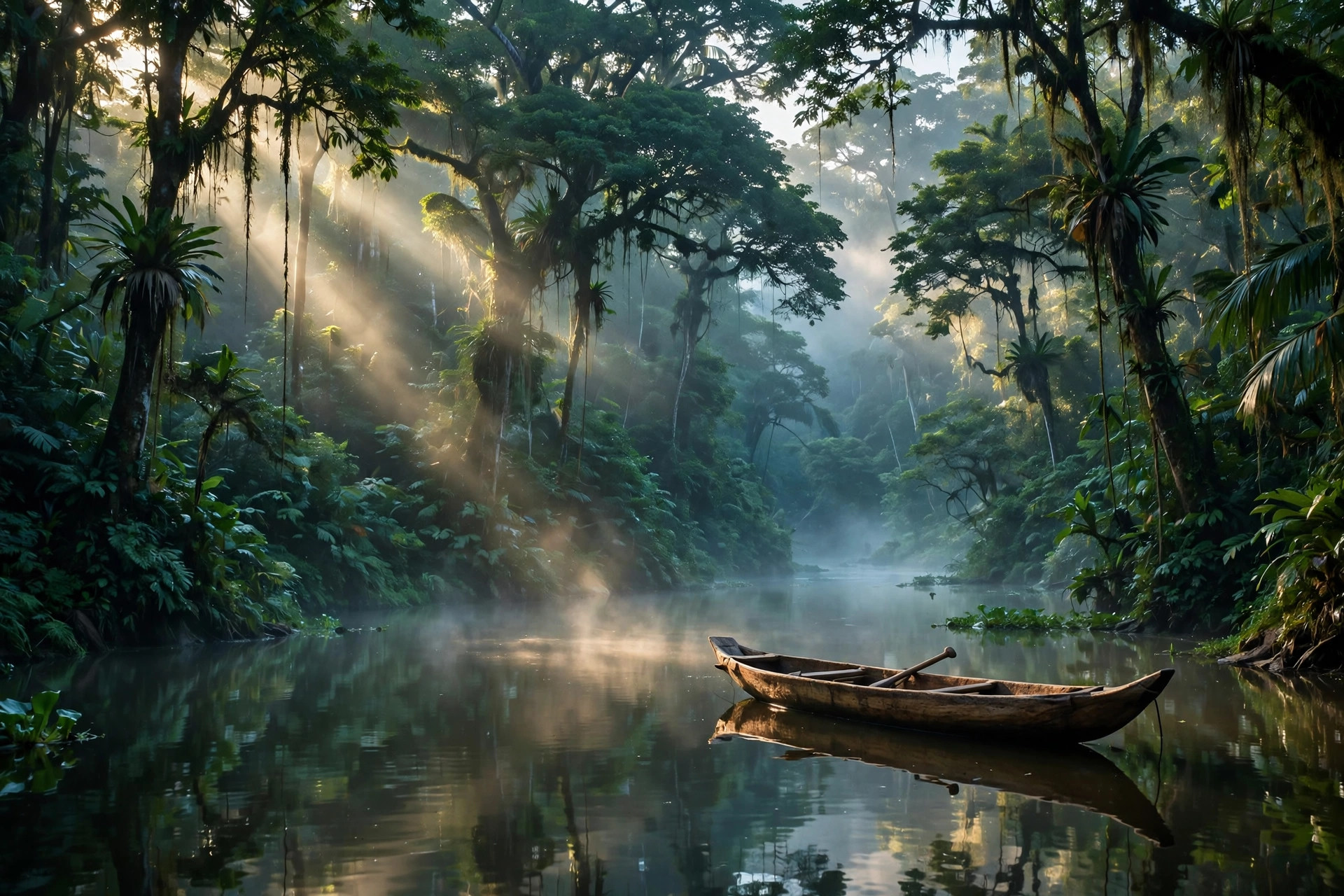
North of Yasuní, Cuyabeno is the flooded-forest Amazon of imagination: a maze of blackwater lagoons and channels best explored by dugout canoe. It is slightly more accessible and often slightly cheaper than Yasuní, with superb birding (hoatzins — the punk-rock "stink birds" — are a highlight), monkeys by the dozen, and excellent night safaris for caiman. Access via Lago Agrio, then a 2-hour bus plus a 2–3 hour canoe ride. This is the classic 4–5 day lodge circuit.
Tena and the upper Amazon
Tena, the gateway to the upper Napo, is the easy-entry Amazon: closer to Quito (about 4–5 hours by bus through the Andes, or a short flight), with lodges along the Napo and Misahuallí rivers, whitewater rafting and kayaking, and the Jumandy caverns. It is less pristine than Yasuní or Cuyabeno but far more accessible — a good 2–3 day Amazon taste if your itinerary is tight. The Misahuallí area is famous for its beach monkeys and the butterflies at the local mariposarios.
How to do it right
- Go with a lodge, not alone. Independent travel in the deep Amazon is not a thing here; park rules require licensed guides, and the lodges have the boats, towers, and naturalists that make the forest legible.
- Give it 4–5 days. Two-night trips spend most of their time in transit. Four nights lets the forest show you its range.
- Pack for wet. It rains year-round; "drier" (roughly December–March) just means less. Quick-dry everything, waterproof bags for electronics, rubber boots (good lodges provide them).
- Vaccines and prophylaxis. Yellow fever vaccination is recommended for the Amazon basin; talk to a travel-medicine doctor 6–8 weeks before departure about malaria prophylaxis and routine boosters. This is not optional homework — do it early.
- The forest is loudest at the edges of the day. Dawn birding and night walks are where the Amazon earns its reputation. Sleep in the middle of the day like everything else does.
Tours we're vetting for The Amazon
We're lining up launch partners for guided tours in this region — operators we'd book ourselves. When we recommend one, we'll tell you exactly why, and any commission will be disclosed here.
No paid placements yet — when affiliate links go live here, they will be disclosed.
What it costs (shape, not prices)
Lodge-based Amazon trips are the priciest mainland travel in Ecuador after the Galápagos — you are paying for boats, licensed naturalist guides, and full board in a remote location. Budget lodges near Tena run far less than deep-jungle lodges in Yasuní. Prices move with season and fuel; get current quotes from 2–3 lodges before committing, and be wary of prices that seem too good — guide quality is the whole trip. check before you go
Where to stay in The Amazon
Our vetted stay partners for this region are coming with the launch. Until then, every hotel and lodge mention in this guide is editorial — nobody paid to be here.
No paid placements yet — when affiliate links go live here, they will be disclosed.