Where the animals never learned to fear you
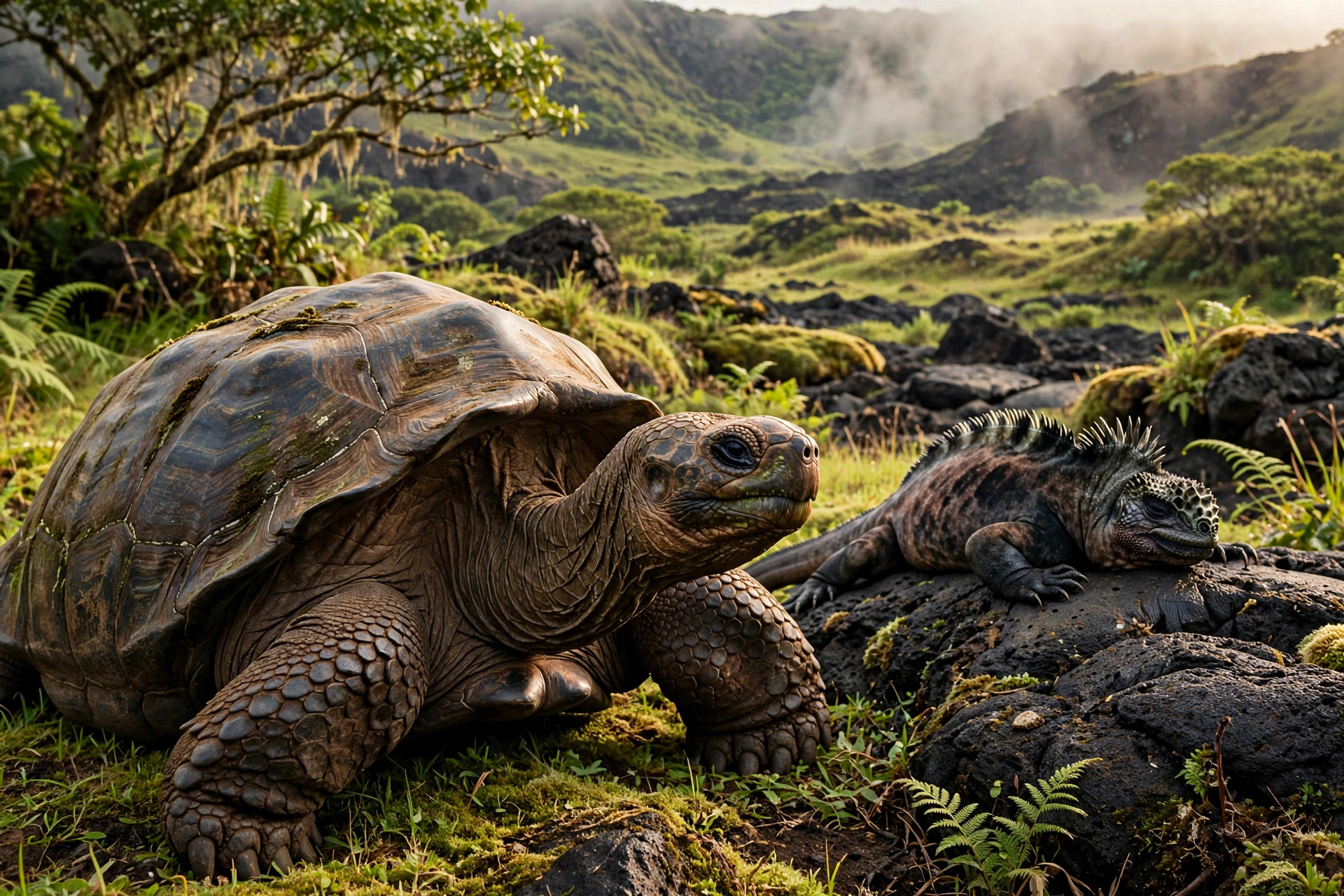
The Galápagos is the rare destination that exceeds its reputation. The animals genuinely do not fear people: blue-footed boobies dance their mating dance a meter from the trail, marine iguanas sneeze salt on the lava rocks beside you, and giant tortoises — some over a century old — amble across the highlands of Santa Cruz and Isabela like they own the place, because they do.
The archipelago sits on the equator, 900 km off the coast. It is a province of Ecuador and a national park, and visiting is a privilege wrapped in rules. Understand the rules, pick the right way to see it, and it will be the best wildlife trip of your life.
Where in Ecuador
Illustrated treasure map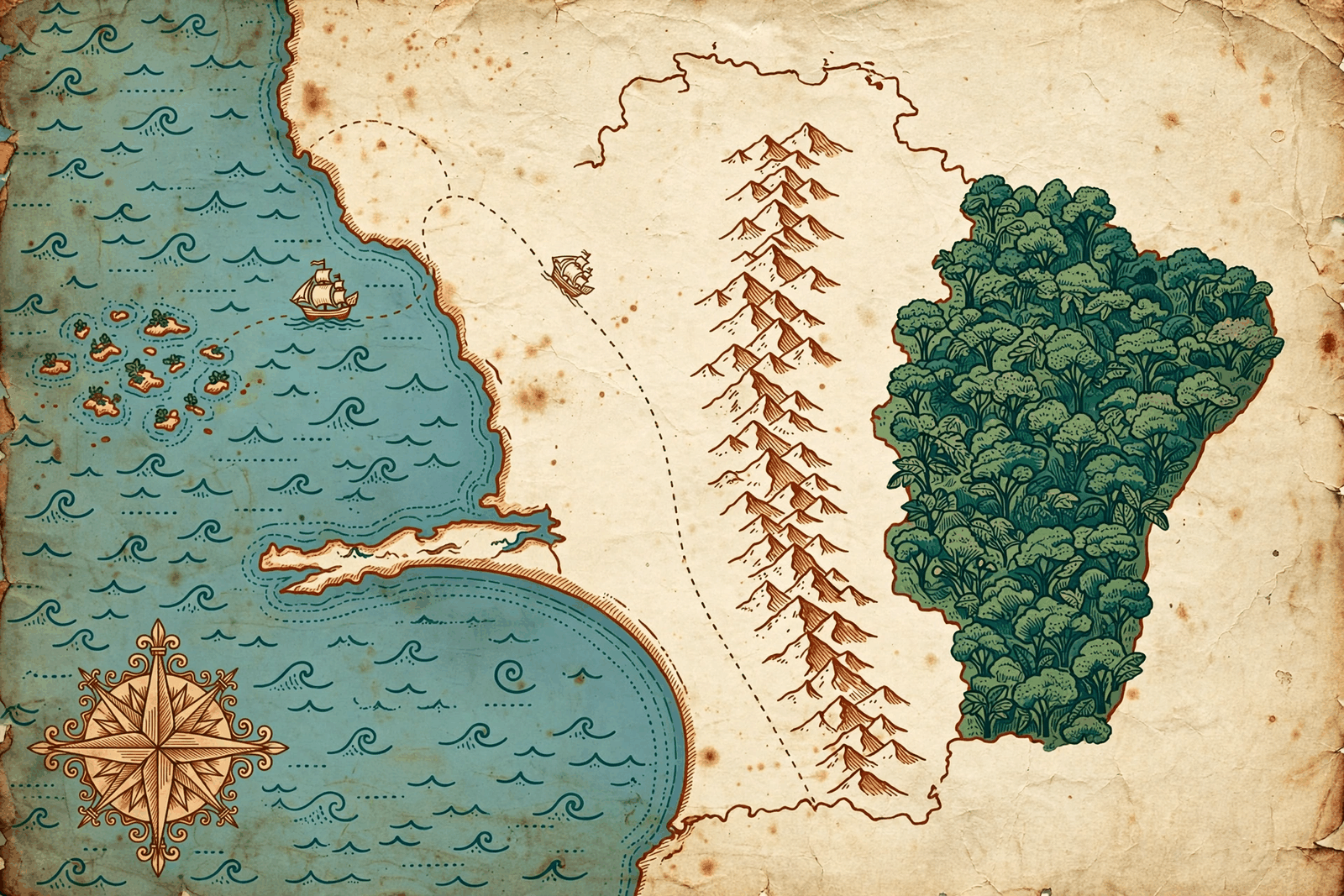 Otavalo
Quito
Latacunga
Baños
Riobamba
Cuenca
Manta
Puerto López
Montañita
Salinas
Guayaquil
Lago Agrio
Coca
Tena
Galápagos
Otavalo
Quito
Latacunga
Baños
Riobamba
Cuenca
Manta
Puerto López
Montañita
Salinas
Guayaquil
Lago Agrio
Coca
Tena
Galápagos
Illustrated treasure map. Not for navigation. Open in Google Maps ↗
Cruise vs. land-based: the big decision
This is the choice that shapes your whole trip. Neither is wrong; they are different trips.
| Small-ship cruise | Land-based (island hopping) | |
|---|---|---|
| How it works | 4–8 day loop, 2 islands/day, sleep on board | Base in towns, day-trip by boat |
| Reach | Remote islands (Genovesa, Española, Fernandina) | Santa Cruz, San Cristóbal, Isabela + nearby sites |
| Wildlife density | Highest — more sites, dawn landings | Excellent, slightly less range |
| Cost | $$$–$$$$ | $$–$$$ |
| Best for | Once-in-a-lifetime, photographers, remote islands | Flexibility, budget control, slower pace |
Book cruises 6+ months ahead for the dry-season months. Land-based trips can be assembled with far less lead time, and many travelers report better value booking day tours in cash on the islands — though that trades certainty for savings. check before you go
Galápagos cruises we are vetting
The cruise you pick shapes the whole trip — itinerary, guide quality, boat size. We are vetting operators we would book ourselves, and we will publish the shortlist with exactly why each made it. Get the alert when it drops.
No paid placements yet — when affiliate links go live here, they will be disclosed.
The islands, in brief
Santa Cruz — the hub. Puerto Ayora has the Charles Darwin Research Station, giant tortoise highlands, Tortuga Bay (a spectacular white-sand beach, free), and Las Grietas (a swimming crevice). Most land-based trips start here.
San Cristóbal — the provincial capital. Kicker Rock (León Dormido) is the signature snorkel/dive day trip: sea lions, rays, reef sharks circling a split volcanic tuff cone. The Interpretation Center and frigatebird hill at Cerro Tijeretas are free and excellent.
Isabela — the largest island, shaped like a seahorse. Los Túneles (lava arches, snorkeling with turtles and white-tip sharks), the Sierra Negra volcano hike (one of the world's largest calderas), and the flamingo lagoon at Villamil.
Española — waved albatross colony (the only place in the world they breed), marine iguanas in Christmas colors, blowhole at Punta Suárez. Cruise-only for most visitors.
Genovesa — "Bird Island." Red-footed boobies, frigatebirds, short-eared owls hunting storm petrels at dusk. Remote; cruise-only.
Bartolomé — the postcard view: Pinnacle Rock over twin bays. Penguins (yes, penguins, on the equator) at the beach below.
Floreana — flamingo lagoon, Post Office Bay (the 18th-century barrel post, still working), and some of the best snorkeling at Devil's Crown.
North Seymour — blue-footed booby and frigatebird colonies an hour from Baltra. The classic first-or-last-day stop.
Wildlife calendar
There is no bad month, but the islands shift character:
| Season | Sea / weather | Wildlife highlights |
|---|---|---|
| Jan–Mar (warm, wet) | Warmest water, occasional rain, lush green | Marine iguanas nesting (Jan), sea lion pups, calm seas |
| Apr–May (transition) | Warm, clearing | Waved albatross arrive on Española (Apr), blue-footed booby mating |
| Jun–Aug (cool, dry / garúa) | Cooler water, misty highlands | Albatross nesting peak, penguins active, whale sightings possible |
| Sep–Dec (cool → warming) | Coolest Sep–Nov, warming Dec | Fur seals, sea lion mating (Aug–Sep), giant tortoise hatchlings emerging |
Fees and paperwork Verified Oct 2026
Budget for these before anything else — they are mandatory and non-negotiable:
- Galápagos National Park entry: $200 for foreign visitors 12 and over (under-12s $100; lower rates for Ecuadorian nationals and CAN/Mercosur visitors). Paid on arrival at Baltra or San Cristóbal airport.
- INGALA transit control card (TCT): $20, purchased online before you fly. Keep the PDF on your phone and a printed copy.
- Biosecurity declaration within 48 hours of your flight — screenshot the QR code; you show it before checking luggage.
- You will be asked for return tickets out of the Galápagos (not just Ecuador) before boarding. Have them ready.
Bring cash in small denominations from the mainland — ATMs on the islands are limited and famously unreliable, especially on Isabela.
The rules (they are serious)
- Stay on marked trails. Stay 2 meters from all animals. Never feed or touch wildlife.
- No drones. No smoking in the park. Take nothing, leave nothing.
- All park site visits require a licensed naturalist guide — this is why cruises and day tours include one.
- These rules are why the wildlife is the way it is. Follow them like the trip depends on it, because it does.
Land-based stays we are vetting
Going land-based? The hotel matters as much as the day trips. We are vetting stays in Puerto Ayora, Puerto Baquerizo Moreno, and Puerto Villamil — bookable soon, with every commission disclosed.
No paid placements yet — when affiliate links go live here, they will be disclosed.
When to go
Year-round. Pick by what you want: warm water and calm seas (Jan–Apr), albatross (Apr–Dec on Española), penguins and cooler diving (Jun–Nov), fewer visitors (May, Sep–Nov shoulder). Diving is best Jun–Nov when the water is cooler and richer.
Getting there
Fly from Quito (UIO) or Guayaquil (GYE) to Baltra (GPS) or San Cristóbal (SCY) — about 3.5 hours including the Guayaquil stop most flights make. There are no international flights to the islands. From Baltra airport, it is a bus + short ferry + bus/taxi ride to Puerto Ayora (about an hour total).
Make This Trip Real: Galápagos Islands
Our paid trip guides pair the reel with the reality — dated itineraries, real costs, booking links. The Ecuador editions are in production now.
No paid placements yet — when affiliate links go live here, they will be disclosed.