The highest capital in the world
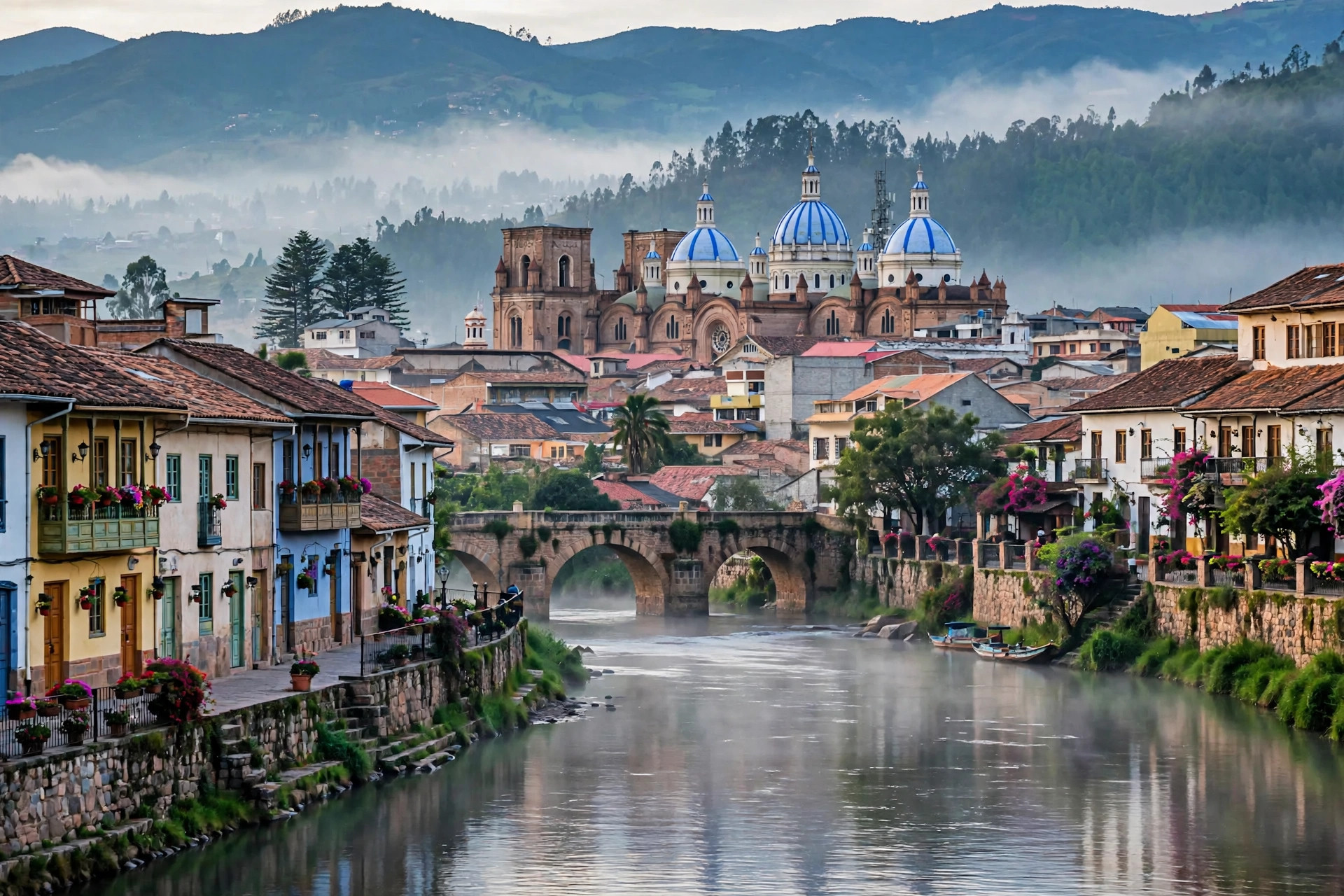
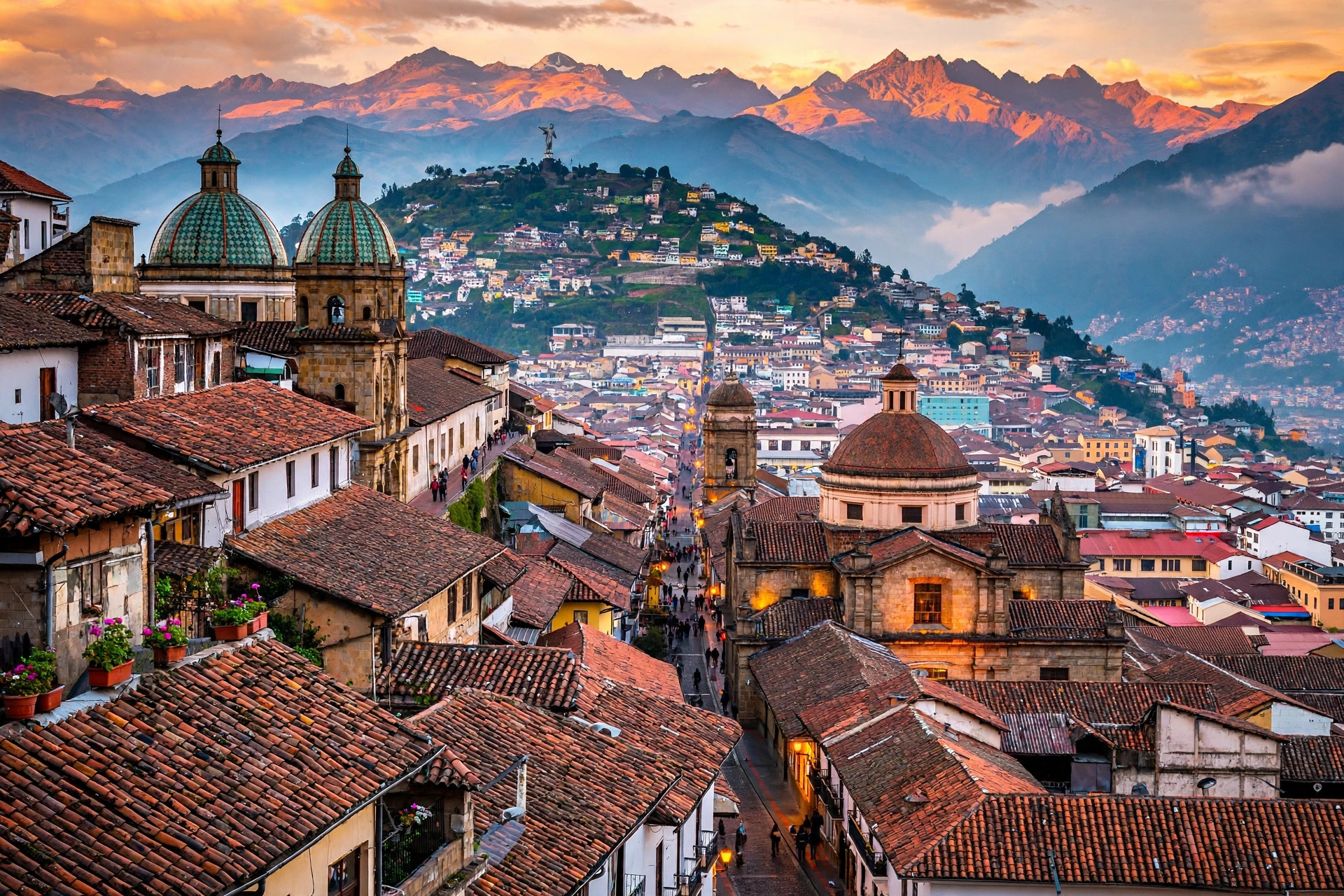
Quito sits at 2,850 meters in a narrow Andean valley, with the Pichincha volcano rising directly behind it. It was one of the first two UNESCO World Heritage cities ever listed (1978, alongside Kraków), and its old town is the largest and best-preserved colonial center in the Americas — 320 hectares of churches, plazas, and mansions that survived earthquakes, eruptions, and modernity.
Most travelers land here. Smart ones stay a while.
Where in Ecuador
Illustrated treasure map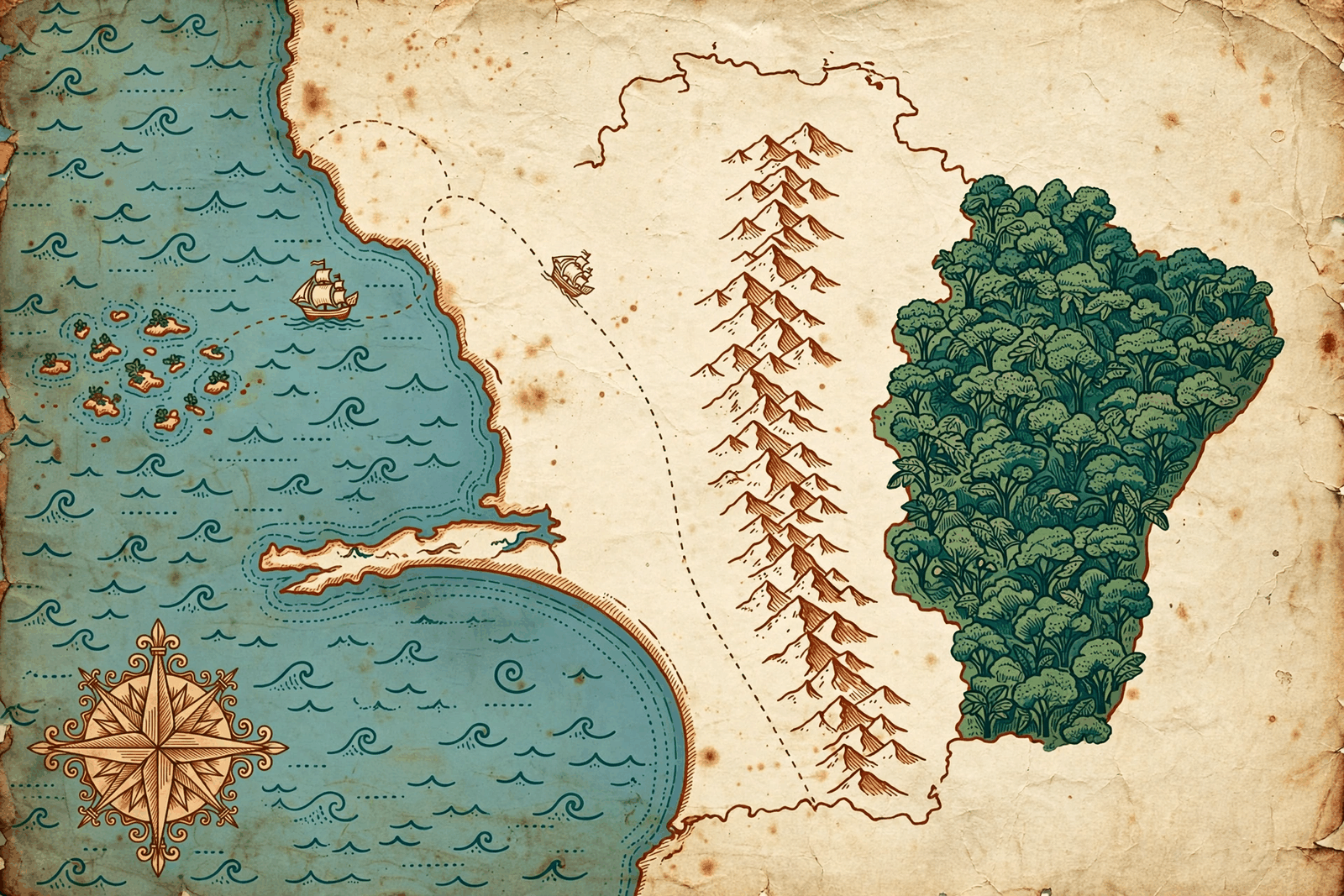 Otavalo
Quito
Latacunga
Baños
Riobamba
Cuenca
Manta
Puerto López
Montañita
Salinas
Guayaquil
Lago Agrio
Coca
Tena
Galápagos
Otavalo
Quito
Latacunga
Baños
Riobamba
Cuenca
Manta
Puerto López
Montañita
Salinas
Guayaquil
Lago Agrio
Coca
Tena
Galápagos
Illustrated treasure map. Not for navigation. Open in Google Maps ↗
The old town (Quito colonial)
Start at Plaza Grande (Plaza de la Independencia): the cathedral, the presidential palace (Carondolet), and the archbishop's palace on four sides. From there, everything fans out on foot.
- La Compañía de Jesús — the church that bankrupts superlatives. Seven tons of gold leaf on the interior, carved over 160 years. If you see one church in South America, make it this one.
- San Francisco — the oldest church in Quito (completed in the 1600s), with a sweeping stone plaza and a museum of colonial art in the convent.
- La Ronda — the old town's most romantic street: cobblestones, balconies, artisan workshops, and music spilling from doorways at night.
- Santo Domingo and San Agustín — quieter plazas, each with a church and a story; the walk between them is the old town at its best.
- El Panecillo — the hill with the winged Virgen de Quito statue, visible from everywhere. Go up for the panorama (daylight hours, and go with the standard precautions for viewpoints).
Eat in the old town at least once: the Mercado Central for hornado and locro, or one of the courtyard restaurants off La Ronda.
The new town and the middle
La Mariscal ("Gringolandia" to its friends) is the hotel and nightlife zone — useful, not beautiful. More interesting: La Floresta, the bohemian quarter of galleries, cafés, and street art, and Guápulo, the cliffside artists' village with a famous winding road and a 17th-century church.
Mitad del Mundo — the equatorial monument, 26 km north. The real equator (measured by GPS) runs about 240 meters from the monument, through the Intiñan museum next door — visit both, straddle the line, and enjoy the water-drain demonstrations (take the physics with a grain of salt; enjoy the theater).
TelefériQo — the cable car from 3,117 m to 4,100 m on the flank of Pichincha. On a clear morning the view runs from Cotopaxi to Cayambe; from the top station, trails climb toward Rucu Pichincha's summit. Go early — the clouds own the afternoons. At 4,100 m you will feel every step; that is the point.
Day trips from Quito
| Trip | Time | Why |
|---|---|---|
| Otavalo market | 1.5 hr each way | South America's most famous indigenous market; Saturday is peak |
| Mindo cloud forest | 2 hr each way | Hummingbirds by the dozen, zip-lines, chocolate tours, 400+ bird species |
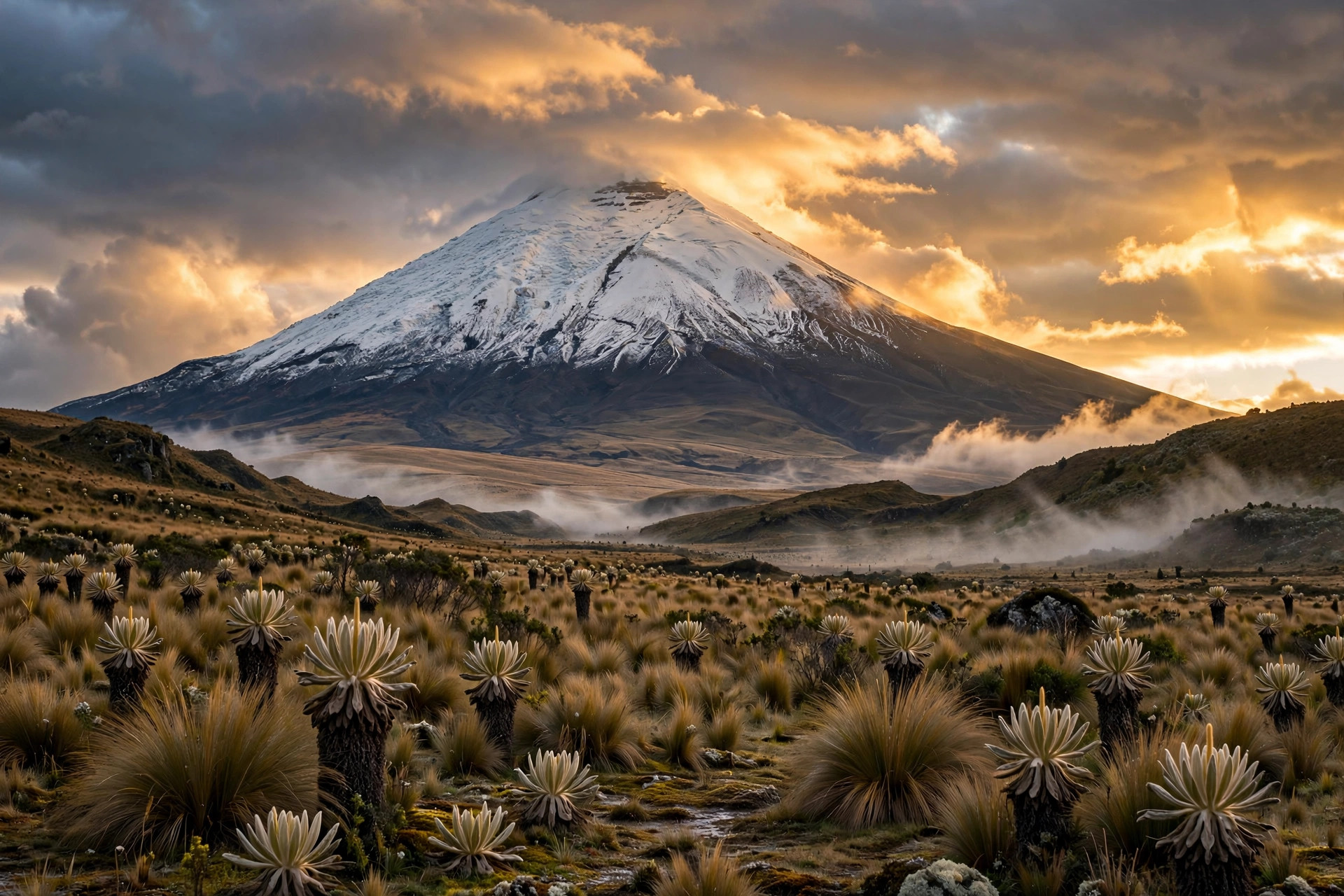
| Cotopaxi National Park | 1.5 hr each way | The perfect cone, the refuge at 4,864 m, condors |
| Papallacta hot springs | 1.5 hr each way | Thermal pools at 3,300 m on the road to the Amazon; hummingbirds included |
| Quilotoa | 3–4 hr each way | Long day, but the crater lake justifies it |
Tours we're vetting for Quito
We're lining up launch partners for guided tours in this region — operators we'd book ourselves. When we recommend one, we'll tell you exactly why, and any commission will be disclosed here.
No paid placements yet — when affiliate links go live here, they will be disclosed.
Where to stay
- Old town — for atmosphere: colonial mansions turned boutique hotels, steps from the plazas. The old town quiets down early; some travelers find it too quiet at night.
- La Floresta / La Mariscal — for restaurants, nightlife, and tour pickups. Most mid-range hotels cluster here.
- Guápulo — for character: small guesthouses on the cliffside, with views and artists for neighbors.
Book the first two nights near the airport only if you land late — otherwise head straight into the city and start acclimatizing.
Altitude, again
Quito is at 2,850 m and you will feel it on day one: stairs wind you, wine hits harder, sleep comes strangely. Take the first 48 hours easy, drink more water than feels necessary, and save TelefériQo and Cotopaxi for day three or later. See the Andes for the full altitude briefing.
Deciding between the capital and the south? Read Quito vs. Cuenca — the head-to-head.
Where to stay in Quito
Our vetted stay partners for this region are coming with the launch. Until then, every hotel and lodge mention in this guide is editorial — nobody paid to be here.
No paid placements yet — when affiliate links go live here, they will be disclosed.