Essentials
The practical layer: money, documents, safety, health, and what to pack. Dated where it matters, honest where it counts.
Where in Ecuador
Illustrated treasure map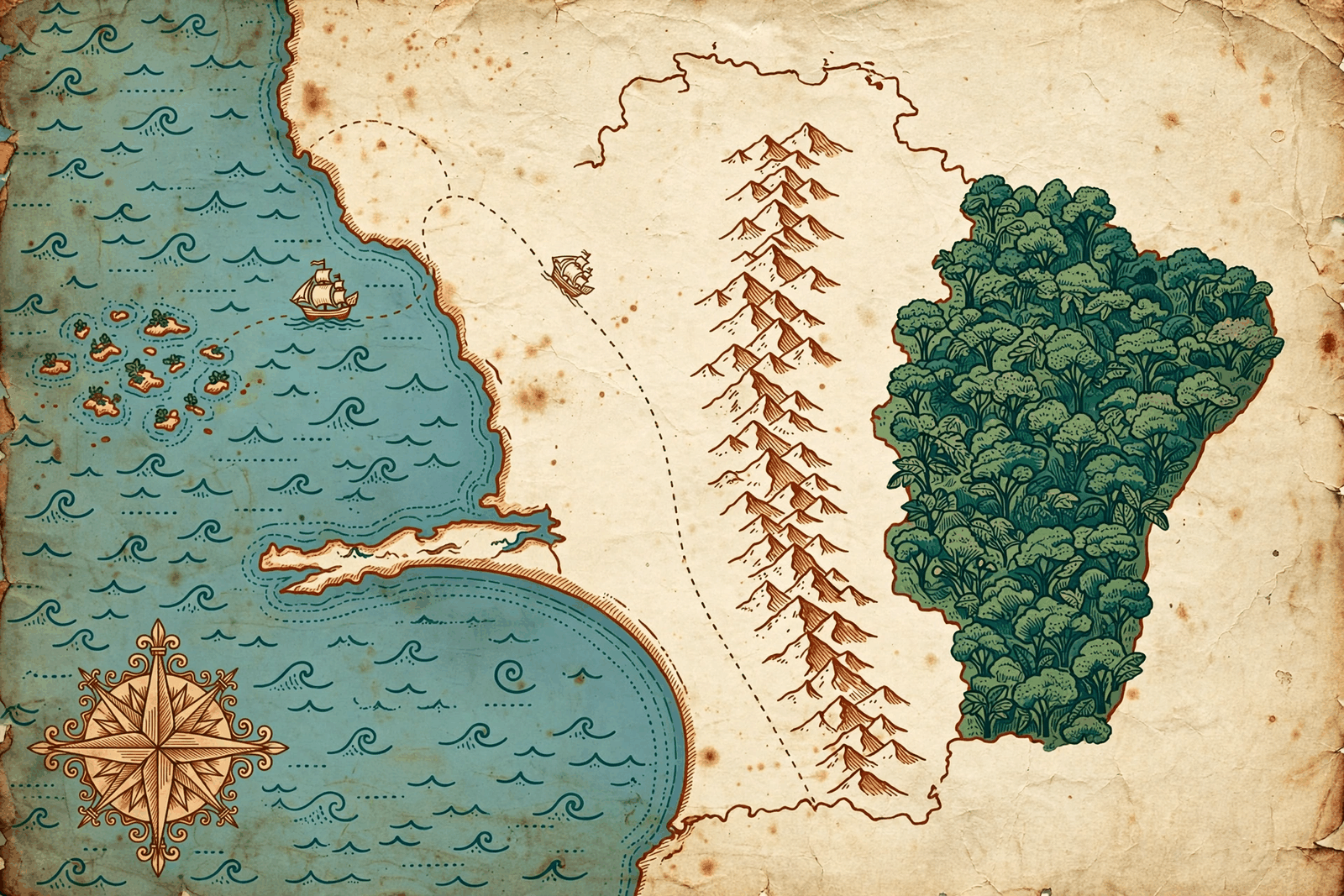 Otavalo
Quito
Latacunga
Baños
Riobamba
Cuenca
Manta
Puerto López
Montañita
Salinas
Guayaquil
Lago Agrio
Coca
Tena
Galápagos
Otavalo
Quito
Latacunga
Baños
Riobamba
Cuenca
Manta
Puerto López
Montañita
Salinas
Guayaquil
Lago Agrio
Coca
Tena
Galápagos
Illustrated treasure map. Not for navigation. Open in Google Maps ↗
Money
Ecuador uses the US dollar — it dollarized in 2000, and the greenback is the everyday currency. For American travelers this removes an entire category of trip friction; for everyone else it removes exchange-rate roulette.
- Cash is king outside the big cities. Carry small bills ($1s, $5s, $10s) — $50s and $100s are hard to break and sometimes refused.
- ATMs (cajeros) are widespread in cities; use bank-affiliated machines and withdraw in daylight.
- Cards work in hotels, restaurants, and tour operators in Quito, Guayaquil, and Cuenca; expect cash-only in markets, small towns, and the Galápagos.
- Tipping: 10% service is often included in restaurant bills (it will say so); round up or add a little extra for good service. Tip guides $5–10/day per person on tours.
Documents
Most nationalities — including the US, Canada, UK, and EU — get 90 days visa-free on arrival. Your passport should be valid for at least 6 months beyond your travel dates, and you may be asked for proof of onward travel.
The Galápagos is a separate paperwork layer: the $20 transit card bought online before you fly, the $200 park entry on arrival, and the biosecurity declaration. Full details on the Galápagos page. Verified Oct 2026
Safety
The honest picture, as of the latest US State Department update (August 2026): Ecuador overall sits at Level 2 — exercise increased caution, citing crime, terrorism, civil unrest, and kidnapping risk. Within that, specific zones carry higher designations — parts of Guayaquil and several coastal and border areas are Level 3 ("reconsider travel") or Level 4 ("do not travel"). The Andean highlands, Quito's tourist zones, Cuenca, and the Galápagos operate normally and receive steady visitor traffic. Verified Aug 2026
What this means in practice:
- Check the current advisory at travel.state.gov before you book and again before you fly. It moves.
- The risk is geographic, not uniform. A Level 2 country with Level 4 zones means: go, but choose where, and don't improvise into the flagged zones.
- Standard South America precautions apply everywhere: don't flash valuables, use ride-hailing or hotel taxis at night, keep to main routes after dark, and ask your hotel about the current local picture when you arrive.
- Emergency number: 911. Tourist police (Policía de Turismo) operate in the main visitor areas.
Health
- Altitude is the most common health issue travelers face: Quito at 2,850 m, day trips past 4,000 m. Acclimatize 48 hours, hydrate, go easy on alcohol, and know the symptoms that mean descend. Full briefing under the Andes.
- Vaccines: routine boosters plus yellow fever for the Amazon basin and typhoid/hepatitis A as your doctor advises. Start 6–8 weeks before departure.
- Water: don't drink the tap. Bottled or filtered water everywhere; most hotels provide it.
- Sun: the equatorial sun at altitude is brutal — high-SPF sunscreen, hat, and sunglasses are non-negotiable, even on overcast days.
- Travel insurance with medical evacuation is strongly recommended, especially if the Galápagos or Amazon are on your itinerary.
Packing
Ecuador is four climates in one bag:
- Highlands: layers. Fleece, rain shell, warm hat — Quito evenings are cool year-round and mountain day trips are cold.
- Amazon: quick-dry everything, waterproof dry bags, headlamp, binoculars. Rubber boots usually provided by lodges.
- Galápagos: reef-safe sunscreen, rash guard, water shoes, seasickness remedy, small-denomination cash.
- Coast: the obvious — plus a light rain layer in the wet months.
- Everywhere: daypack, reusable water bottle, Spanish phrasebook app (English is limited outside tourism), and photocopies of your passport kept separate from the original.
Connectivity
- SIM cards from Claro, Movistar, or CNT are cheap and easy at the airport or any phone shop; bring an unlocked phone. Coverage is good in cities and towns, spotty in the deep Amazon and parts of the Galápagos (many Galápagos hotels now run Starlink).
- Wi-Fi is standard in hotels and cafés in the cities; don't count on it in lodges or on boats.
- Language: Spanish. Tourism-facing staff in the main circuit speak English; a little Spanish transforms the trip. Download the offline Spanish pack in your translate app before you fly.
Make This Trip Real: Essentials
Our paid trip guides pair the reel with the reality — dated itineraries, real costs, booking links. The Ecuador editions are in production now.
No paid placements yet — when affiliate links go live here, they will be disclosed.