Surf by day, bonfires by night
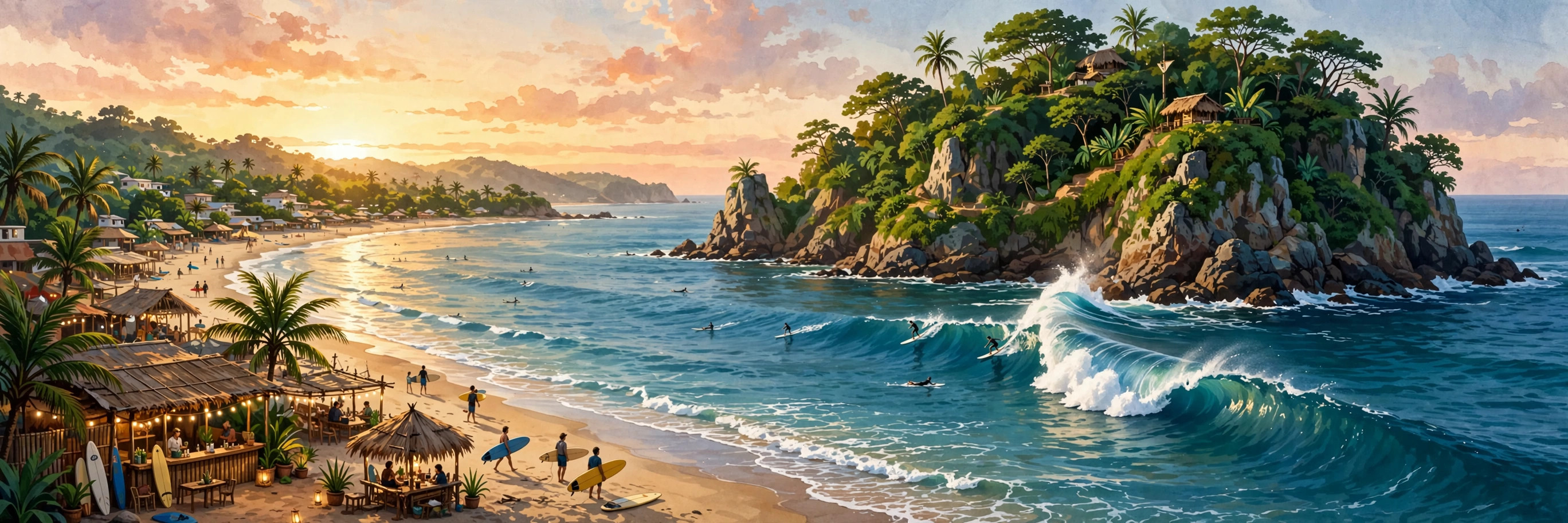
Montañita is Ecuador's most famous beach town, and it makes no effort to be anything else. By day it is surf lessons, hammocks, and smoothie bowls on a long Pacific beach. By night, especially Thursday through Saturday, the beach itself becomes the party — bonfires, clubs spilling onto the sand, dancing until 3 or 4 in the morning.
It is two towns in one, and which one you get depends on when you arrive and where you sleep. Surfers and backpackers have loved it for decades. Light sleepers, luxury travelers, and anyone expecting polished infrastructure should read the honest notes below before booking.
Where in Ecuador
Illustrated treasure map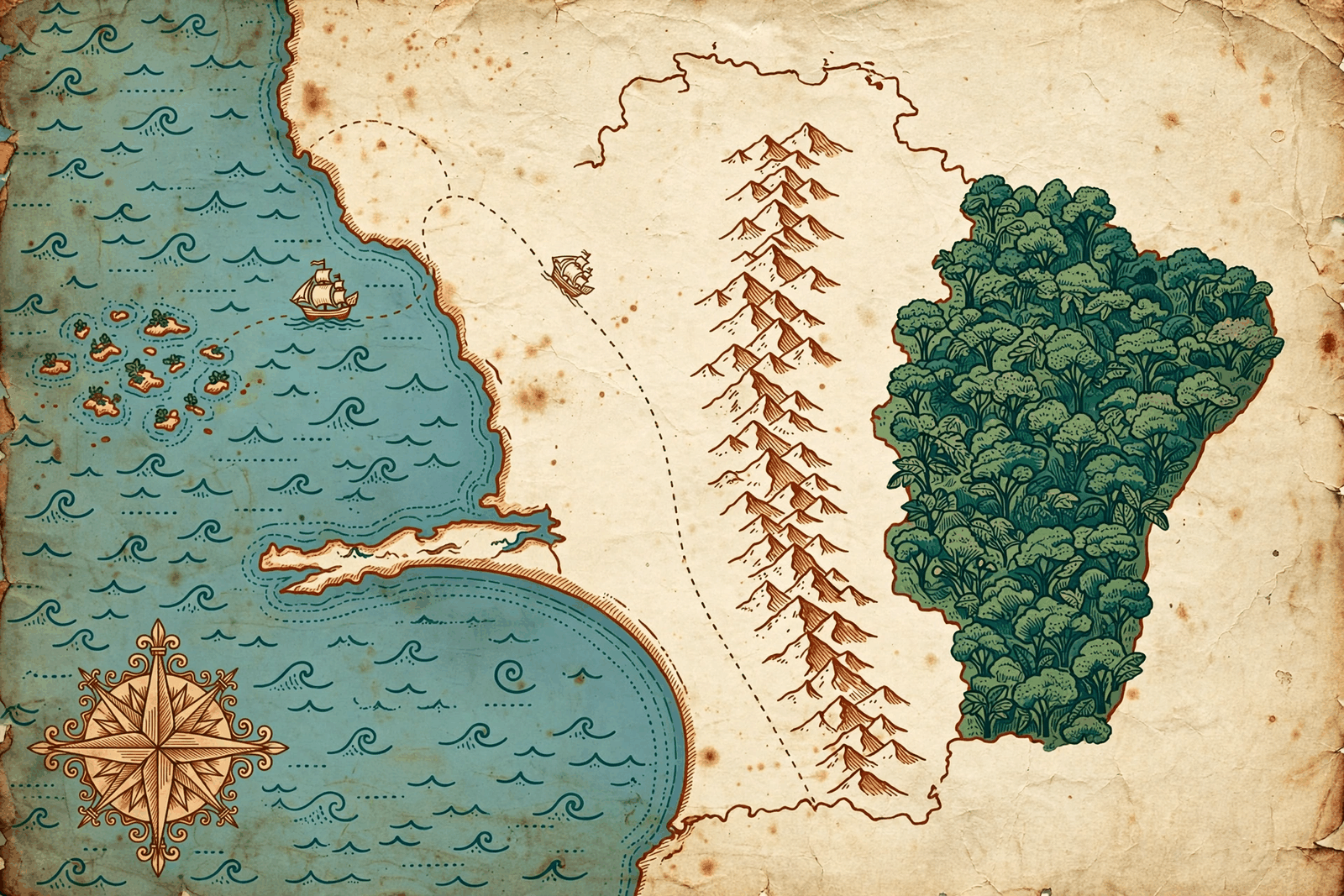 Otavalo
Quito
Latacunga
Baños
Riobamba
Cuenca
Manta
Puerto López
Montañita
Salinas
Guayaquil
Lago Agrio
Coca
Tena
Galápagos
Otavalo
Quito
Latacunga
Baños
Riobamba
Cuenca
Manta
Puerto López
Montañita
Salinas
Guayaquil
Lago Agrio
Coca
Tena
Galápagos
Illustrated treasure map. Not for navigation. Open in Google Maps ↗
The surf
Montañita's main break is a beach break with hollow peaks that works best at mid-to-high tide — punchy and fun for shortboarders. The rocky point at the north end, La Punta, gives longer, faster rights and is the town's most famous and most crowded wave. Prime season is December–April, when northwest groundswells arrive and the water sits at a boardshorts-warm 22–28°C. Verified Oct 2026
June through October brings the cold Humboldt current: greyer skies, windier afternoons, cooler water (pack a springsuit), and less consistent south swells. Beginners should start on the beach break or head 10 minutes north to Olón, where the surf is gentler and the lineup calmer. Save La Punta and the reef points for when your pop-up is solid. Surf schools and board rentals line the beach and are cheap — you can sort everything the morning you arrive. check before you go
Even if you don't surf, walk out to La Punta at sunset. The rocky bluff at the north end of the beach is the town's don't-miss viewpoint, about ten minutes along the sand from the center.
Nightlife: the honest version
Each night a different club takes the spotlight — Lost Beach Club is famous for Mondays, Caña Grill for Saturdays, Poco Loco for Fridays and cheap open-bar deals — but lineups rotate constantly, so ask around when you arrive rather than trusting a blog post. Saturdays are the wildest; Tuesdays and Sundays are relatively dead. The beach parties have been compared to a miniature Full Moon Party, and the comparison is not entirely unfair.
The practical notes: watch your drinks in the party zone, don't walk the beach alone late at night, and if you want to sleep, book accommodation a few streets back from the main strip or in Olón.
Day trips up the coast
Montañita sits on the Ruta del Spondylus, the coastal highway running north, and the best of the region is an easy hop away by taxi, colectivo, or local bus:
- Olón (~5 km, ~10 min north): the quieter sibling — same ocean, calmer scene, gentler surf, family sunset walks. The easy escape when Montañita gets loud.
- Ayampe (~15–18 km north): a stripped-down surf and yoga village. Occasional barrels on strong north swells, surf schools like Otra Ola and The Surf Office, and small lodges such as Finca Punta Ayampe and Spondylus Lodge.
- Puerto López (~50 km, ~1 hr north): gateway to Machalilla National Park and the jumping-off point for Isla de la Plata — the "poor man's Galápagos." Day tours run about six hours, boats leave around 9:30 AM, with blue-footed boobies, frigatebirds, and snorkeling. Group rates are reported around $40–50 per person — confirm locally before you go. check before you go
- Los Frailes (inside the national park, ~20 min north of Puerto López): repeatedly called Ecuador's most beautiful beach — a pristine crescent backed by dry tropical forest, with viewpoint hikes.
- Agua Blanca (also inside the park): an indigenous community with an archaeological museum, sulfur lagoon, and therapeutic mud baths. Bring cash for the entrance fee. check before you go
Whales vs. surf: pick your season
Humpback whales pass the coast June–September (sometimes into October), and Isla de la Plata tours double as whale-watching trips in season. But this is the tradeoff the brochures skip: surf season and whale season barely overlap. December–April gives you the warm water and best waves; June–September gives you whales, greyer skies, and weaker surf. Choose deliberately. Verified Oct 2026
Where to eat
The food scene is seafood-first beach shacks plus the backpacker circuit's greatest hits: Peruvian, Japanese-Thai fusion, Italian and French expat spots, pancake cafés, and cheap street food. Beach-town restaurants turn over fast, so treat any "open now" status as indicative — but these are the names that keep showing up:
- Tiki Limbo — the best-known sunset spot in town; bar plus seafood, and reportedly the priciest table in Montañita. Worth it for one golden-hour dinner. check before you go
- Jajá en Balsa — brew pub energy, repeatedly called the best food in town by reviewers; the tacos get the most love. check before you go
- Tambo Sabores Peruanos — Peruvian with Thai touches (the green curry with shrimp is the order), and giant hummingbirds visit the tables. check before you go
- Shankha Sushi n' Thai — Japanese-Thai on the sand; at high tide the water comes right up to the restaurant. check before you go
- Dharma Beach — the sunset-dinner fallback on the sand. check before you go
- Papillon — French-Latin bistro; burgers and a shrimp-avocado starter that regulars swear by. check before you go
- Carmita's Pancake House — breakfast and healthy café fare; the vegan ceviche gets called the best vegan food in town. check before you go
- Rústica Montañita — right on the beach, and reviewers insist it is the best coffee in town. check before you go
- Buena Onda Café — American-style café breakfasts at backpacker prices. check before you go
For a quieter dinner, hop to Olón (~5 km north): Spondylus Restaurant and Rasimar Restaurante are both well-reviewed for seafood and Mediterranean-leaning cooking. check before you go
Relaxation and wellness
Surf towns run on sore shoulders, and Montañita has the recovery infrastructure to match:
- Hotel Kundalini has the town's most complete wellness setup — spa, sauna, hammam, massage, and yoga classes. Non-guests can often book treatments; ask at reception.
- Yoga retreats cluster around Montañita and La Punta — bookable multi-day programs (for example at Casa del Sol) bundle daily yoga with massage and Reiki. The town also has drop-in yoga classes aimed at surfers.
- Bromelia Retreat & Healing Center, about 8 km out toward Manglaralto, offers a yoga room and full-body massage in a quieter setting.
- Beach massage is ubiquitous — informal offers up and down the sand. Fine for a $15 rubdown; don't expect a spa menu.
The deepest quiet, though, is north of town: Olón for calm beach walks, Ayampe for the most stripped-down stillness, and the Samai Lodge area near Olón for wellness-positioned stays.
Where to stay — the honest luxury ceiling
Let's be direct: Montañita has no true luxury hotels. A Guayaquil local quoted in a 2026 visitor guide described the town as "almost totally natural, without luxurious hotels" — and that's accurate. The best in-town options top out at comfortable 3–4 star and boutique-ecolodge level. If you need five-star polish, stay north and visit for the day.
Best in town (all verified on 2026 listings; prices move — confirm at booking):
- Hotel Kundalini — the town's flagship: 4-star, private beach area, restaurant, spa and yoga. The closest thing to upscale in Montañita. check before you go
- Dharma Beach — 3-star, beachfront, pool, restaurant and bar. Solid mid-range base. check before you go
- Nativa Bambu Ecolodge — 3-star ecolodge with pool; the priciest in-town option found, and the most design-forward. check before you go
- ME Hotel & Villas (Montañita Estates) — 4-star, near the center, frequently booked. check before you go
- Balsa Surf Camp — 3-star surf camp; well-rated if the trip is about the waves. check before you go
- Selina Montañita — the digital-nomad chain option; check current reviews before booking (an older review flagged pool maintenance). check before you go
Hostels (dorms and cheap privates roughly $8–20/night): Esperanto Hostel, Slumber Party Montañita, UFO Rooms, Hostal Yaku, Munay Backpacker. check before you go
Actually upscale — but not in Montañita (say it plainly):
- Olón area: Samai Lodge Holistic Living (wellness-positioned, the best quiet-luxury-adjacent bet) and, for the real thing, a staffed luxury beachfront villa in Olón's gated community — six bedrooms, pool with in-pool bar, private cook and driver included, bookable via the major platforms. This is the actual luxury product on this coast. check before you go
- Ayampe: Finca Punta Ayampe, Spondylus Lodge, La Buena Vida — small, quiet, upscale-casual. check before you go
- Puerto López: Victor Hugo Hotel (ocean views) and Cerro Lobo (4-star, highly rated) if you're basing for Isla de la Plata. check before you go
Getting there and around
Fly into Guayaquil (GYE). Direct buses run Guayaquil → Montañita roughly every 30 minutes via Cooperativa Libertad Peninsular, around $6–8. Budget about 3 hours door-to-door — published times vary wildly (one aggregator claims 1h20m, which looks optimistic; the long-standing guidebook figure is 2.5–3 hours). Taxis from the Guayaquil terminal run roughly $95–120; private shuttles run on demand. Verified Oct 2026 check before you go
The town itself is walkable. Taxis, colectivos, and local buses run the coastal highway to Olón, Ayampe, and Puerto López.
Safety — read this before you book
Ecuador overall is U.S. State Department Level 2: Exercise Increased Caution. But Montañita sits in Santa Elena province, which the current advisory lists under Level 3: "Reconsider Travel" due to crime and terrorism — a province-wide designation, not a "do not travel" order, and it applies equally to Olón and Ayampe. Puerto López and Los Frailes sit in Manabí province, which carries the same Level 3 designation. The Level 4 "Do Not Travel" zones are elsewhere (parts of Guayaquil, Esmeraldas, the northern border) — none of them is Montañita. Verified Oct 2026
What that means in practice: the tourist towns operate normally and see steady visitor traffic, but check the live advisory before you book — conditions change. Travel the main routes in daylight, use registered taxis at night, keep valuables minimal on the beach, watch your drinks in the party zone, and ask your hotel about local conditions when you arrive. Enroll in the State Department's STEP program before the trip. See Essentials for the full safety picture.
Where to stay in Montañita
Our vetted stay partners for this region are coming with the launch. Until then, every hotel and lodge mention in this guide is editorial — nobody paid to be here.
No paid placements yet — when affiliate links go live here, they will be disclosed.
Keep exploring the coast
- The Pacific Coast — the full region: whales, Guayaquil, Machalilla
- When to go — seasons by region, festivals worth timing
- Getting around — flights, buses, and how regions connect