Ecuador's most livable city
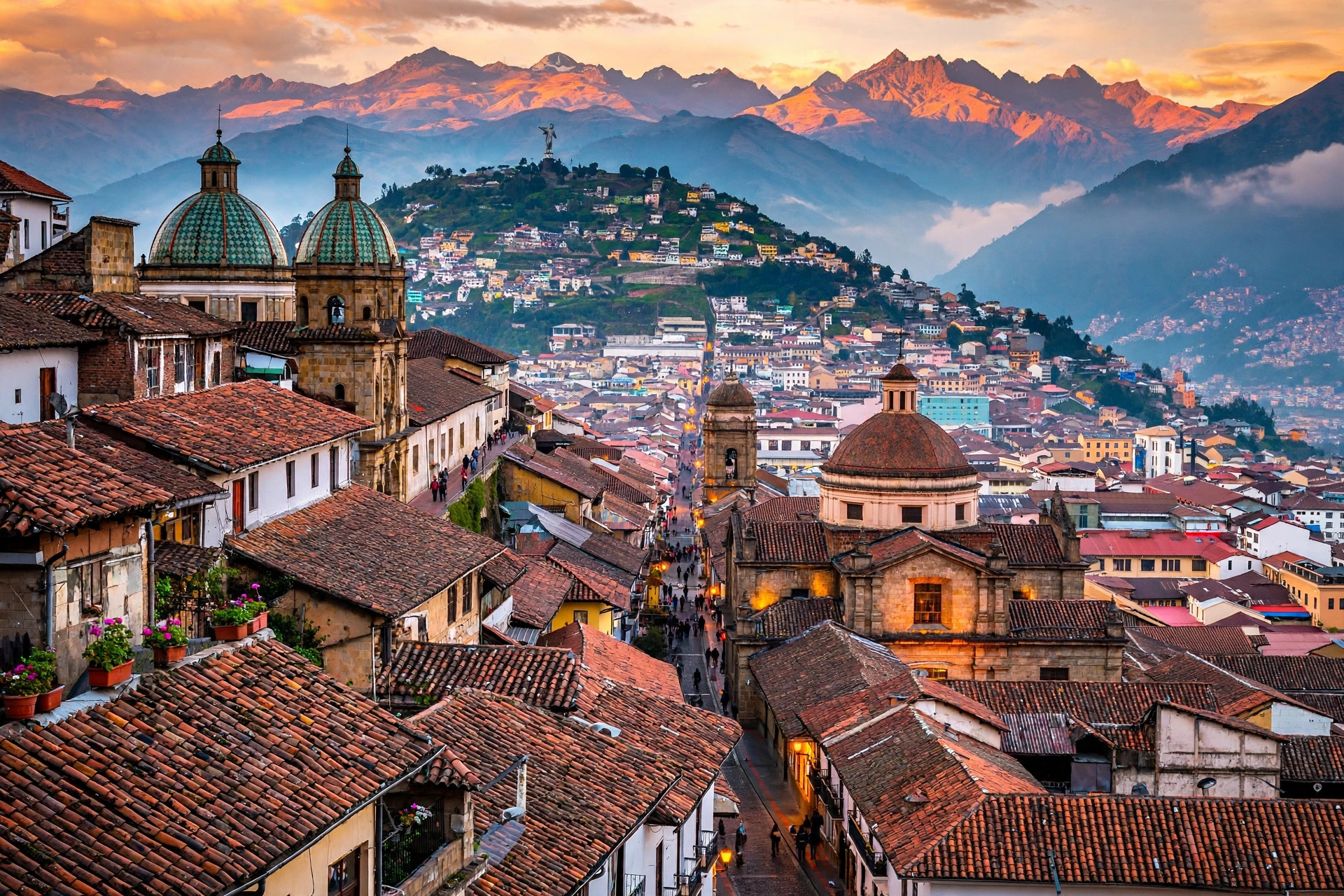
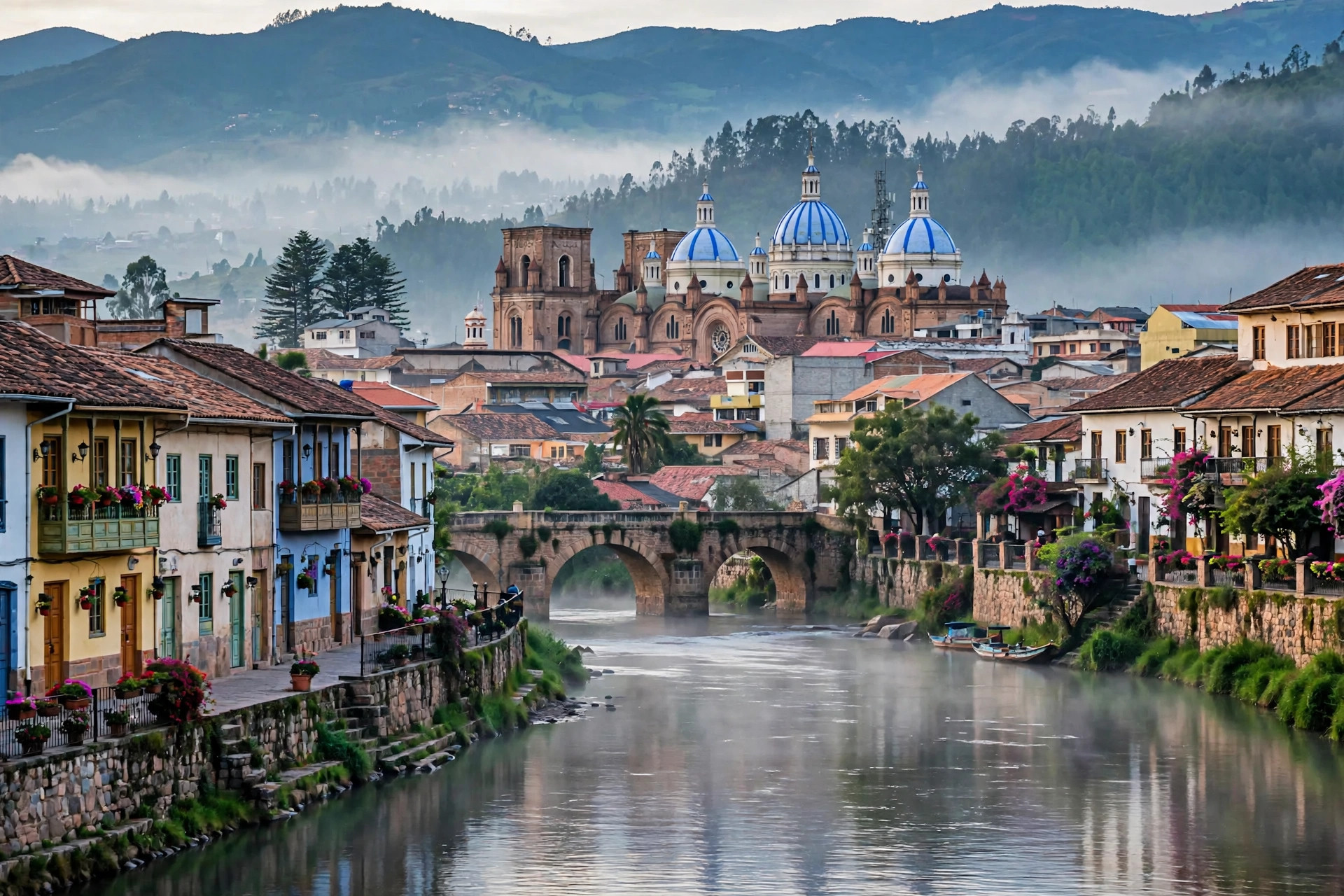
Cuenca doesn't shout. It doesn't need to. The third city of Ecuador is a UNESCO-listed colonial center wrapped around four rivers, with blue-domed cathedrals, whitewashed houses with wrought-iron balconies, and a café culture that would be at home in Europe — at prices that decidedly would not.
Travelers routinely arrive for a day and stay for three. Retirees from North America have been quietly doing the same thing for decades, which tells you something about the quality of life here — and means the city is well set up for visitors without feeling touristy.
Where in Ecuador
Illustrated treasure map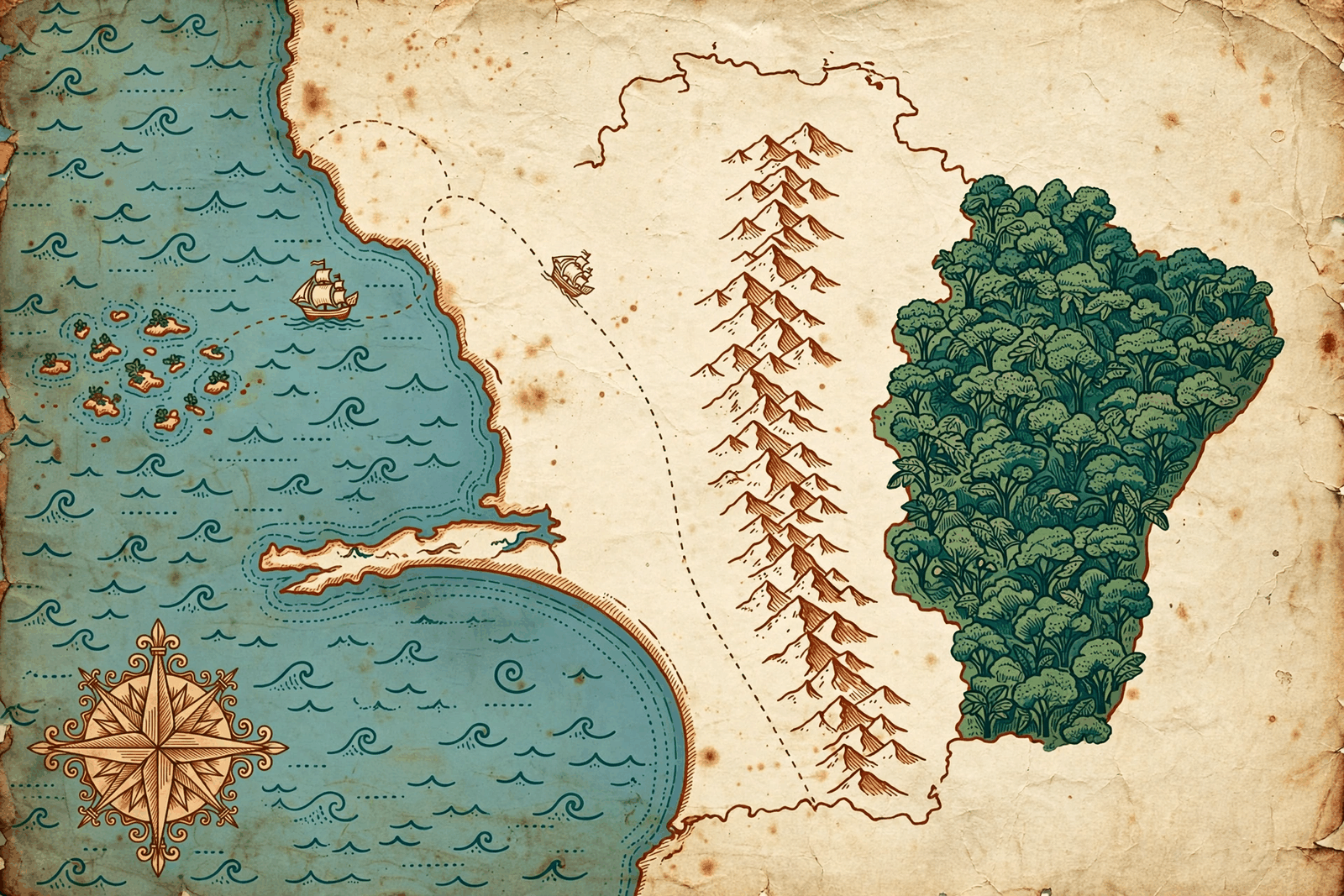 Otavalo
Quito
Latacunga
Baños
Riobamba
Cuenca
Manta
Puerto López
Montañita
Salinas
Guayaquil
Lago Agrio
Coca
Tena
Galápagos
Otavalo
Quito
Latacunga
Baños
Riobamba
Cuenca
Manta
Puerto López
Montañita
Salinas
Guayaquil
Lago Agrio
Coca
Tena
Galápagos
Illustrated treasure map. Not for navigation. Open in Google Maps ↗
The historic center
Cuenca's old town is compact and made for walking. The anchor is the New Cathedral (Catedral de la Inmaculada Concepción) — its three blue-and-white tiled domes are the city's signature, visible from everywhere. Construction started in 1885 and, by local legend, the architect miscalculated: the towers can't support bells, so the cathedral is famously bell-less. Climb to the dome terraces for the best view in the city.
Around it:
- Parque Calderón — the main square, with the Old Cathedral (now a museum) on one side.
- Plaza de las Flores — the flower market, a riot of color in a tiny square.
- Calle Larga — the long street of bars, restaurants, and colonial houses along the river.
- The four rivers — the Tomebamba, Yanuncay, Tarqui, and Machángara. The Barranco walkway along the Tomebamba, with its hanging houses and riverside path, is Cuenca's great urban stroll.
The Panama hat (which is Ecuadorian)
The "Panama" hat — the toquilla straw fedora — has always been made in Ecuador, and Cuenca is one of its great production centers (the other is Montecristi, on the coast). Visit a sombrerería to see the weaving: a fine Montecristi fino can take months to weave and cost accordingly. Buy the real thing here, where the workshops are, not at the airport. A genuine Cuenca-made hat, bought where it's woven, is one of the best souvenirs in South America.
Cajas National Park
Thirty minutes west of the city, El Cajas is 285 km² of high-altitude paramo studded with some 270 lakes. The Toreadora area has well-marked trails from 1-hour loops to full-day routes between lakes, at 3,900–4,200 m. Weather changes in minutes — bring layers and rain gear even when the city is sunny. Trout fishing, Andean condors, and a landscape that feels like the top of the world. Half a day minimum; a full day if you hike.
Ingapirca
Ecuador's most important Inca site sits 60 km north of Cuenca: Ingapirca, a 15th-century fortress-temple with the country's best-preserved Inca stonework (including the elliptical Temple of the Sun, built in the classic mortarless style). It is modest by Cusco standards and all the more atmospheric for it — often nearly empty, with the Cañari story layered under the Inca one. Half-day trip, easily arranged from Cuenca.
Tours we're vetting for Cuenca
We're lining up launch partners for guided tours in this region — operators we'd book ourselves. When we recommend one, we'll tell you exactly why, and any commission will be disclosed here.
No paid placements yet — when affiliate links go live here, they will be disclosed.
Eating and drinking in Cuenca
Cuenca punches above its weight: riverfront restaurants on the Barranco, the Mercado 10 de Agosto for hornado and mote pillo, and a coffee scene fueled by Ecuador's highland beans. Try mote pillo (hominy with egg), cuy (guinea pig — the Andean delicacy; order ahead at traditional restaurants), and the local chicha. The city's breweries and wine bars cluster around Calle Larga and the new town's Remigio Crespo avenue.
Practical Cuenca
- Getting there: 45-minute flight from Quito, or the spectacular full-day bus ride south through the Andes (8–10 hours — the flight is the sane choice on a tight itinerary). Cuenca's airport (CUE) is 10 minutes from the center.
- Getting around: the historic center is walkable; the tranvía (tram) runs the length of the city and is worth riding for its own sake.
- Climate: eternal spring — 14–22°C most days, cool nights, occasional rain. Layers, always.
- Safety: Cuenca is widely considered Ecuador's safest major city, with the usual big-city precautions after dark.
Deciding between the south and the capital? Read Quito vs. Cuenca — the head-to-head.
Where to stay in Cuenca
Our vetted stay partners for this region are coming with the launch. Until then, every hotel and lodge mention in this guide is editorial — nobody paid to be here.
No paid placements yet — when affiliate links go live here, they will be disclosed.