The Avenue of the Volcanoes
Alexander von Humboldt named it in 1802, and the name stuck: a high corridor of the Andes where more than a dozen major volcanoes — several still active — line up along the Pan-American Highway between Quito and Cuenca. This is the roof of Ecuador, and it is where most mainland trips spend most of their time.
The Andes here are not a barrier; they are the destination. Snow-capped cones, turquoise crater lakes, adventure towns, indigenous markets, and two of South America's great colonial cities — all strung along one spectacular road.
Where in Ecuador
Illustrated treasure map Otavalo
Quito
Latacunga
Baños
Riobamba
Cuenca
Manta
Puerto López
Montañita
Salinas
Guayaquil
Lago Agrio
Coca
Tena
Galápagos
Otavalo
Quito
Latacunga
Baños
Riobamba
Cuenca
Manta
Puerto López
Montañita
Salinas
Guayaquil
Lago Agrio
Coca
Tena
Galápagos
Illustrated treasure map. Not for navigation. Open in Google Maps ↗
Cotopaxi National Park
Cotopaxi (5,897 m) is one of the highest active volcanoes in the world and the perfect volcanic cone — the mountain on every postcard. Most visitors do it as a day trip from Quito or Latacunga: drive to the parking area at 4,600 m, walk to the José Rivas refuge at 4,864 m, and look across at a summit that has been intermittently active in recent years. The park also holds wild horses, Andean condors, and the Limpiopungo lagoon. Summit climbs are technical and require a licensed guide and acclimatization — arrange through a Quito operator. check before you go
The Quilotoa Loop
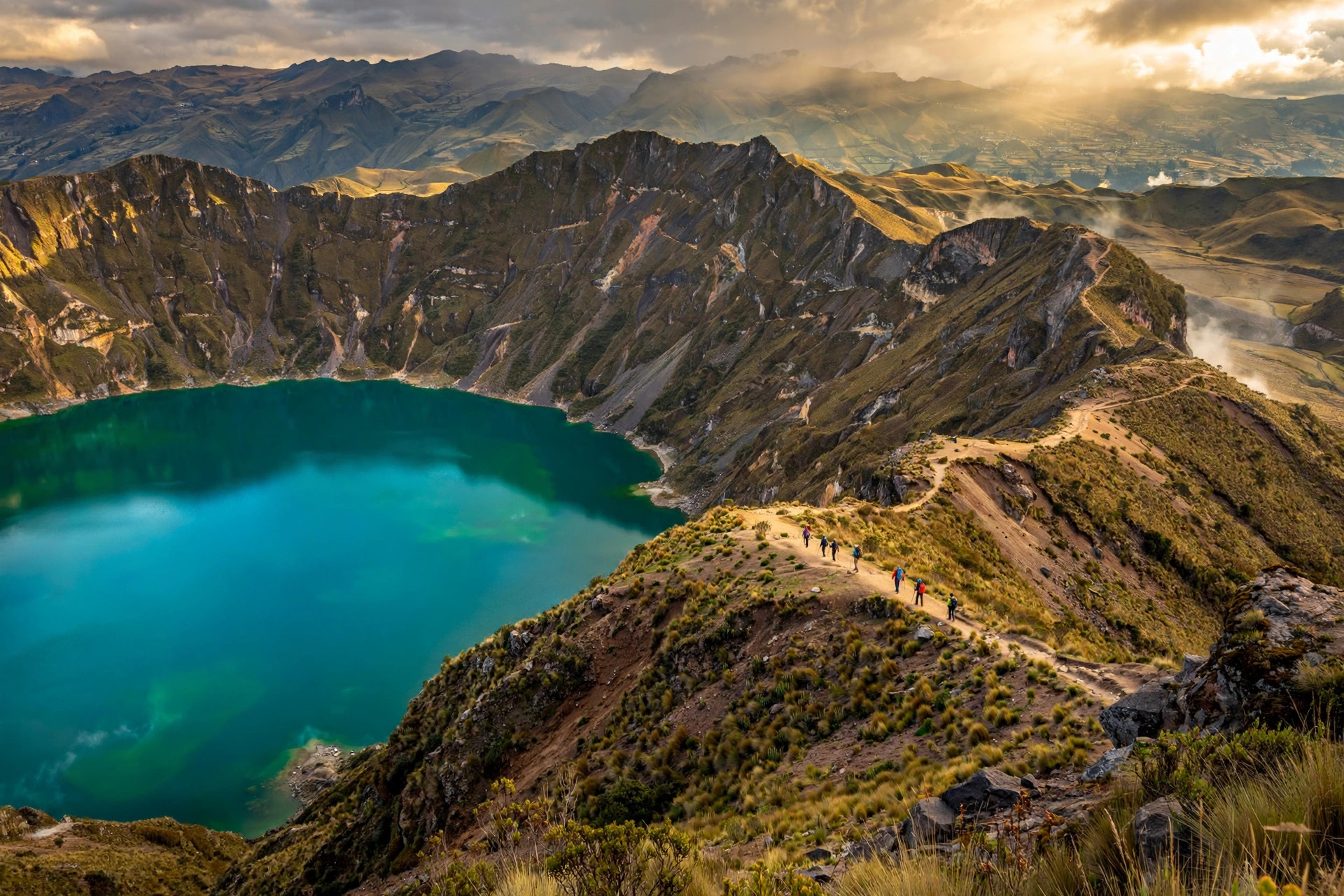
A 200-km circuit through highland villages, ending — or starting — at Quilotoa, a 3-km-wide volcanic crater holding a startling turquoise lake. The classic route: Latacunga → Tigua → Zumbahua → Quilotoa → Chugchilán → Isinliví, hiking village to village and sleeping in family-run hostels. Three to four days on foot, or one very long day trip from Latacunga if you only want the crater. The lake's color shifts with the minerals and the light — go early before the afternoon clouds build.
Baños: the adventure capital
Baños de Agua Santa sits in a valley at the foot of the still-active Tungurahua volcano, where the Andes drop toward the Amazon. It is Ecuador's adventure playground: whitewater rafting on the Pastaza, canyoning down waterfalls, mountain biking the Ruta de las Cascadas to Pailón del Diablo (the Devil's Cauldron), and the famous Casa del Árbol swing — the "swing at the end of the world" over the valley. The town is also named for its hot springs (baños): the thermal baths at the edge of town are the perfect end to an adrenaline day. Give it two to three days.
Otavalo market
The Mercado de Ponchos in Otavalo, an hour and a half north of Quito, is the most famous indigenous market in South America. Saturday is the big day, when the Plaza de Ponchos fills with Otavaleño weavers selling textiles, and the animal market runs at dawn. Go on Saturday if you can, but the craft market runs daily. Pair it with nearby Cuicocha (a crater lake with guinea-pig-shaped islands, in local legend) and the leather town of Cotacachi.
Chimborazo
At 6,263 m, Chimborazo is Ecuador's highest peak — and, measured from the center of the Earth, the closest point on the planet to the sun, thanks to the equatorial bulge. The Refugio Carrel at 4,850 m and the Whymper refuge at 5,000 m are reachable on a tough day hike from Riobamba; the summit is a serious mountaineering objective. Even non-climbers come for the vicuña herds reintroduced on its slopes.
The Devil's Nose train
The Nariz del Diablo railway, between Alausí and Sibambe, is one of the great railway engineering feats: a series of switchbacks descending a near-vertical mountainside. Service has been suspended and restored more than once over the years — check current operating status before building your itinerary around it. check before you go When running, it is a half-day trip easily combined with the highlands south of Riobamba.
Highland cities
- Quito — the capital, 2,850 m, the best-preserved colonial old town in the Americas. Three days minimum; most trips start or end here.
- Cuenca — the southern highland jewel, UNESCO-listed, walkable, and relaxed. Two to three days.
- Riobamba — the mountaineer's basecamp: Chimborazo, Carihuairazo, and the Devil's Nose within reach. Often an overnight, occasionally a love affair.
- Latacunga — the gateway to Cotopaxi and the Quilotoa Loop. Functional, not romantic; one night is usually enough.
Tours we're vetting for The Andes
We're lining up launch partners for guided tours in this region — operators we'd book ourselves. When we recommend one, we'll tell you exactly why, and any commission will be disclosed here.
No paid placements yet — when affiliate links go live here, they will be disclosed.
Altitude: take it seriously
Quito sits at 2,850 m; much of your time will be above 2,500 m, and day trips push past 4,500 m. Acclimatize: take it easy for the first 48 hours in Quito, hydrate aggressively, go easy on alcohol, and consider talking to your doctor about altitude medication before you fly. Symptoms that worsen — severe headache, confusion, breathlessness at rest — mean descend and seek care. This is the single most common trip-ruiner in the Andes, and it is entirely manageable with patience.
Where to stay in The Andes
Our vetted stay partners for this region are coming with the launch. Until then, every hotel and lodge mention in this guide is editorial — nobody paid to be here.
No paid placements yet — when affiliate links go live here, they will be disclosed.