The practical layer
New Orleans is an easy city to visit and a city that rewards preparation. The essentials are few, but they matter more here than in most American destinations: the weather has real opinions, the festival calendar moves prices, and the neighborhoods you are touring are people's homes. Get these right and the rest of the trip takes care of itself.
On safety: treat the city as an active American city with large nightlife crowds. Stay on active streets at night, secure valuables in dense crowds, and ride rather than walk late across neighborhoods. The tourist core is well-trafficked; the risk rises with isolation and inattention, the same as anywhere. Standard city sense, applied consistently, covers nearly everything.
Where in New Orleans
Illustrated treasure map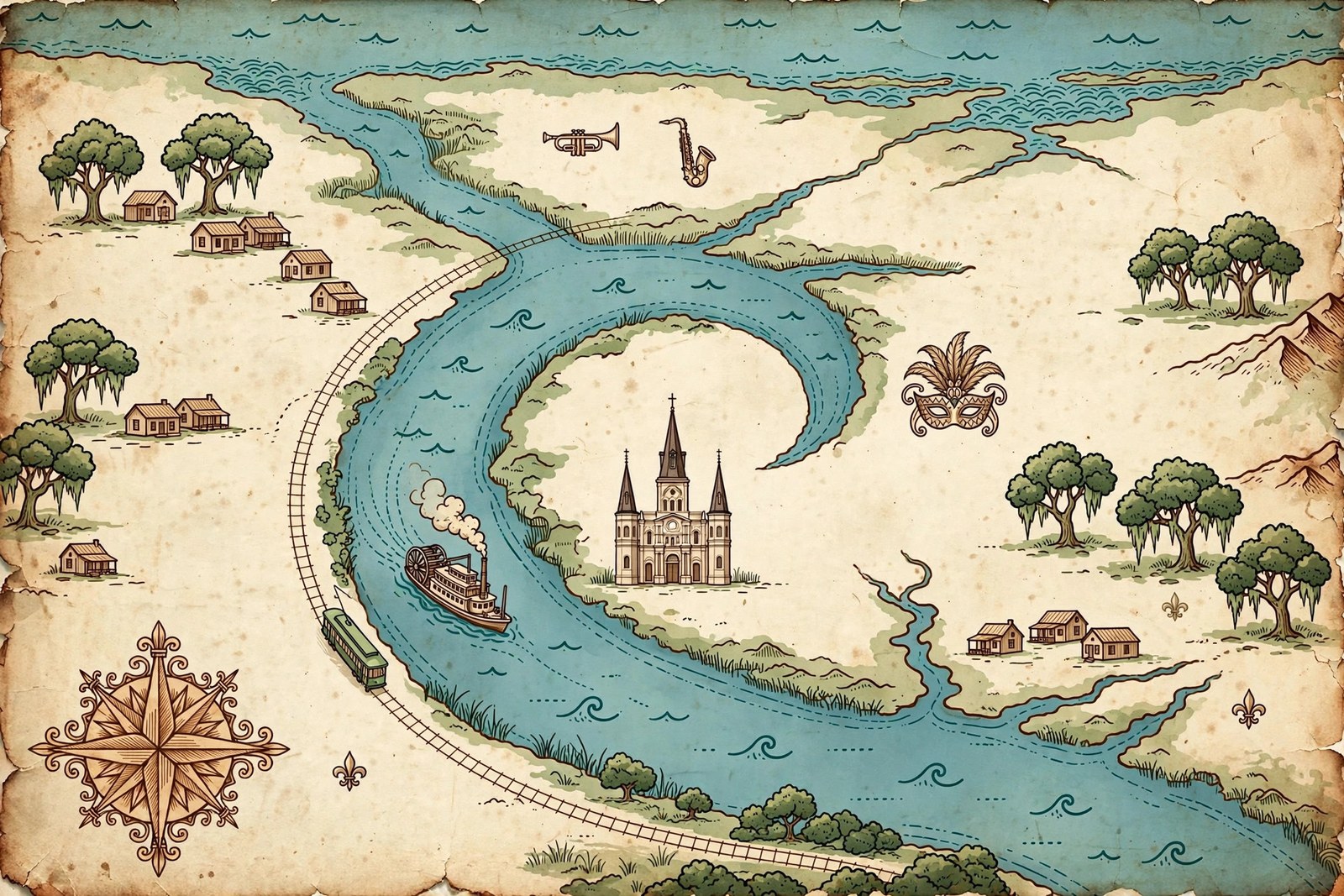 French Quarter
Jackson Square
Treme
Faubourg Marigny
Bywater
Garden District
Uptown
Carrollton
Mid-City
City Park
Algiers Point
Warehouse District
French Quarter
Jackson Square
Treme
Faubourg Marigny
Bywater
Garden District
Uptown
Carrollton
Mid-City
City Park
Algiers Point
Warehouse District
Illustrated treasure map. Not for navigation. Open in Google Maps ↗
Hurricanes, heat, and packing
Hurricane season officially runs June 1 through November 30. A trip in these months should include a plan, not just a hope: know your travel insurance terms, watch the National Hurricane Center if anything is brewing, and understand that a serious storm means leaving, not sheltering in a hotel. This is the Gulf Coast; the guidance is the same one locals live by.
Heat is the more certain adversary. June through September brings highs near 91°F with heavy humidity: hydrate deliberately, pace your middays, and treat air-conditioned breaks as itinerary items. Pack light, breathable clothing, a hat, and the excellent walking shoes the city's uneven sidewalks demand in every season. Winter visitors should add layers; January lows near 46°F with damp river wind feel cooler than the number.
Make This Trip Real: Essentials
Our paid trip guides pair the reel with the reality — dated itineraries, real costs, booking links. The New Orleans editions are in production now.
No paid placements yet — when affiliate links go live here, they will be disclosed.
What to pack
The list is short. Excellent walking shoes, non-negotiable in every season: the city's historic paving, uneven sidewalks, and long blocks punish fashion footwear. Light, breathable clothing and a hat for the warm months; layers for winter, when damp river wind makes 46°F feel colder. A small umbrella or rain shell year-round; summer storms arrive fast. Sunscreen for festival season, because the Fair Grounds and the parade routes offer limited shade. And one outfit that can handle Commander's Palace or a nice dinner: this city dresses up when it wants to, and you will want to at least once.
Money, tipping, and where you sleep
Tipping is part of the cost of dining: 15 to 20 percent for sit-down service, and check whether gratuity is already included for larger parties. Short-term rentals are tightly regulated and platforms must verify permits; a licensed hotel, B&B, or guesthouse removes the risk of a disrupted booking. If you do book a rental, confirm the permit yourself rather than trusting the listing.
On connectivity and money, there is little to add: this is a major American city, cards work everywhere, ATMs are plentiful, and the only cash worth carrying is small bills for tips, street vendors, and the occasional cash-only counter. Download the Le Pass app before you arrive so transit is solved on day one.
A final word on the city's pace. New Orleans runs on its own clock: service is leisurely, plans are approximate, and the best experiences rarely start on time. Build slack into every day, say yes to the detour, and resist the urge to optimize. The city rewards the traveler who lingers and punishes the one who rushes. That is not inefficiency; it is the product.
Travel gently
Neighborhoods are homes first. Keep volume down on residential blocks, ask before photographing people, and remember second lines and Masking Indian processions are community practice, not content. Katrina's mark is living history: visit Tremé and the Lower Ninth Ward with that understanding, spend money at neighborhood businesses, and be wary of any tour that treats the flooding as spectacle. The city's spiritual landscape, from Black Catholic parishes to living African diasporic traditions, deserves the same respect you would bring to any house of worship: these are continuing practices, not supernatural décor.
One practical corollary: the service economy here runs on tips and regulars. Tip well, be patient when the room is full, learn your bartender's name, and go back to the places that treated you right. In a city built on relationships, being a good guest is not just manners; it is how the place works.
Why essentials, why now
The city gives more to the prepared. A traveler who knows the festival calendar, the streetcar map, the heat plan, and the etiquette gets a deeper city than one who wings it. None of this is difficult. All of it is the difference between visiting New Orleans and merely being there.