The Quarter rewards discernment
The French Quarter is the oldest neighborhood in New Orleans, the original French grid laid out in 1718, and it is two places at once. By day it is Jackson Square and the St. Louis Cathedral, the artists and portrait painters along the iron fence, Royal Street's antique galleries, Chartres Street's quieter blocks, the French Market, and the riverfront where the streetcar rattles past. By night parts of it become the highest-intensity visitor nightlife corridor in the South, centered on Bourbon Street. Both are real. The trick is knowing which one you came for.
Start at Jackson Square, the Quarter's front room. The cathedral, the Cabildo and Presbytère flanking it, the artists at the fence, the beignets at Café du Monde a short walk away on Decatur. Royal Street rewards slow walking: galleries, bookshops, the kind of storefronts that have survived a century of change. Chartres runs parallel and quieter. The riverfront, at the foot of the Quarter, gives you the Mississippi at working scale, container ships and all.
Where in New Orleans
Illustrated treasure map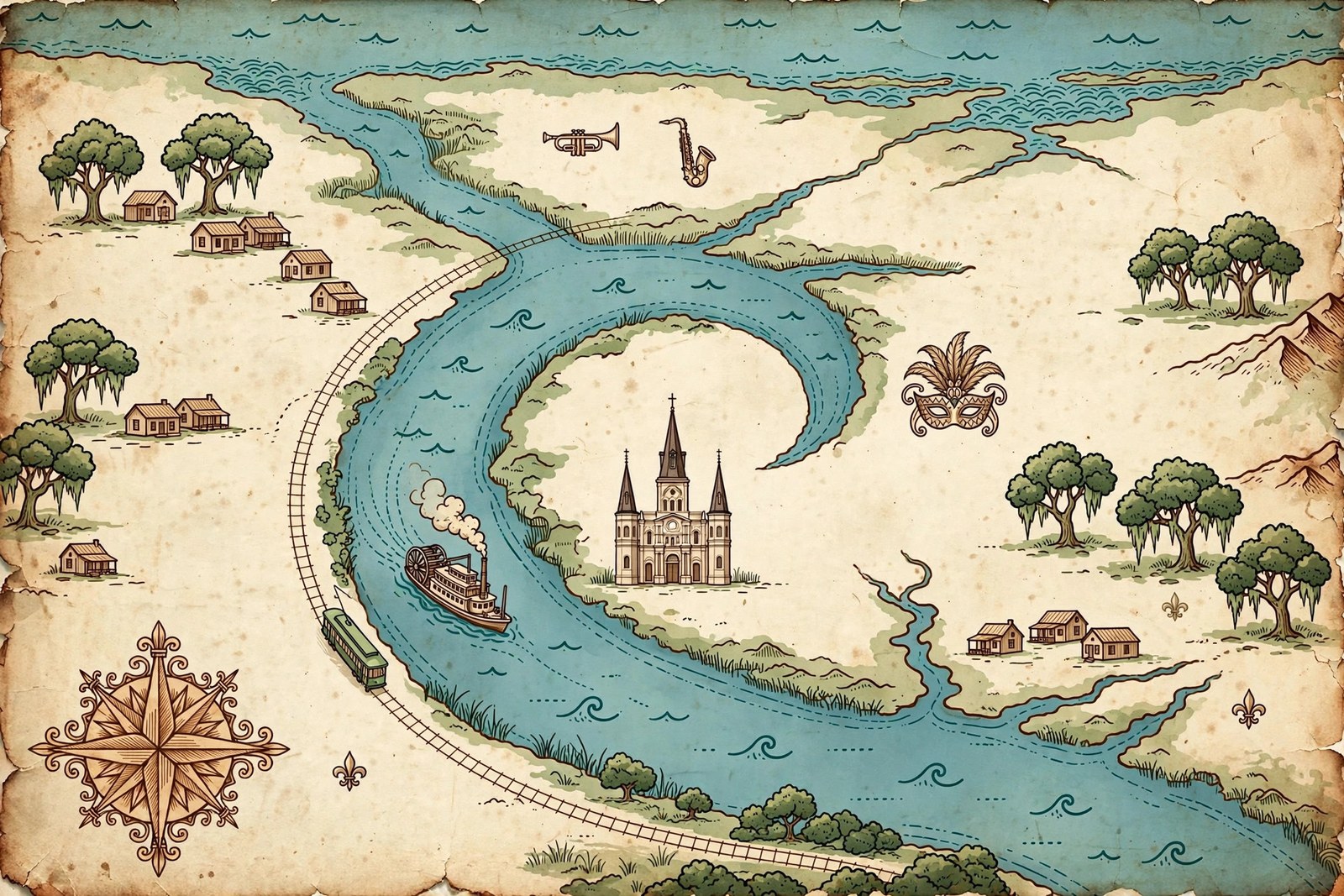 French Quarter
Jackson Square
Treme
Faubourg Marigny
Bywater
Garden District
Uptown
Carrollton
Mid-City
City Park
Algiers Point
Warehouse District
French Quarter
Jackson Square
Treme
Faubourg Marigny
Bywater
Garden District
Uptown
Carrollton
Mid-City
City Park
Algiers Point
Warehouse District
Illustrated treasure map. Not for navigation. Open in Google Maps ↗
Music, food, and the Bourbon question
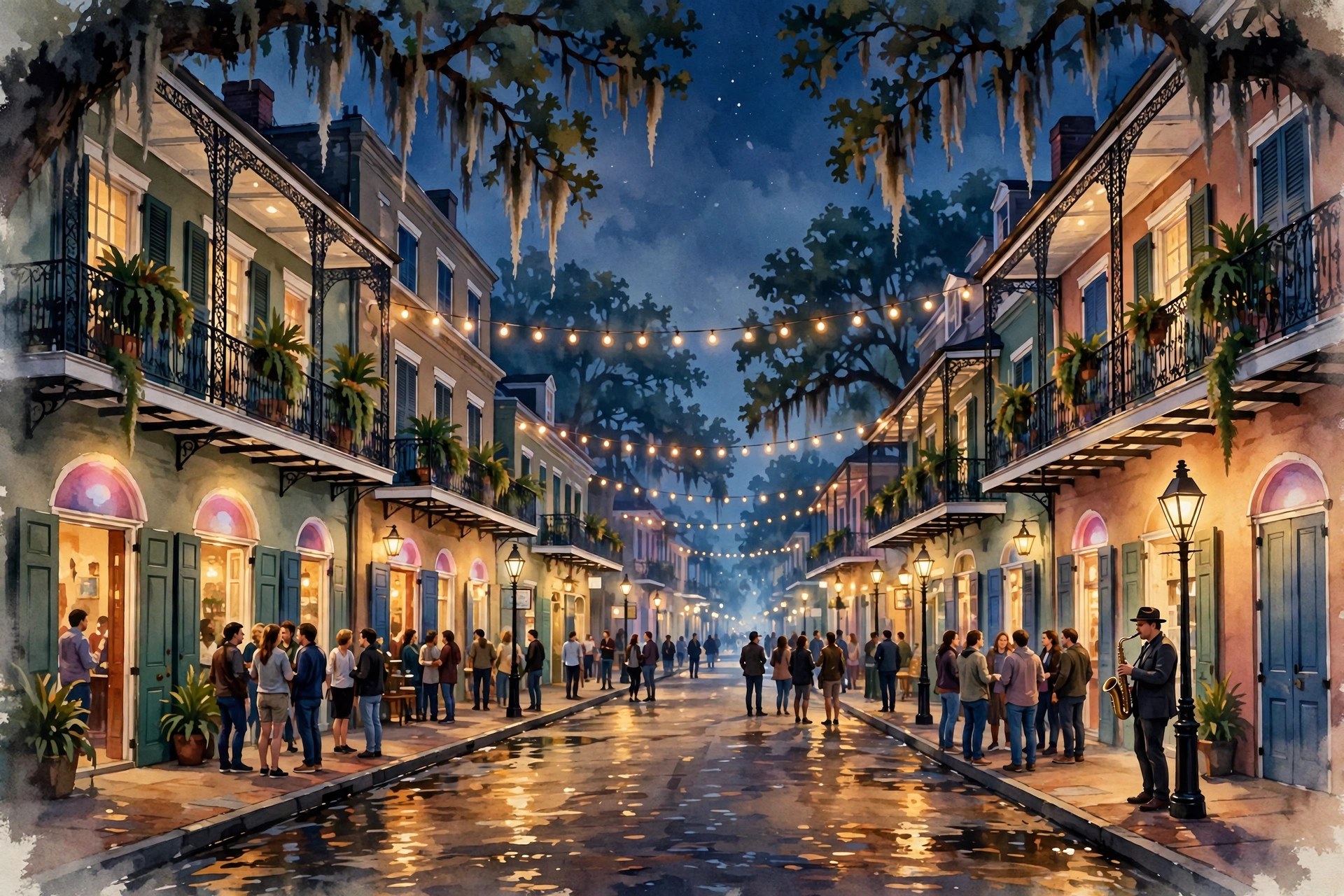
For music, the Quarter's essential room is Preservation Hall: traditional jazz in its original room, intimate and unamplified, and worth booking ahead check before you go. Bourbon Street and Frenchmen Street serve different markets. Bourbon is spectacle and volume. Frenchmen, just across Esplanade in the Marigny, is oriented toward live jazz, brass, blues, and related clubs. Do both if you must, but know what each is selling.
Eat deliberately here rather than by foot-traffic gravity. The Quarter holds genuine institutions alongside tourist traps, and the difference is usually one block. Café du Monde is the landmark beignet café: order the beignets and café au lait, expect powdered sugar on everything you own. Beyond that, the city's best cultural understanding comes from eating beyond the Quarter, which the food guide covers in full.
Tours we're vetting for The French Quarter
We're lining up launch partners for guided tours in this region — operators we'd book ourselves. When we recommend one, we'll tell you exactly why, and any commission will be disclosed here.
No paid placements yet — when affiliate links go live here, they will be disclosed.
Beyond the postcard blocks
The French Market, running along Decatur toward Esplanade, is the city's oldest market site: part farmers market, part flea market, part food hall, and worth a slow morning. The riverfront at the Moon Walk gives you the Mississippi at working scale, with the Natchez steamboat docked nearby for the travelers who want the calliope version of the river. The Cabildo and the Presbytère, flanking the cathedral, are the state museums where Louisiana's colonial history is told properly; if you only enter one museum in the Quarter, make it one of these two.
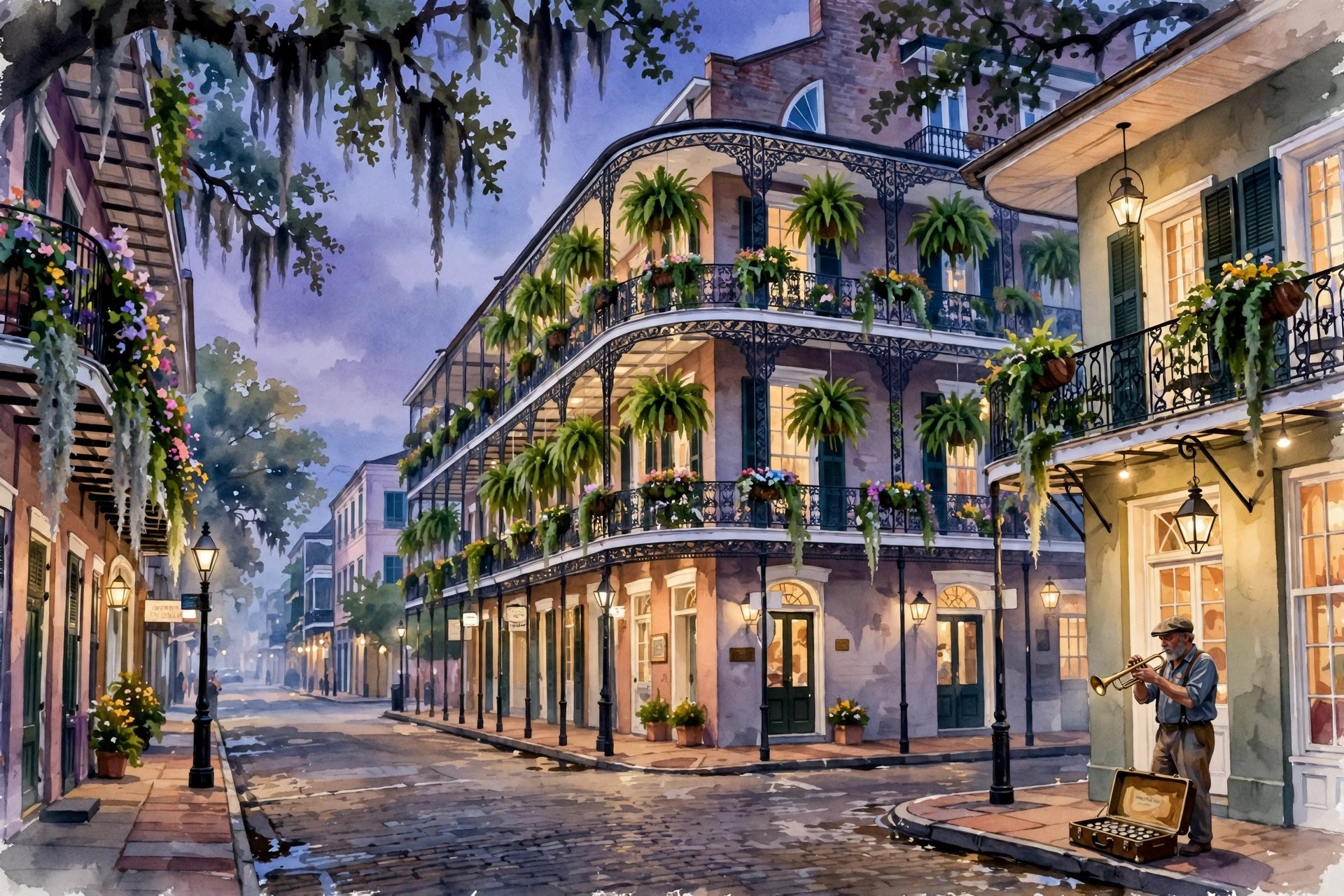
Royal Street's antique galleries deserve an unhurried hour, and the stretch between St. Ann and St. Peter holds the densest run. Chartres, one block over toward the river, is the quieter parallel: residential, handsome, and the better street for simply walking. Pirates Alley, the narrow lane beside the cathedral, is the Quarter in miniature, all gas lamps and literary ghosts.
Where to stay, and the noise question
The Quarter is the right base for a first visit: maximum walkability, history at the door, no car needed. The trade is noise. Nightlife sound is real on and near Bourbon, and it runs late. Light sleepers should favor upriver blocks or streets well off Bourbon, ask hotels directly about which side the quiet rooms face, and treat "courtyard room" as a meaningful phrase here.
One to three nights, first visit: the Quarter or the CBD/Warehouse District for logistics. The CBD puts you a short walk or streetcar ride from the Quarter with large hotel inventory and the Superdome nearby, and it sleeps quieter. The Warehouse District adds the museums: the National WWII Museum is the heavyweight, a full-day institution that consistently ranks among the country's best, and the Contemporary Arts Center anchors the gallery side.
Second visit or longer stay: consider the lower Quarter near Esplanade, which puts Frenchmen Street and Tremé within easy reach while keeping the Quarter's walkability. Wherever you land, confirm the room's exposure before you commit: in this neighborhood, "quiet side" and "courtyard facing" are not marketing phrases but survival information.
A note on respect
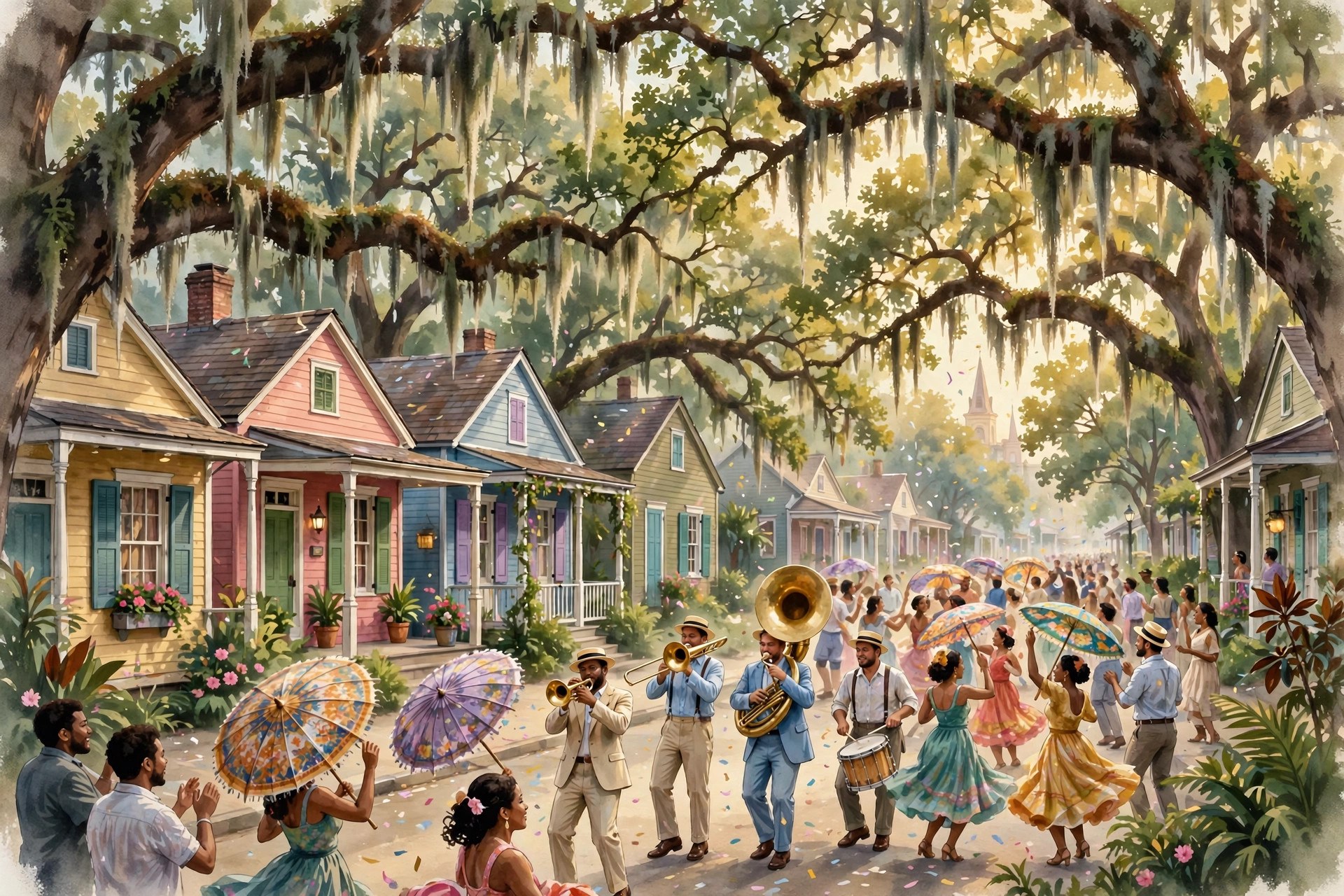
The Quarter is a residential neighborhood as well as a destination. People live above the shops on Royal and Chartres. Keep volume down on residential blocks, ask before photographing people, and remember that second lines and processions that pass through are community practice, not content.
Why the Quarter, why now
It is the front door, not the whole house. Do the Quarter properly on day one, then let the rest of the city in: Tremé and Congo Square are a short walk up Esplanade, the Garden District is a streetcar ride down St. Charles, and Frenchmen Street is across the avenue. The Quarter is at its best as a base camp, not a boundary.
Preservation Hall still matters. In a city where music venues come and go, the original room playing traditional jazz without amplification is the single most concentrated dose of what this city invented. Book ahead; it is small.
Daylight is underrated here. The Quarter at 9 a.m., before the crowds, with the light coming down Royal Street, is a different neighborhood from the Quarter at midnight. Give it both.