Eating is how the city explains itself
Eating is how New Orleans' migration history becomes visible. Gumbo, red beans and rice, jambalaya, po'boys, muffulettas, oysters, pralines, and beignets sit alongside Creole fine dining, Vietnamese-Louisiana cooking, and Caribbean influences, and every plate carries a chapter of who came here and when. The most persistently oversimplified distinction in Louisiana tourism applies at the table too: Creole culture emerged from the interaction of French, Spanish, African, and Native American peoples in colonial Louisiana, while Cajun derives most directly from Acadian settlers, with its historical heartland in Acadiana and rural southwestern Louisiana. This city is fundamentally a Creole and Black Atlantic food city with substantial Cajun influence. Order accordingly.
Rule one: do not spend every meal in the French Quarter. Uptown, Mid-City, Tremé, and Marigny/Bywater broaden the picture from iconic visitor dishes to the foods New Orleanians build weekly routines around. The Quarter has genuine institutions, but the city's eating life is distributed, and the distribution is the lesson.
Where in New Orleans
Illustrated treasure map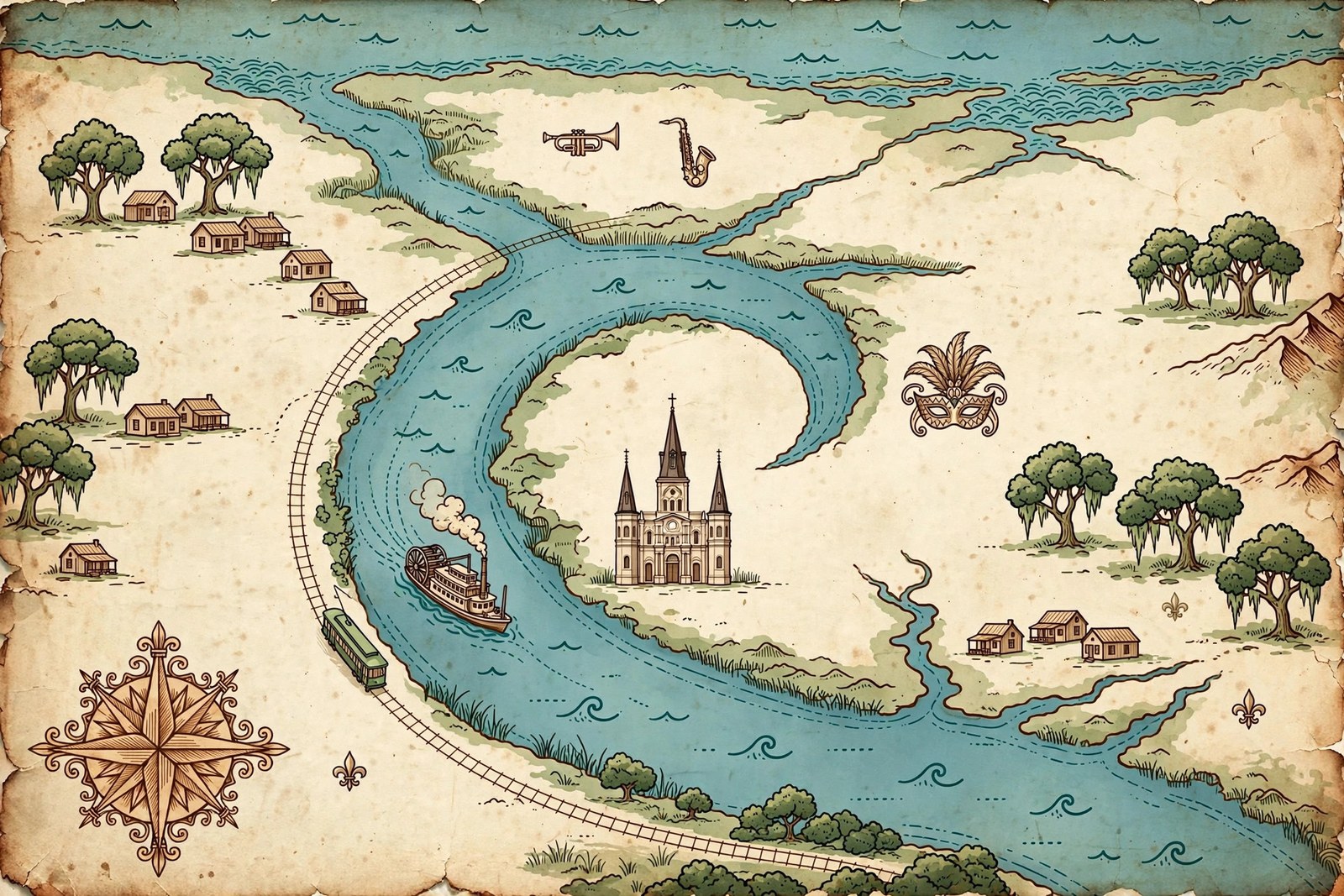 French Quarter
Jackson Square
Treme
Faubourg Marigny
Bywater
Garden District
Uptown
Carrollton
Mid-City
City Park
Algiers Point
Warehouse District
French Quarter
Jackson Square
Treme
Faubourg Marigny
Bywater
Garden District
Uptown
Carrollton
Mid-City
City Park
Algiers Point
Warehouse District
Illustrated treasure map. Not for navigation. Open in Google Maps ↗
The dishes, decoded
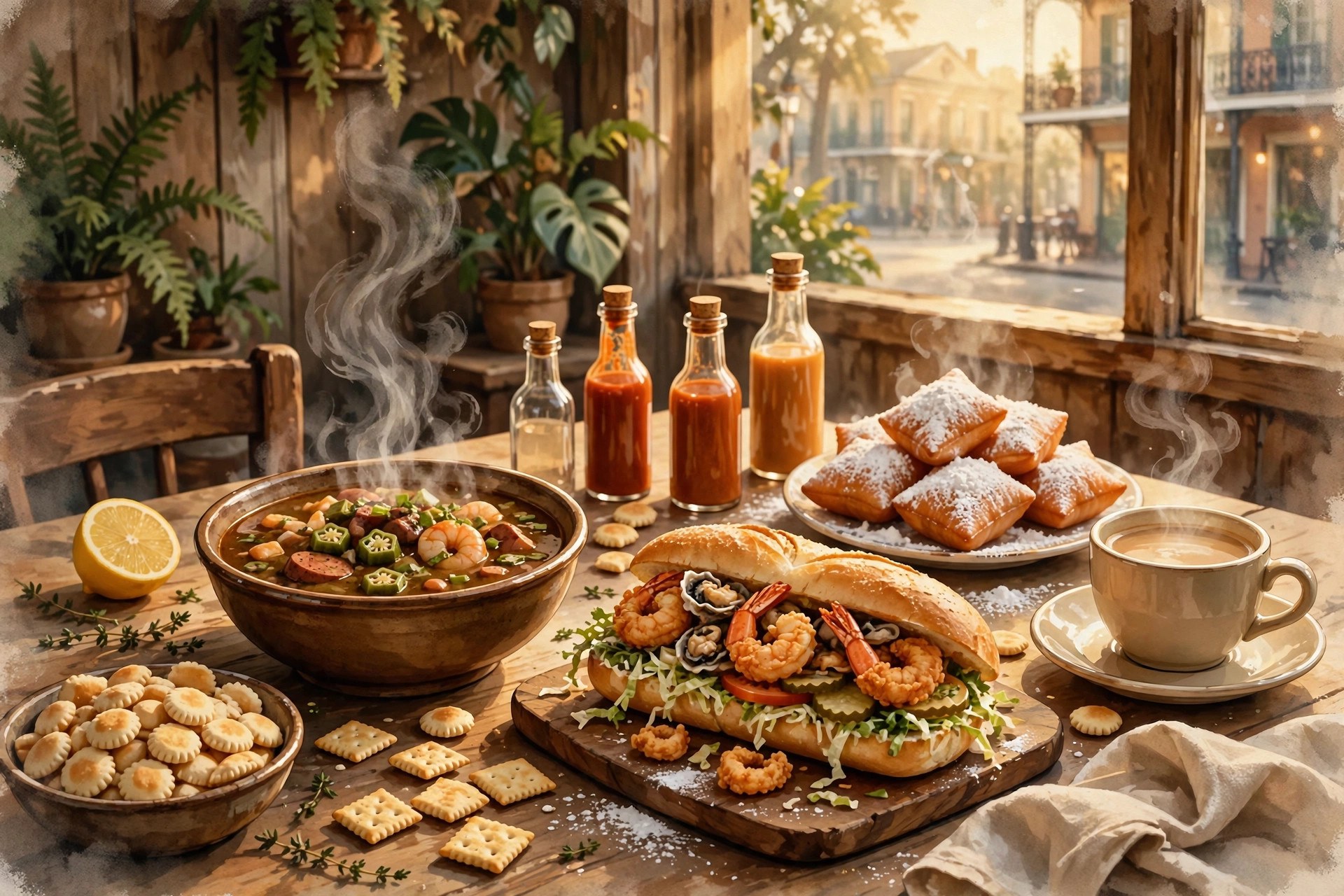
Gumbo is the thesis statement: a roux-thickened stew that changes by cook and by neighborhood, and the fastest way to start an argument among locals. Red beans and rice is Monday's dish, the traditional wash-day meal, and the creamiest versions are found far from the tourist core. Jambalaya is the rice dish everyone claims; po'boys are the sandwich that eats like a meal, dressed or not, with the roast beef debris version as the connoisseur's pick and the fried shrimp as the people's. Muffulettas are the Italian-delicatessen contribution, best shared. Oysters come raw, chargrilled, and fried; the chargrilled, born at a French Quarter oyster bar, is the city's great modern classic check before you go. Pralines are the Creole candy. Beignets are the powdered-sugar rite of passage.
Crawfish has a season, roughly spring check before you go, and during it the backyard boil is the city's truest social form. If you are offered a seat at one, accept.
Make This Trip Real: Food
Our paid trip guides pair the reel with the reality — dated itineraries, real costs, booking links. The New Orleans editions are in production now.
No paid placements yet — when affiliate links go live here, they will be disclosed.
A three-day eating plan
Day one, the canon: beignets at Café du Monde in the morning, a po'boy at lunch, gumbo at dinner. Day two, the neighborhoods: red beans and rice on a Monday if the calendar cooperates, a Mid-City po'boy counter, dinner at one of the fine-dining rooms. Day three, the edges: a Vietnamese-Louisiana lunch, chargrilled oysters in the afternoon, and whatever the locals at the next table are having. Six meals, three centuries.
The snowball deserves its own mention: the New Orleans shaved-ice tradition, with flavors and condensed-milk variations that inspire genuine devotion. Hansen's is the historic stand check before you go. In summer, it is not a dessert but a survival strategy.
The rooms
Café du Monde in the Quarter is the landmark beignet café: beignets and café au lait, powdered sugar on everything you own, open at hours that mock the concept of closing check before you go. Commander's Palace in the Garden District is the Creole fine-dining institution: special occasion, book ahead, dress like you mean it. Dooky Chase in Tremé pairs Creole fine dining with deep civil-rights history; in the segregation era it was one of the few places where Black and white leaders could meet and eat together.
Beyond the institutions, the Vietnamese-Louisiana kitchens, the Mid-City po'boy counters, the Uptown lunch joints: these are where the city's food culture is maintained rather than displayed. Ask a local where they ate last Tuesday, not where they take visitors. The corner stores selling hot plates, the bakery cases with the king cake in season, the oyster happy hours that run like clockwork: this is the eating life the guides usually miss, and it is the best part.
How the city eats
Food is often served more leisurely than an efficiency-focused traveler expects. In this city that is usually a feature, not a failure. Leave time between dinner and a ticketed set. Tip as part of the cost of dining: 15 to 20 percent for sit-down service, and check whether gratuity is already included for larger parties.
Why food, why now
The canon is intact and the edges are moving. The classic dishes are cooked as well as ever, and the Vietnamese, Caribbean, and contemporary kitchens keep the cuisine from becoming a museum. Eat the canon on day one and the edges on day three, and you will understand the city's last three centuries in about six meals.