Downriver, where the music sleeps
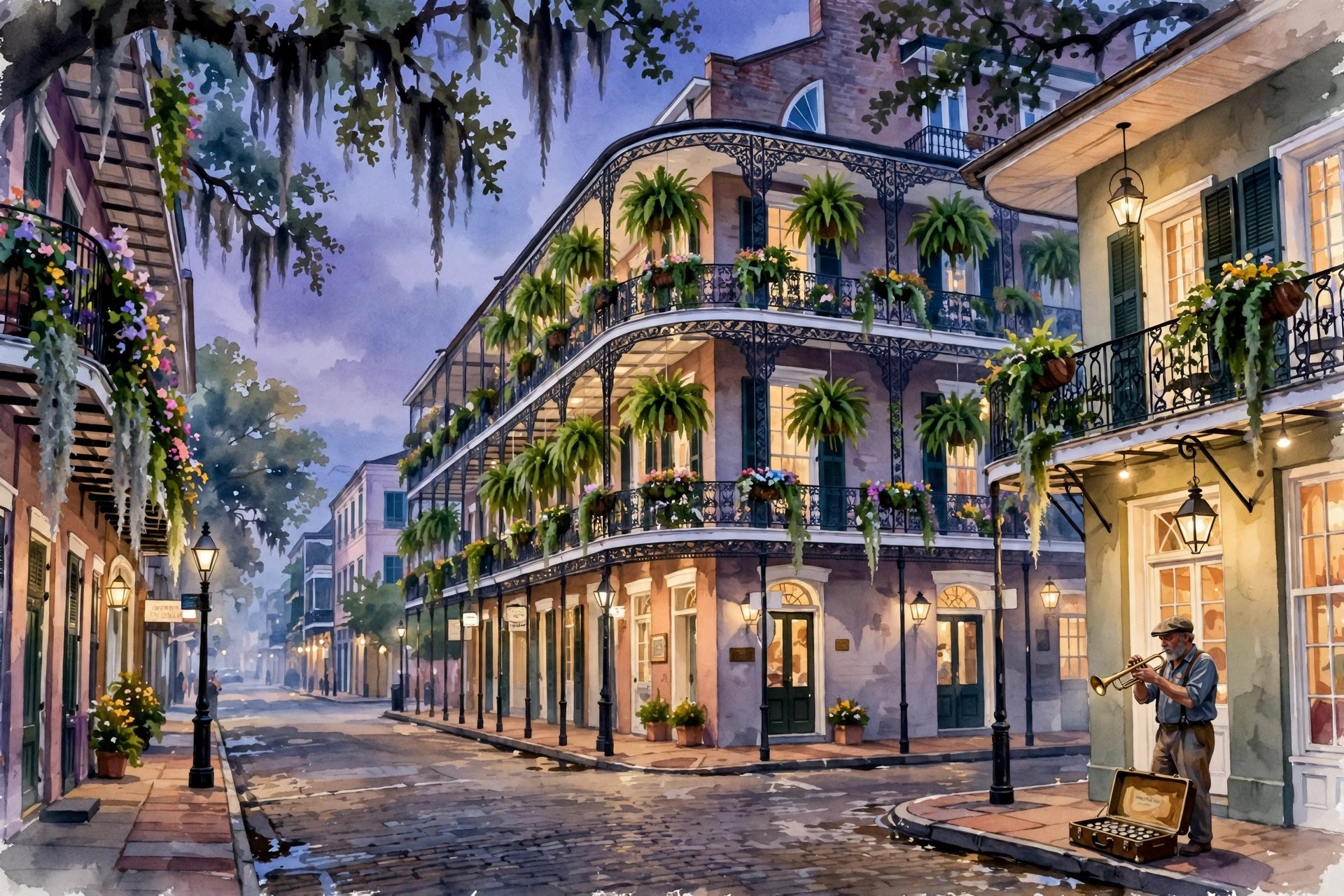
Just downriver from the French Quarter, across Esplanade Avenue, the Faubourg Marigny and Bywater form the city's music-first residential belt. The Marigny holds Frenchmen Street, the live-music corridor oriented toward jazz, brass, blues, and related clubs. The Bywater, further down, is the art-and-café scene: Creole cottages and shotgun houses, galleries, coffee shops, and a residential quiet that visitors are expected to respect. This is where repeat visitors stay, and where a first-timer with the right priorities should consider staying too.
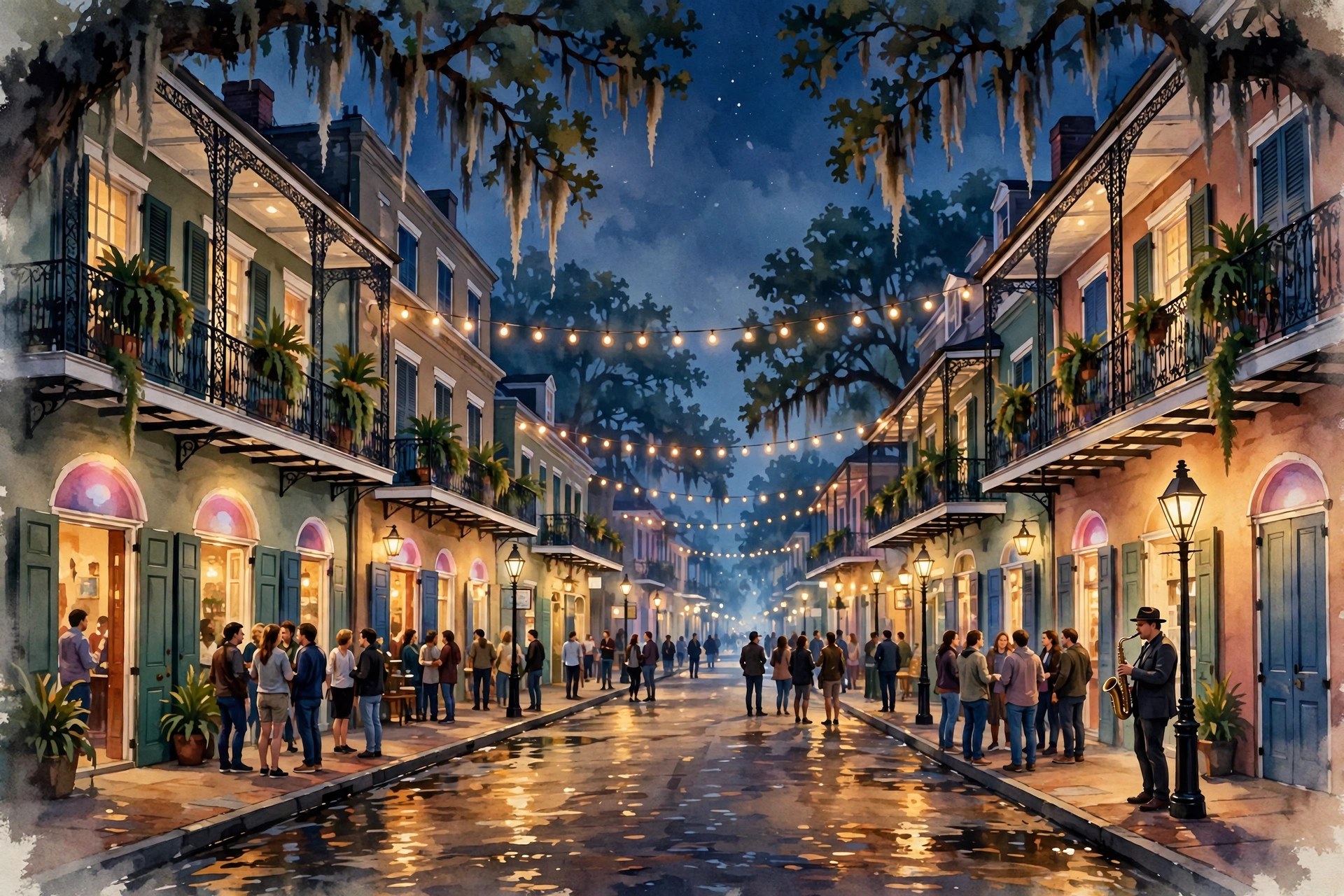
Frenchmen Street is the headline. Snug Harbor is the modern jazz club, the Spotted Cat the beloved staple, and the block between them holds a dense run of rooms where you can hear serious music on any night of the week. It is heavily visited now, so arrive with the same discernment you would bring anywhere: the clubs with a cover charge and a listening room are usually the point; the street itself is the scene around it.
Where in New Orleans
Illustrated treasure map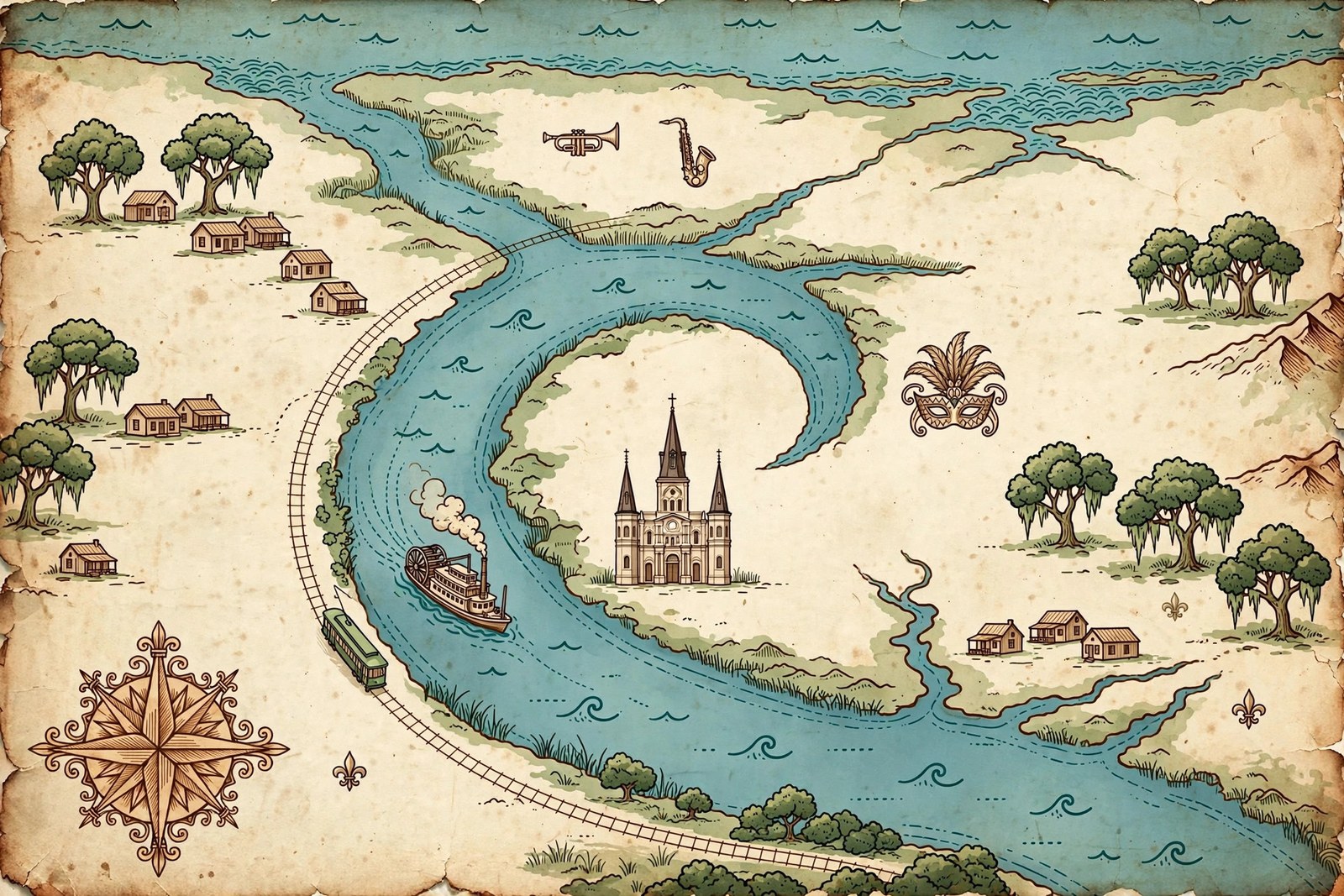 French Quarter
Jackson Square
Treme
Faubourg Marigny
Bywater
Garden District
Uptown
Carrollton
Mid-City
City Park
Algiers Point
Warehouse District
French Quarter
Jackson Square
Treme
Faubourg Marigny
Bywater
Garden District
Uptown
Carrollton
Mid-City
City Park
Algiers Point
Warehouse District
Illustrated treasure map. Not for navigation. Open in Google Maps ↗
A Frenchmen Street field guide
Frenchmen works on a simple economy: cover charges, set times, and listening rooms. The clubs with a cover are usually the point; the street itself is the scene around them. Sets typically run in the evening with late shows on weekends check before you go, and the best strategy is one booked performance plus spontaneous wandering rather than a bar crawl. Arrive before the set you want, not during it; the good rooms fill. Between sets, the street's food options, from late-night po'boys to the art market stalls, keep the night moving.
The spillover streets matter too. The blocks around Frenchmen hold smaller bars with no cover and serious players, the kind of rooms where a Tuesday outplays a Saturday elsewhere. Ask the musicians where they go after their sets; the answer is usually the best guidance in the city.
Bywater days, Marigny nights
By day, the Bywater is for wandering: Royal Street's far-downriver stretch, the galleries and shops, coffee done properly, and Crescent Park, the riverfront park with skyline views back toward downtown. The park's elevated walkway runs along the river past the old industrial wharves, a genuinely lovely piece of urban reuse. It is residential and quiet beyond the park. Keep volume down, don't block the narrow sidewalks in groups, and remember the cottages are homes.
St. Claude Avenue, the Bywater's commercial spine, holds the neighborhood's galleries, music venues, and late-night rooms. It is artsier and rawer than Frenchmen, and the crowds skew younger and more local. The Bywater's whole proposition is that nothing here was built for you; behave like a guest and it rewards you like one.
By night, the Marigny is for listening. For a musically serious evening, combine one booked performance with spontaneous listening rather than treating the night as bar-hopping: pick a set at Snug Harbor or a brass band at one of the larger rooms, then let Frenchmen Street fill in the rest. Leave time between dinner and a ticketed set; in this city, meals run leisurely.
Where to stay in Marigny & Bywater
Our vetted stay partners for this region are coming with the launch. Until then, every hotel and lodge mention in this guide is editorial — nobody paid to be here.
No paid placements yet — when affiliate links go live here, they will be disclosed.
Where to stay
The Marigny is the right base for live music, couples, and repeat visitors: Frenchmen Street at the door, the Quarter a walk away. The lodging inventory is smaller than downtown, mostly guesthouses, inns, and short-term rentals, so book early for festival weekends. A note on rentals: short-term rentals are tightly regulated and platforms must verify permits, so a licensed hotel, B&B, or guesthouse removes the risk of a disrupted booking.
Why Marigny & Bywater, why now
This is the city's current answer to Bourbon. As the Quarter's party corridor gets louder and more generic, the serious listening has consolidated here. If music is why you came, sleep near it.
The Bywater is the city's studio. Galleries, print shops, coffee roasters, and the kind of main-street commerce that gentrification usually kills first. Spend money here; it lands directly in the local economy.
Esplanade is the seam. The avenue dividing the Quarter from the Marigny is one of the city's grandest streets, all Creole mansions and oak canopy. Walk it in daylight at least once; it explains, better than any museum, how the city's French and Creole elite actually lived, and how close the music corridor sits to that history.