Where jazz was born, and a neighborhood still living it
Tremé is one of the oldest Black neighborhoods in the United States, and the ground where jazz began. Congo Square, inside what is now Louis Armstrong Park, is where enslaved Africans gathered on Sundays to drum and dance, and the National Park Service traces jazz's development to exactly this cultural interaction: African drumming, brass-band traditions, Black social-aid organizations, and neighborhood parading. This is not background color. It is the origin point of the music the whole city sells.
Come with context, not just a camera. Tremé is a living historic neighborhood, and it carries Katrina's mark visibly: the flooding, the scattering of residents and musicians across the country in 2005, and the long return since. The remembrance here is part of living culture, not a closed chapter. Be wary of any tour that treats it as spectacle.
Where in New Orleans
Illustrated treasure map French Quarter
Jackson Square
Treme
Faubourg Marigny
Bywater
Garden District
Uptown
Carrollton
Mid-City
City Park
Algiers Point
Warehouse District
French Quarter
Jackson Square
Treme
Faubourg Marigny
Bywater
Garden District
Uptown
Carrollton
Mid-City
City Park
Algiers Point
Warehouse District
Illustrated treasure map. Not for navigation. Open in Google Maps ↗
Congo Square, Armstrong Park, and Dooky Chase
Louis Armstrong Park, with its distinctive arch, sits at Tremé's edge and holds Congo Square within it. Walk it in daylight, read the markers, and understand what happened on that ground before you go listen to the music it produced. The park hosts cultural events through the year; check what is on while you are in town.
Dooky Chase, the Creole fine-dining institution on Orleans Avenue, carries deep civil-rights history alongside its menu: in the segregation era it was one of the few places where Black and white civil-rights leaders could meet and eat together. Eating here is dining inside history. Book ahead.
St. Augustine Church, the historic Black Catholic parish, anchors the neighborhood's spiritual life. If you attend a service, attend as a congregant, not an observer: dress accordingly, participate respectfully, and leave the camera alone.
The Backstreet Cultural Museum, on Henriette Delille Street, is the small institution that explains the big traditions: Mardi Gras Indian suits, second-line regalia, and jazz-funeral artifacts, collected and interpreted by the community that made them check before you go. It is the essential companion to everything you will see on the street, and the single best hour of preparation a visitor can buy.
Tremé's food is part of the story too. The neighborhood's Creole kitchens, from Dooky Chase to the corner plate-lunch spots, fed the civil-rights movement and the musicians alike. Eat in the neighborhood, not just through it; the lunch counter is as much a cultural institution as the museum.
Tours we're vetting for Tremé
We're lining up launch partners for guided tours in this region — operators we'd book ourselves. When we recommend one, we'll tell you exactly why, and any commission will be disclosed here.
No paid placements yet — when affiliate links go live here, they will be disclosed.
Second lines and how to behave at one
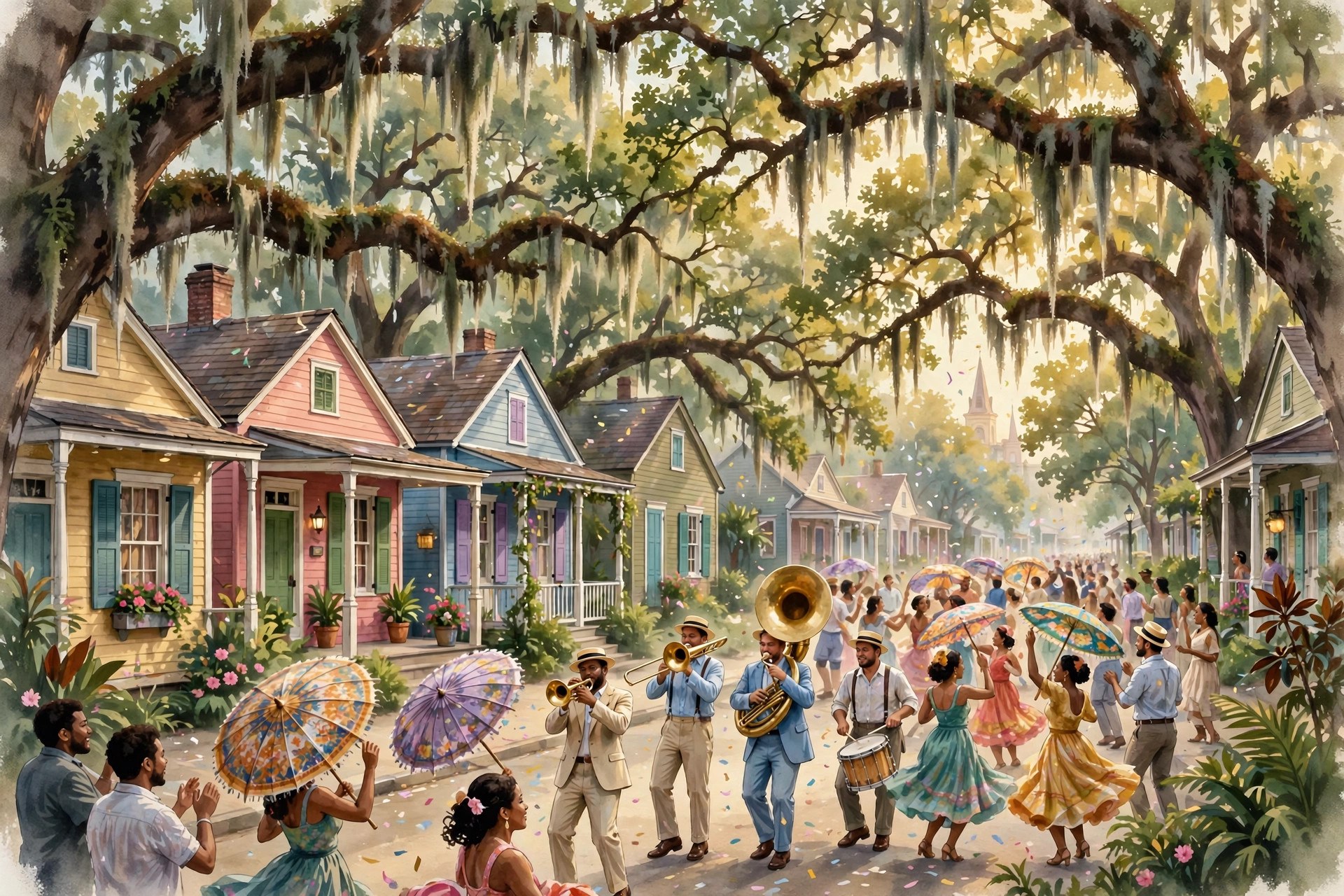
A public second line is a community institution, not street entertainment. Social-aid clubs historically provided community support as well as parading, and their parades created both employment and musical training for generations of musicians. If you encounter one: participate respectfully, keep your distance from club members and families, never touch a suit or an instrument, and be especially mindful around memorial elements. Ask before photographing people. This is the single most important etiquette in the city, and visitors get it wrong constantly.
The jazz funeral is the tradition's most solemn form: a dirge on the way to the burial, and joyous release on the way back. If you witness one, you are witnessing a family's grief and celebration. Keep a respectful distance, do not treat it as a performance, and follow the lead of the community present. Some processions welcome followers; a funeral is not automatically one of them.
A Tremé half-day, sequenced
Morning: Louis Armstrong Park and Congo Square, reading the markers before the day heats up. Midday: the Backstreet Cultural Museum, then lunch at Dooky Chase if you booked ahead, or a neighborhood plate lunch nearby. Afternoon: St. Augustine and the residential blocks, on foot and quietly. Evening: take what the morning taught you to a club, in Tremé or on Frenchmen Street, and hear the lineage with new ears. That sequence, park to museum to table to club, is the deepest half-day in the city.
Why Tremé, why now
It is the deepest half-day in the city. A morning that runs Congo Square to Dooky Chase to the Backstreet Cultural Museum check before you go will teach you more about New Orleans than a week of Bourbon Street. Pair it with the music guide so the lineage is audible when you hear it that night.
The recovery is visible and unfinished. No neighborhood makes the stakes of the city's story clearer. Visit with that history in mind, spend money at neighborhood businesses, and treat the place as what it is: home to people, first.