The reason you came
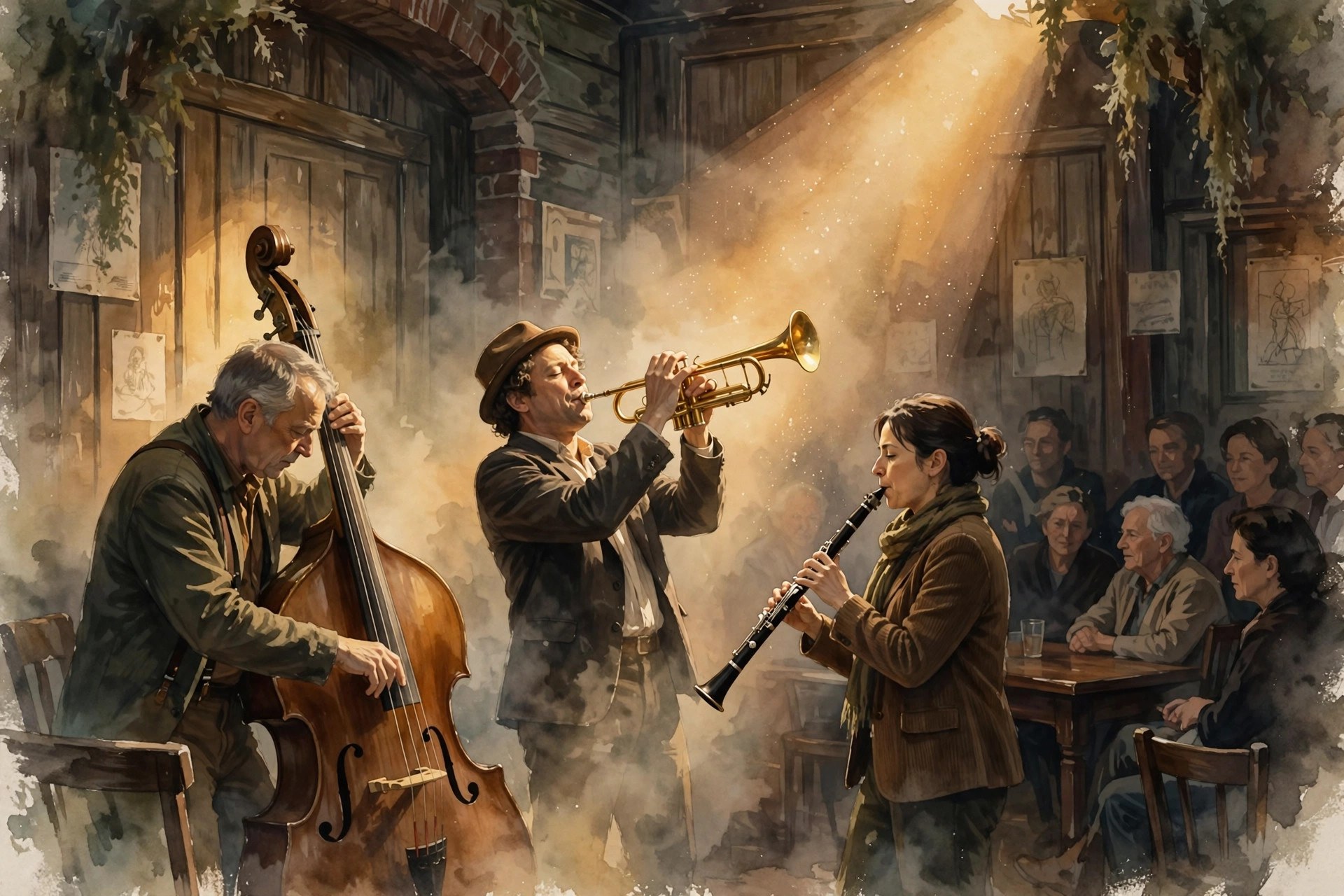
Jazz was born in New Orleans, in the interaction of African and Caribbean musical traditions at Congo Square, the brass bands, and Black neighborhood parading. That is not a slogan; the National Park Service traces it to this city's unusually dense cultural meeting. And the lineage is still audible nightly: traditional jazz, brass bands, blues, bounce, and second lines are community institutions first and visitor experiences second. Treat them that way and the city opens up. Treat them as background music and you will miss the entire point.
The single most important distinction: Bourbon Street and Frenchmen Street serve different markets. Bourbon is the highest-intensity visitor nightlife corridor. Frenchmen, in the Marigny, is oriented toward live jazz, brass, blues, and related clubs, though it too is now heavily visited. Uptown, Magazine and Freret Streets, and parts of the Warehouse District offer a third model: neighborhood rooms without Bourbon's density.
Where in New Orleans
Illustrated treasure map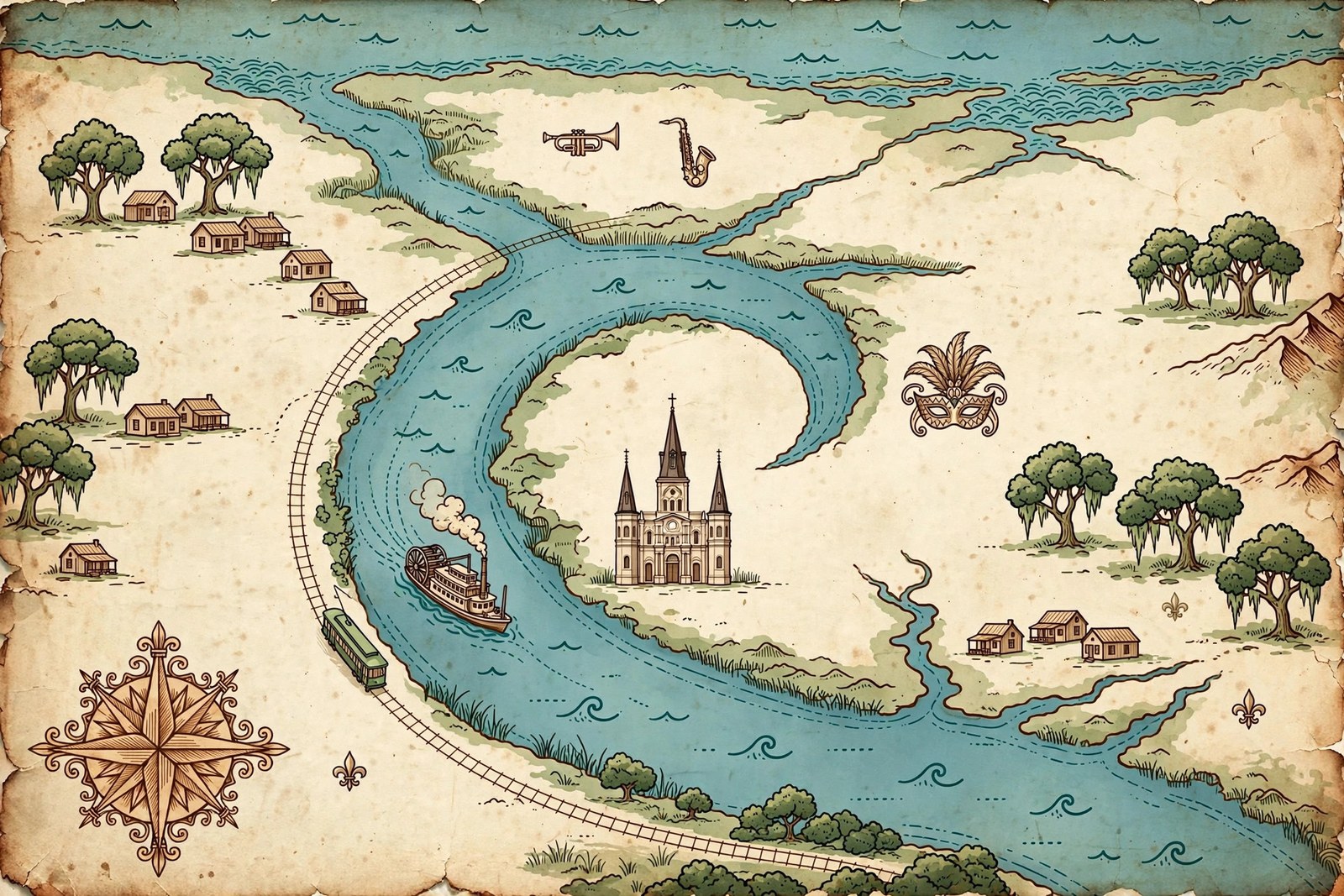 French Quarter
Jackson Square
Treme
Faubourg Marigny
Bywater
Garden District
Uptown
Carrollton
Mid-City
City Park
Algiers Point
Warehouse District
French Quarter
Jackson Square
Treme
Faubourg Marigny
Bywater
Garden District
Uptown
Carrollton
Mid-City
City Park
Algiers Point
Warehouse District
Illustrated treasure map. Not for navigation. Open in Google Maps ↗
The rooms
Listed as institutions, not rankings. Preservation Hall in the Quarter: traditional jazz in its original room, unamplified, small enough to book out. Tipitina's Uptown: the city's rock and funk institution. The Maple Leaf Bar Uptown: the long-running room where any night can surprise you. Snug Harbor on Frenchmen: the modern jazz club. The Spotted Cat on Frenchmen: the beloved staple.
For a musically serious evening, combine one booked performance with spontaneous listening rather than treating the night as bar-hopping. Leave time between dinner and a ticketed set; this city's meals run leisurely, and rushing one to make the other spoils both.
Tours we're vetting for Music
We're lining up launch partners for guided tours in this region — operators we'd book ourselves. When we recommend one, we'll tell you exactly why, and any commission will be disclosed here.
No paid placements yet — when affiliate links go live here, they will be disclosed.
How to plan a music week
Sunday is the strategic day: second lines traditionally parade on Sundays, and a Sunday that includes one, checked via listings and local word of mouth, is the highest-value day in the city's music week. Weeknights belong to the clubs: Frenchmen Street runs nightly, the Uptown rooms reward the midweek visitor with thinner crowds and the same players. Festival season concentrates everything, but the nightly economy never stops; some of the best sets happen in the off weeks when the rooms are half full and the bands stretch out.
A practical template for three nights: night one, a booked set at Preservation Hall or Snug Harbor for the tradition; night two, Frenchmen Street wandering with one anchor club; night three, an Uptown room like Tipitina's or the Maple Leaf for the neighborhood version. Leave the fourth night open. The city fills open nights better than any itinerary can.
Second lines, brass bands, and bounce
A public second line is a community institution, not street entertainment. Social-aid clubs historically provided community support as well as parading, and their parades created both employment and musical training for generations of musicians. If you encounter one: participate respectfully, keep distance from club members and families, never touch a suit or instrument, and be especially mindful around memorial elements.
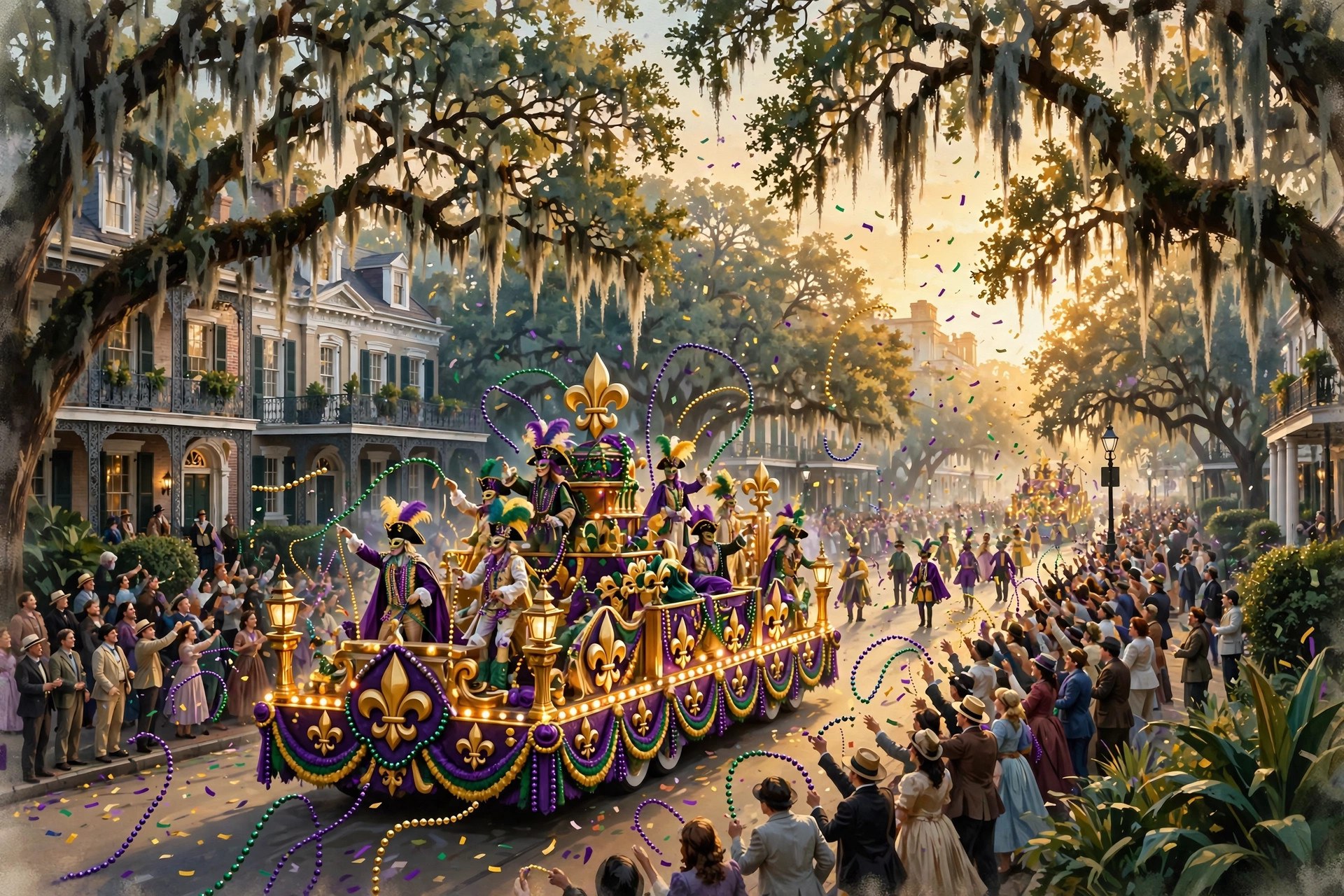
Black Masking Indian processions, with their hand-sewn suits, parade on Super Sunday and St. Joseph's Day as well as Carnival. These are living traditions. Treat them as continuing practices, not photo opportunities: ask before photographing people, keep your volume appropriate, and understand you are a guest.
Bounce, the city's homegrown hip-hop, fills clubs and festival stages alike. If your trip overlaps a bounce night at one of the larger rooms, go. It is as New Orleanian as the brass band, and twice as loud.
The brass band itself deserves a paragraph. Born from the funeral and parade traditions, carried by tuba and snare drum through the streets, it is the city's marching heartbeat. Rebirth Brass Band's long residency nights check before you go are the classic entry point: loud, joyful, communal, and the clearest proof that this music is a living practice rather than a heritage act. When a brass band plays a club, the room becomes a parade that ran out of street.
Why music, why now
The lineage is unbroken. Katrina scattered the city's musicians across the country in 2005, and an extraordinary number came back. The rooms above are staffed by people who chose this city twice. When you pay a cover here, you are funding the continuation, not the commemoration.
Sunday is a strategy. Second lines traditionally parade on Sundays. If your trip can include one Sunday, build the day around the possibility: check listings, ask locals, and keep the afternoon flexible. It is the single highest-value day in the city's music week.