Fix your dates around the calendar
New Orleans has no bad season, only seasons with different bargains. The city's festival calendar is the dominant variable: it sets hotel prices, crowd levels, and the character of whole weeks. Fix your dates around the event calendar first, the weather second, and everything else after.
March through April is the best all-around window: comfortable temperatures and the strongest spring festival calendar, with French Quarter Festival and Jazz & Heritage Festival anchoring it. Late October through November is the best alternative: comfortable weather, a less frenetic pace, and the fall music and food season. Note that hurricane season officially runs through November 30, so keep an eye on the tropics even in the pleasant months.
Where in New Orleans
Illustrated treasure map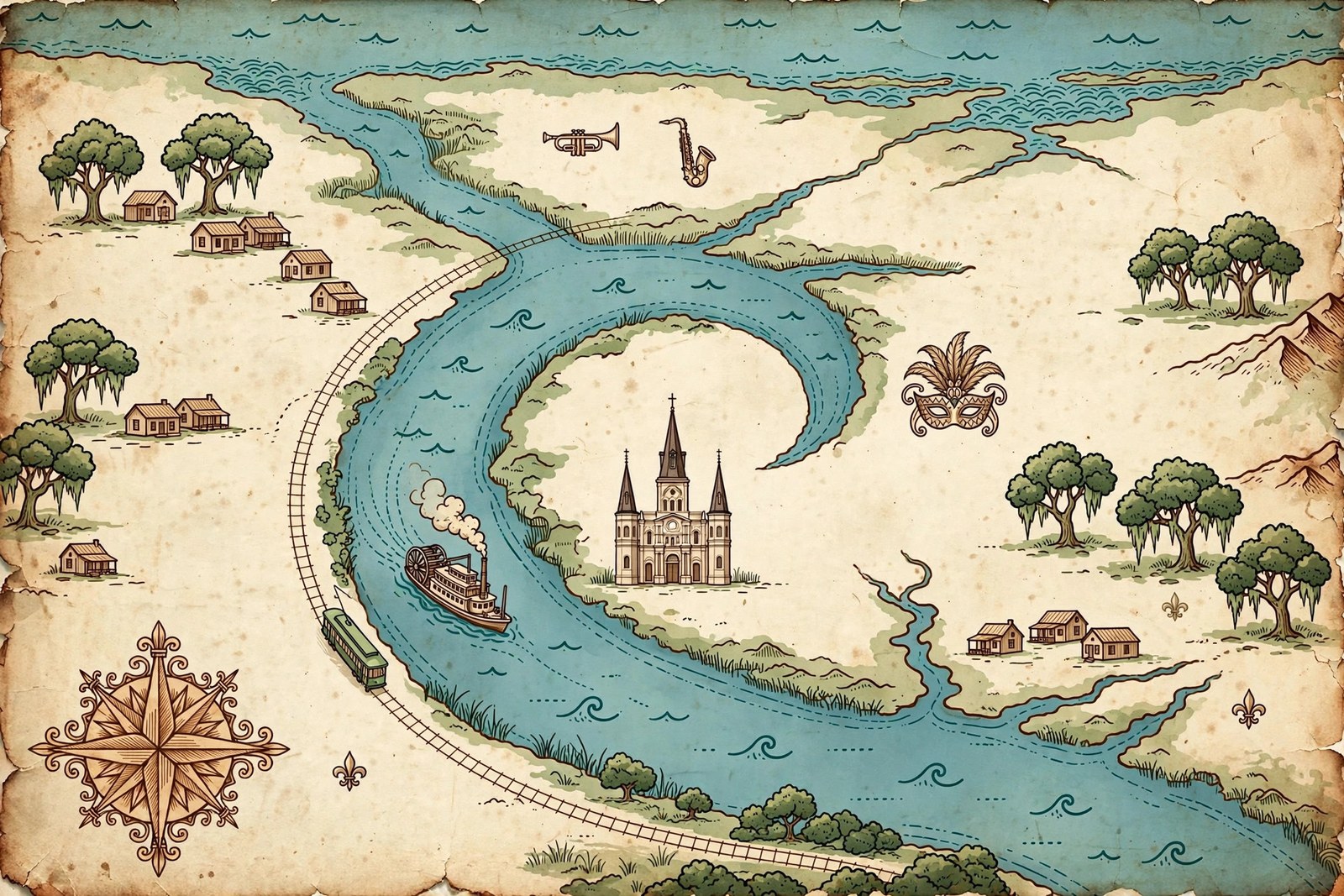 French Quarter
Jackson Square
Treme
Faubourg Marigny
Bywater
Garden District
Uptown
Carrollton
Mid-City
City Park
Algiers Point
Warehouse District
French Quarter
Jackson Square
Treme
Faubourg Marigny
Bywater
Garden District
Uptown
Carrollton
Mid-City
City Park
Algiers Point
Warehouse District
Illustrated treasure map. Not for navigation. Open in Google Maps ↗
Month by month, briefly
January and February are Carnival's runway: cooler weather, building energy, parades starting in the weeks before Fat Tuesday. March and April are the peak: the best weather of the year stacked with the best festivals. May warms up and Jazz Fest's second weekend often flirts with real heat. June through September is the long hot season, with Satchmo SummerFest and ESSENCE as the cultural anchors and the best hotel rates of the year.
October brings relief: the air dries, the light turns golden, and the fall festival season begins. November is arguably the sweetest month, cool evenings, full calendars, thinner crowds. December is mild and festive, with the city's holiday programming, Celebration in the Oaks in City Park check before you go, giving winter visitors something the cold-climate cities can't.
The seasons, honestly
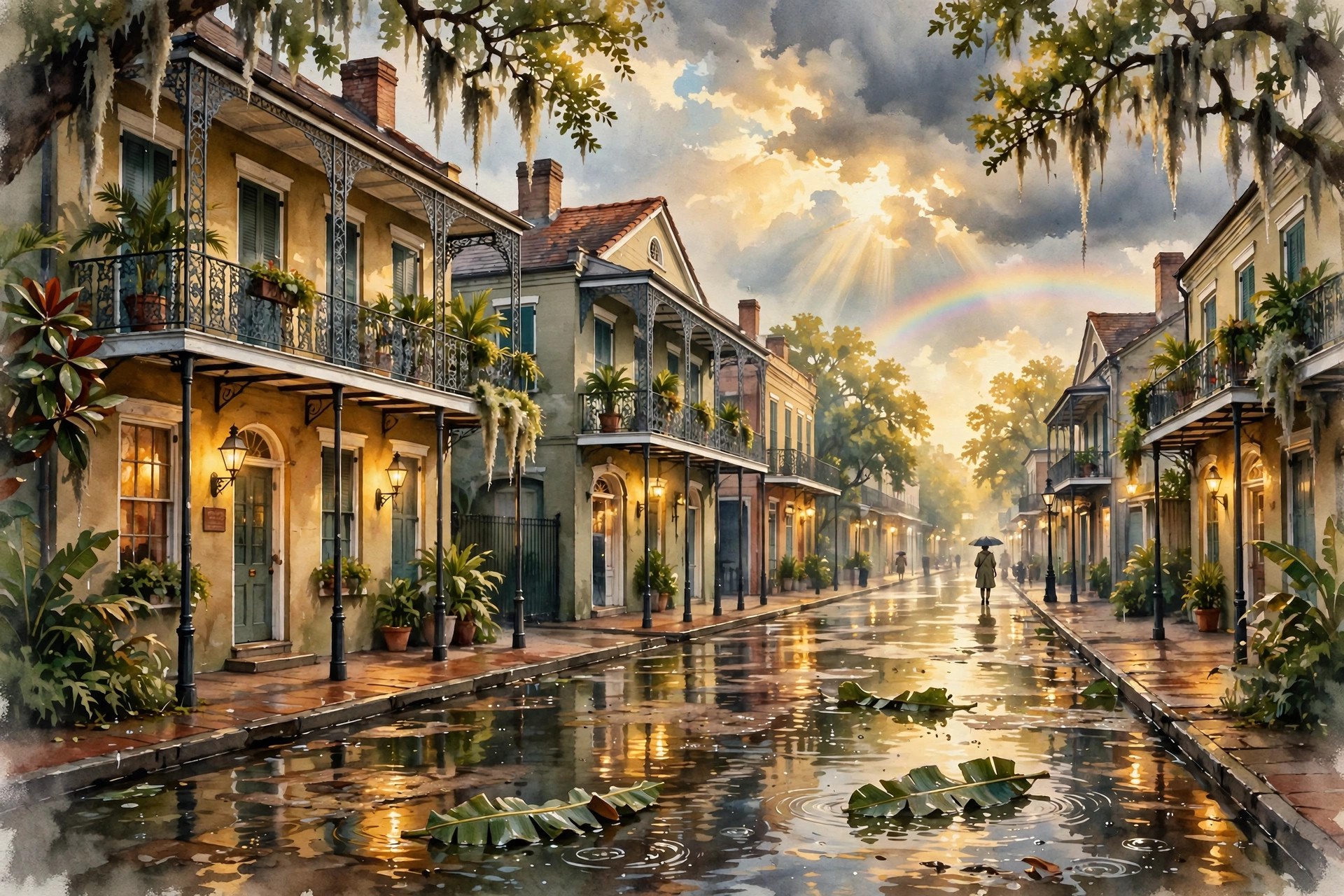
June through September brings lower demand and better lodging availability, with real trade-offs: highs near 91°F, heavy humidity and rainfall, and tropical-cyclone risk. Midday pacing, hydration, and indoor breaks become necessities rather than suggestions. This is the bargain season, and for heat-tolerant travelers who plan around the afternoons, it is genuinely good value.
December through February is mild but not warm: normal January lows near 46°F, and damp wind off the river can feel cooler. Bring layers. Carnival season builds through these months toward Fat Tuesday, which concentrates both the magic and the crowds: February 9 in 2027 check before you go.
One more timing factor: Saints home weekends fill the city's hotels on their own logic from September through January check before you go. If football is not your reason for coming, check the schedule before booking a fall weekend, or you will pay game-weekend prices for a non-game trip.
Cruise season adds another wrinkle: the Port of New Orleans runs Caribbean sailings year-round, and embarkation weekends nudge downtown hotel demand. If your trip coincides with a big sailing day, book earlier than you otherwise would. Conversely, a pre- or post-cruise night in the city is one of the great travel bargains hiding in plain sight: the cruise infrastructure makes the logistics easy, and one extra night buys you the French Quarter at dawn before the ship crowd wakes.
Where to stay in When to Go
Our vetted stay partners for this region are coming with the launch. Until then, every hotel and lodge mention in this guide is editorial — nobody paid to be here.
No paid placements yet — when affiliate links go live here, they will be disclosed.
Festival dates that move the market
Mardi Gras (Fat Tuesday), Jazz & Heritage Festival (late April into May), French Quarter Festival (mid-April), ESSENCE (early July), and Southern Decadence (Labor Day weekend) each transform the city's lodging market for their duration check before you go. The rule is simple: decide whether you are a festival traveler or not. If you are, build the trip around the event and book lodging the moment dates are fixed. If you are not, check the calendar anyway, because arriving during Jazz Fest without knowing it is the most expensive surprise in American travel.
Shoulder weeks around the big festivals are the savvy move: the week before Jazz Fest often has pleasant weather, thinner crowds, and saner prices, with the city already warming up. Similarly, the weeks flanking Mardi Gras carry Carnival energy without Fat Tuesday's peak pricing. The festivals guide has the full calendar logic.
Why timing, why now
Spring is the classic for a reason. The weather cooperates, the festivals stack, and the city is at its most itself. If you get one trip, make it March or April. If you get two, add late October. Everything else is a trade you make with open eyes.
Summer is the contrarian play. The heat is real, but so are the empty restaurants, the negotiable hotel rates, and the locals-only feel of a city temporarily returned to its residents. ESSENCE in July and Satchmo in August give the season cultural anchors. If you can handle 91°F and plan your days around it, summer New Orleans is the best value in American travel.