Local New Orleans, at local pace
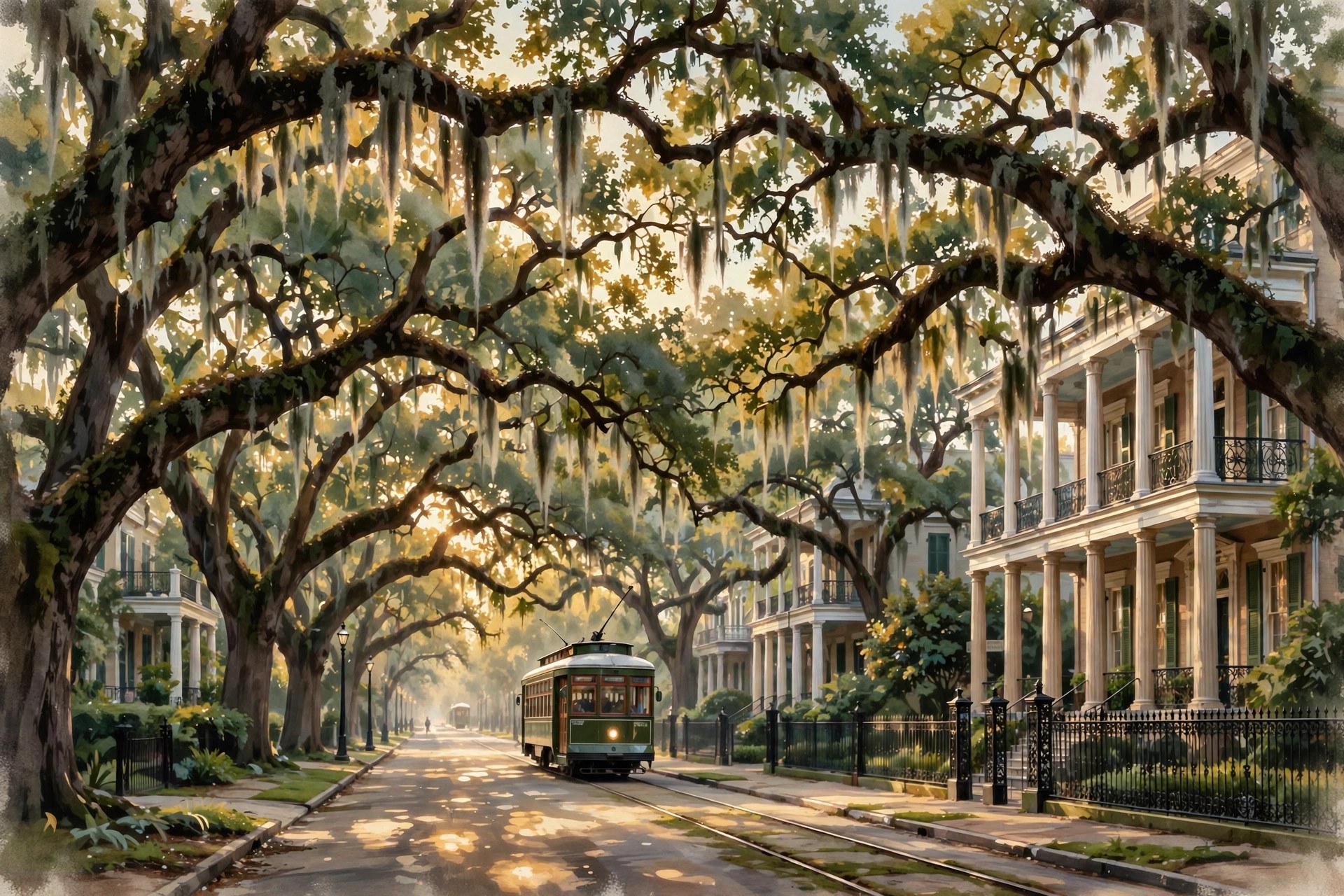
Uptown is the broad residential swath between the Garden District and Carrollton, and it is where New Orleans stops performing and starts living. Magazine Street runs its commercial spine for six miles check before you go: bookshops, outfitters, neighborhood restaurants, the stores locals actually use. The St. Charles streetcar threads the oak canopy overhead. At the far end, Carrollton holds the universities, Tulane and Loyola, and a cluster of neighborhood music rooms that have outlasted every trend.
This is the right base for a week-long trip or a repeat visit, when the itinerary has time for neighborhood rhythms: a morning at Audubon Park, an afternoon working down Magazine, an evening where the venue, not the district, is the destination.
Where in New Orleans
Illustrated treasure map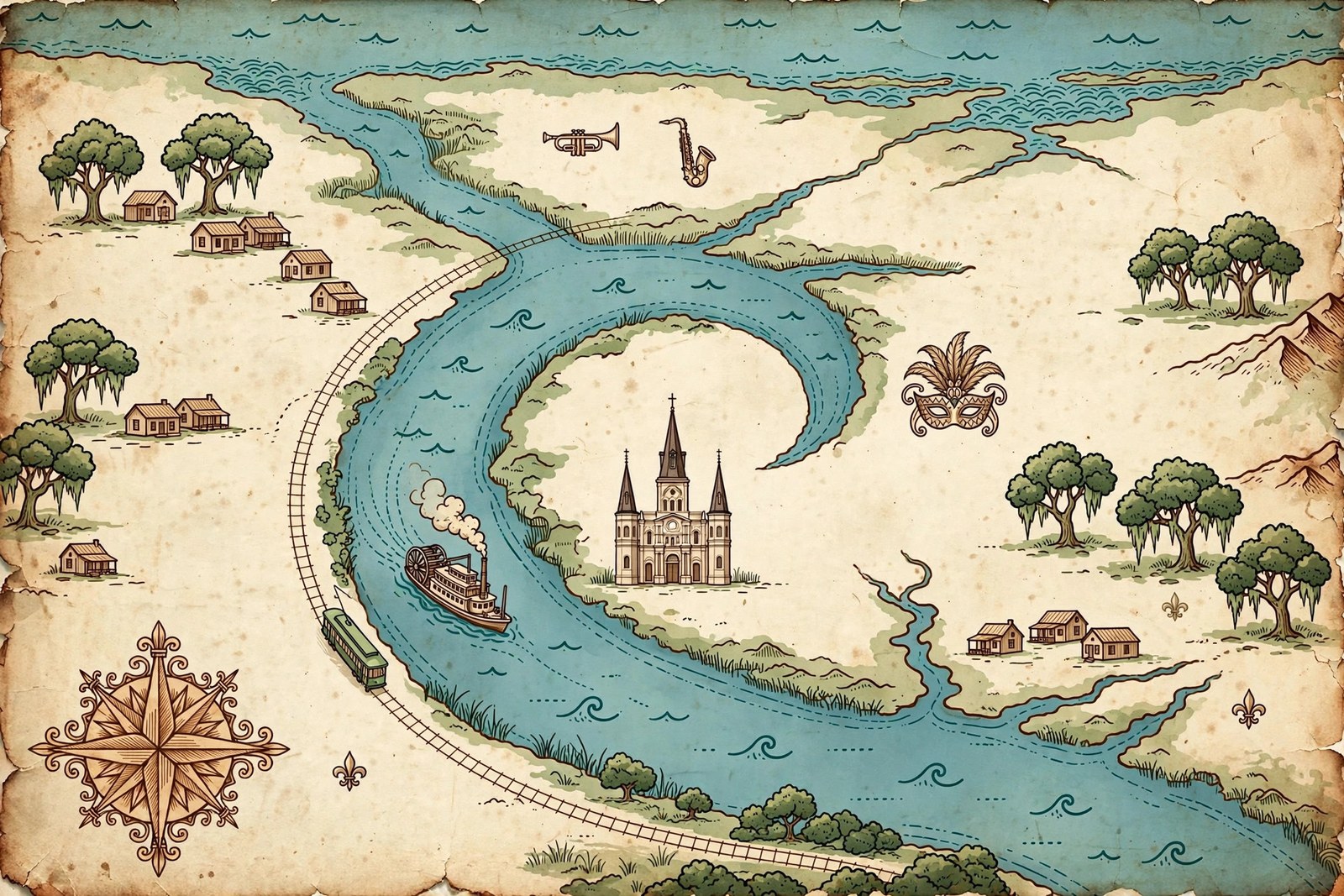 French Quarter
Jackson Square
Treme
Faubourg Marigny
Bywater
Garden District
Uptown
Carrollton
Mid-City
City Park
Algiers Point
Warehouse District
French Quarter
Jackson Square
Treme
Faubourg Marigny
Bywater
Garden District
Uptown
Carrollton
Mid-City
City Park
Algiers Point
Warehouse District
Illustrated treasure map. Not for navigation. Open in Google Maps ↗
The rooms that made the city's other music
Uptown's clubs are institutions. Tipitina's is the city's rock and funk institution, the room where the Meters' legacy and everything after it gets played loud. The Maple Leaf Bar is the long-running live-music room where a Tuesday can outplay a Saturday anywhere else. These are neighborhood rooms without Bourbon's density: show up, pay the cover, stand close, stay late.
Carrollton adds its own layer: smaller bars and listening rooms near the universities, crowds that skew local, and the end-of-the-line feel that keeps the scene honest. Ask around; the best nights here are rarely the advertised ones. The streetcar's turnaround at Carrollton and St. Charles is itself a small landmark: watch the cars reverse on the historic turntable arrangement check before you go, then walk the surrounding blocks for the neighborhood's best low-key evening.
Tours we're vetting for Uptown & Carrollton
We're lining up launch partners for guided tours in this region — operators we'd book ourselves. When we recommend one, we'll tell you exactly why, and any commission will be disclosed here.
No paid placements yet — when affiliate links go live here, they will be disclosed.
Magazine Street, properly
Magazine runs six miles check before you go, and the Uptown stretch is its most local: independent bookshops, kitchen stores, vintage, galleries, and the lunch counters that have fed the neighborhood for decades. Don't attempt it end to end; pick a mile and work it slowly. The blocks around Napoleon and Jefferson Avenues hold a strong concentration, and the street's rhythm, shop, café, shop, is the neighborhood's daytime signature.
Freret Street, a few blocks lake-side of St. Charles, is the younger commercial strip: bars, casual restaurants, and a college-adjacent energy from the nearby universities. It is the right call for an unplanned evening when you want food and a drink without a destination.
Parks, campuses, and the long walk
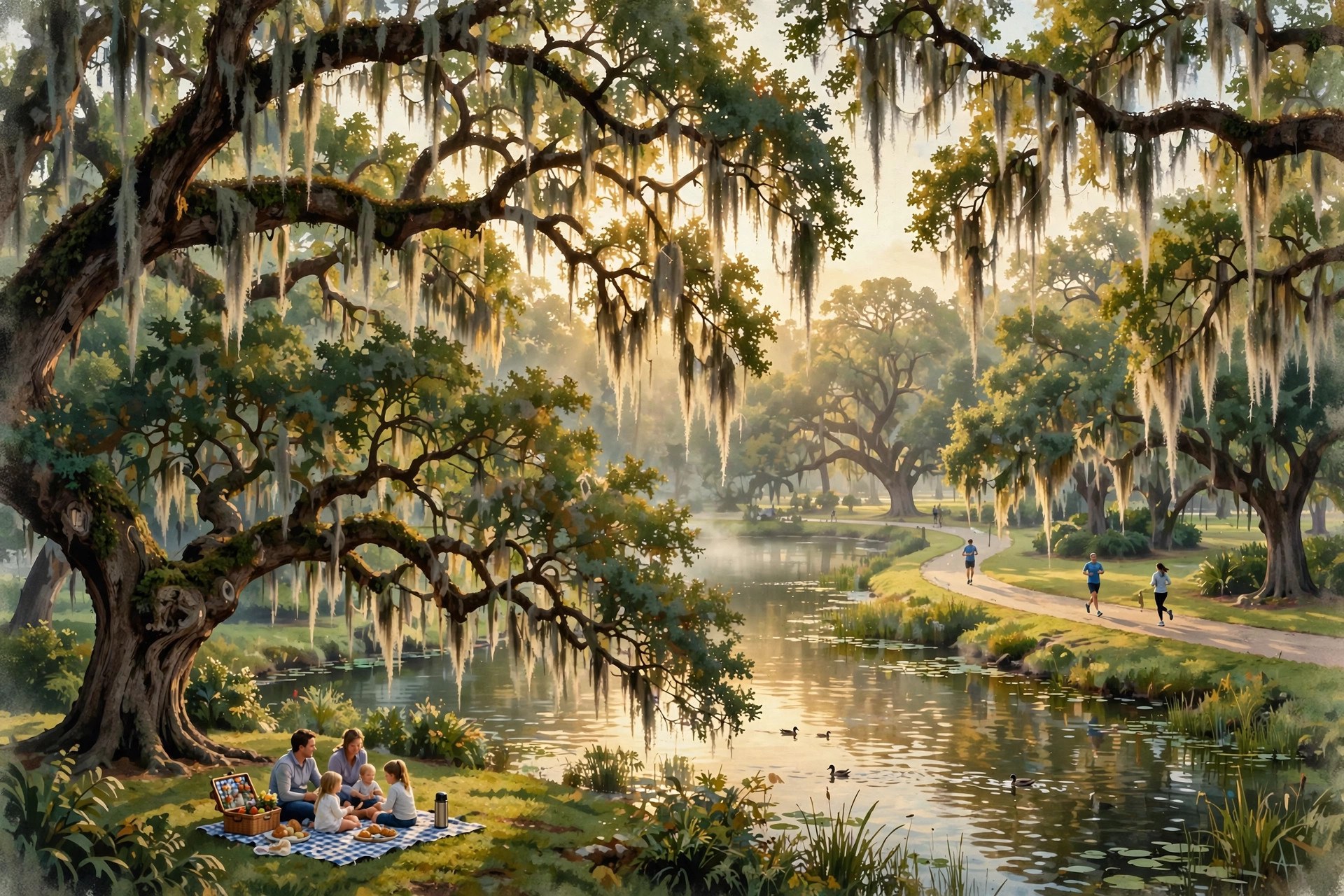
Audubon Park is Uptown's green: live oaks, lagoons, jogging paths, and the Audubon Zoo at its river end. It pairs naturally with a Magazine Street day: park in the morning, commerce in the afternoon. The zoo is a genuine half-day, strong on Louisiana wetlands exhibits, and the park's oak allée is one of the city's great free sights. The university campuses are worth a stroll for the architecture alone, and the surrounding blocks hold some of the city's best unpretentious eating: the po'boy shops and lunch counters near Tulane and Loyola feed students and professors at prices the Quarter forgot.
Where to stay
Uptown suits a week or a repeat: guesthouses and small hotels along St. Charles and Magazine, quieter streets, the streetcar as your downtown tether. Families do well here: the park, the zoo, and the streetcar ride itself all read as attractions to kids. For festival weekends, Uptown inventory goes fast despite the distance from the action; the streetcar runs 24 hours, which is exactly why.
The Carrollton end is the value play: slightly farther out, slightly cheaper, and arguably the most neighborhood-authentic base in the city. You will eat where students and professors eat, drink where the musicians drink after their sets, and ride the full streetcar line like a local. For a second or third trip, there is no better headquarters.
Why Uptown, why now
It is the city's depth charge. The Quarter gives you the postcard, Tremé gives you the origin, but Uptown gives you the ongoing concern: the rooms where working musicians play on Tuesdays, the streets where the culture is maintained rather than displayed. A trip without an Uptown night is a trip that stayed on the surface.
The universities keep it young. Tulane and Loyola pump students, faculty, and visiting artists through Carrollton year-round, which is why the far end of the streetcar line has the city's best cheap eats and its most adventurous small rooms. College towns inside a 300-year-old city: only here.